

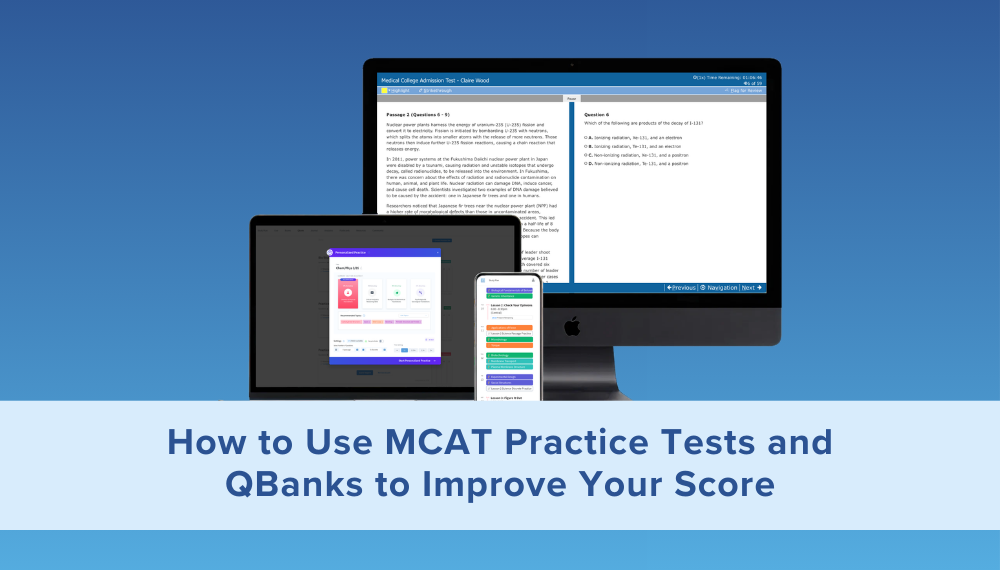
If you’ve started studying for the MCAT, you’ve probably heard two pieces of advice over and over: Take MCAT practice tests. Do lots of practice questions. Guess what? They’re not wrong.
However, plenty of students take tons of practice tests and grind through thousands of questions and still feel like their score isn’t improving as much as it should. When used correctly, MCAT practice exams and an MCAT question bank can create a smart feedback loop that helps you identify weaknesses, practice them deliberately, and steadily improve your score over time.
At Blueprint MCAT, we designed our MCAT practice tests and QBank to work together inside that exact loop. Let’s walk through how that actually works.
🔁 The MCAT Practice Feedback Loop
Step 1: Start with an MCAT Practice Test
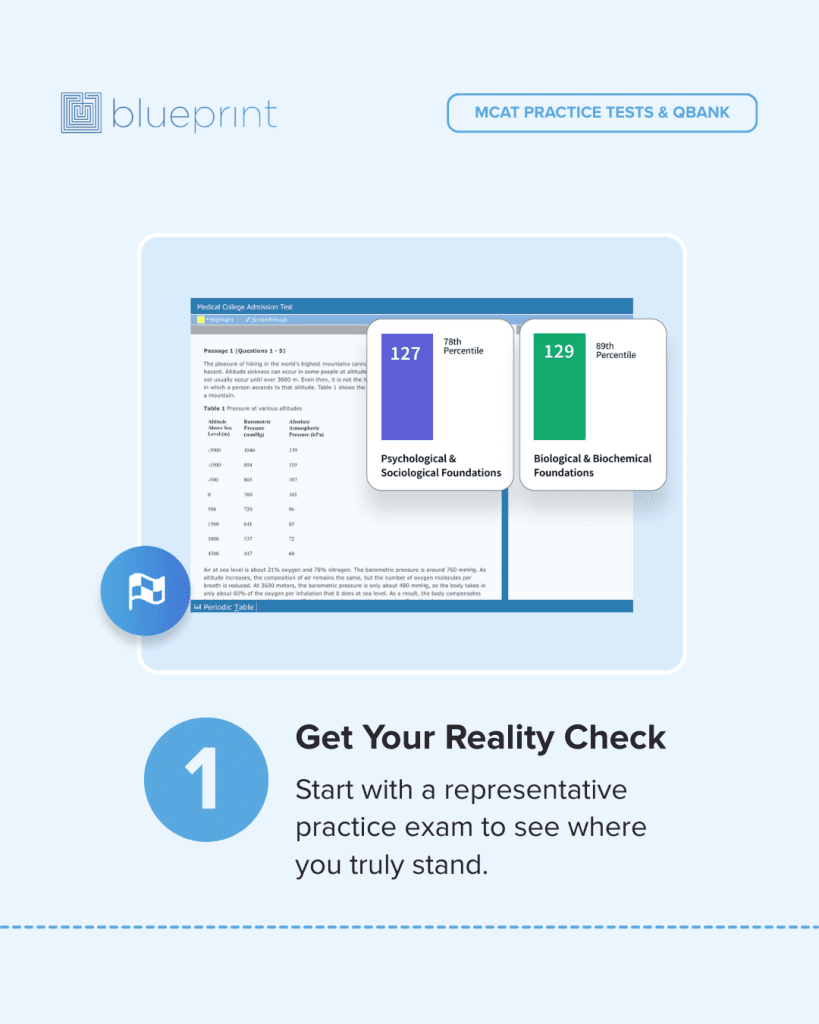
MCAT practice exams are essential in every MCAT study plan. They get you comfortable with the MCAT format so test day doesn’t feel like a surprise. They help you build the endurance you need to handle a nearly 8-hour test. And they give you a detailed picture of exactly where you stand — what you know, what you don’t, and where your biggest opportunities for improvement are.
Most students should begin with a diagnostic exam before they even begin building a study schedule. An MCAT diagnostic test gives you a baseline that determines what the rest of your MCAT study plan should look like.
If your diagnostic score comes in lower than you expected, don’t panic! That’s completely normal. MCAT students take their diagnostic before they’ve done any serious studying, so it’s not meant to be a reflection of your potential. Remember, you can only go up from here!
💡 Pro Tip: Haven’t taken your MCAT diagnostic? Get a free one inside your Blueprint MCAT Free Trial! Click here to get started!
Why Accurate Practice Tests Matter
Not all MCAT practice tests are created equal. Many students wonder if their practice scores can even be trusted.
If your practice scores are inflated, you might walk into test day with a false sense of confidence. If they’re deflated, you might start doubting your progress when you’re actually on the right track. Either way, inaccurate scores make it much harder to plan your prep.
That’s why Blueprint’s MCAT practice tests were designed to mirror the real MCAT as closely as possible—same question structure, same format, same timing, and same level of difficulty.
To test this, we analyzed students who took Blueprint’s free half-length diagnostic and then sat for the actual MCAT within 90 days. On average, their diagnostic score was just 1.5 points lower than their real MCAT score.
In other words, the starting point students saw on their Blueprint diagnostic was remarkably close to where they actually landed on test day. That’s exactly what you want from a diagnostic: a baseline that’s accurate enough to guide your prep, without being artificially inflated or deflated.
Step 2: Look Beyond Right and Wrong
Once you finish an MCAT practice test, the most important work begins: reviewing it carefully.
Instead of just checking which questions you missed, try to identify patterns in why you missed them.
For example:
- Did timing cause rushed decisions?
- Were certain content areas consistently difficult?
- Were you misinterpreting passages or graphs?
- Did you change correct answers to incorrect ones?
These patterns are where real score improvements come from. The goal of review isn’t just understanding one question — it’s identifying repeatable mistakes or opportunities where you can improve.
Without the insights from your practice tests, it’s easy to fall into the trap of reviewing everything equally. But MCAT prep is much more effective when you focus on the specific things that are costing you points.
Blueprint MCAT practice exams make this process much easier and faster by providing detailed analytics after every test. Our platform breaks down your performance by:
- MCAT section
- subject and content category
- AAMC reasoning skill
- question type and difficulty
- answer changes (including when you switch from right to wrong)
Instead of guessing what to study next, you can clearly see where your time will make the biggest impact.
Step 3: Use Question Banks for Targeted Practice
Once you know what needs improvement, the next step is targeted practice. That’s where a question bank becomes especially powerful.
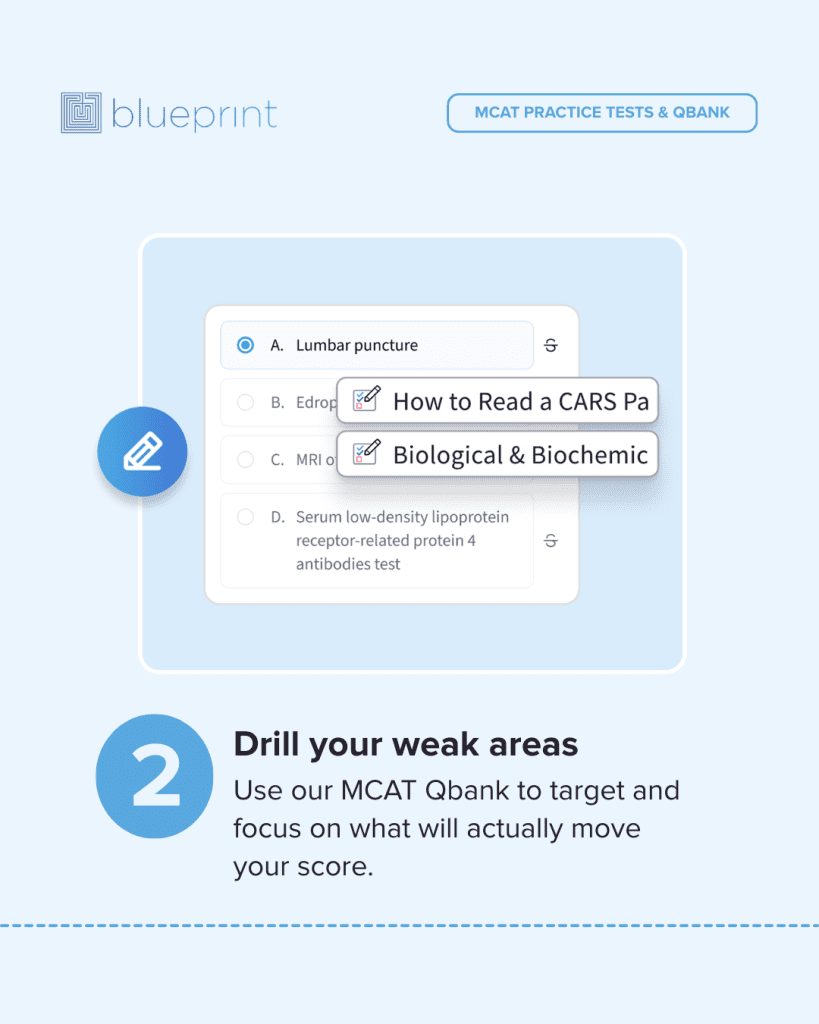
An MCAT QBank is essentially a large library of practice questions that can be organized into focused practice sets. Instead of doing random questions and hoping they help, you can practice the exact topics and skills that your most recent exam revealed.
With Blueprint MCAT, this process is built directly into the system. After you complete a practice exam, your results automatically feed into the QBank, which recommends targeted practice sets designed to strengthen the areas holding your score back.
This kind of targeted practice helps you improve much faster than broad, unfocused studying. And you’ll never run out of practice material! The Blueprint MCAT QBank includes 5,000+ MCAT-style questions organized around the AAMC content outline, so you can quickly create practice sets based on exactly what your exam analytics revealed.
Each question also comes with thorough explanations that go beyond simply pointing out the right answer and instead guide you through the reasoning behind it so you can recognize similar question patterns in the future.
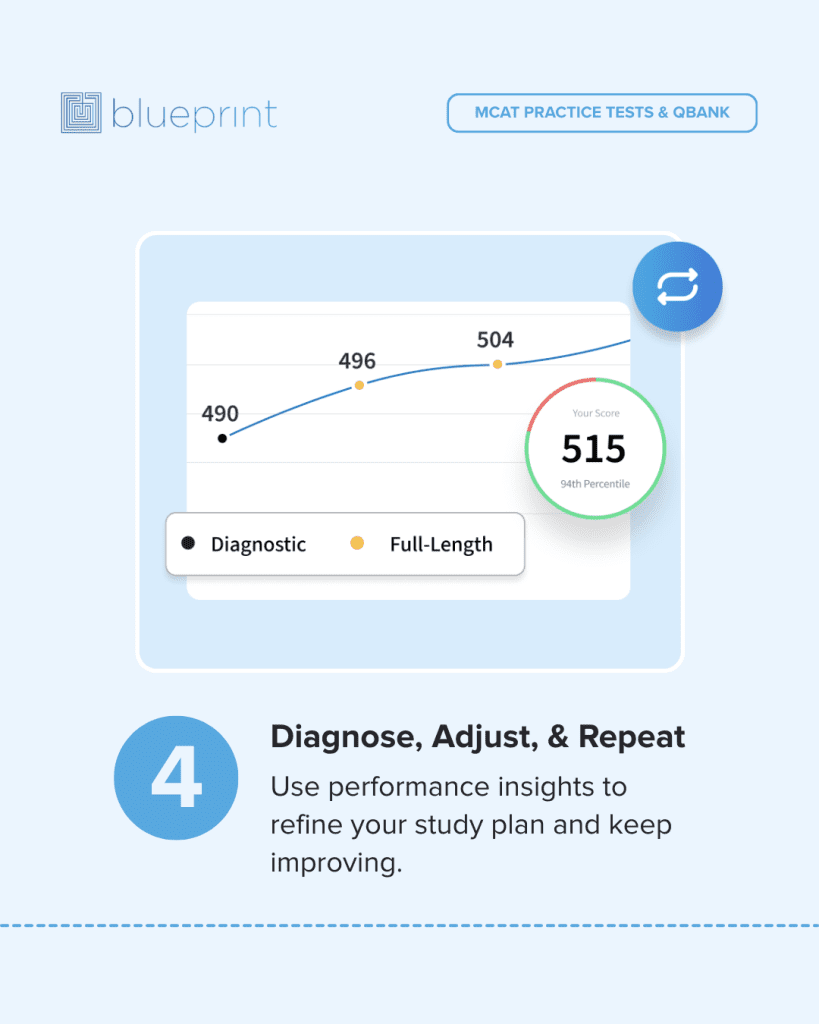
Step 4: Repeat the Process
As you continue with your MCAT prep, your practice exams reveal new insights, your QBank drills those skills, and you can adjust your study plan so you’re always moving forward.
A typical study cycle might look like this:
- Take a practice exam
- Review your performance carefully
- Practice weak areas using a QBank
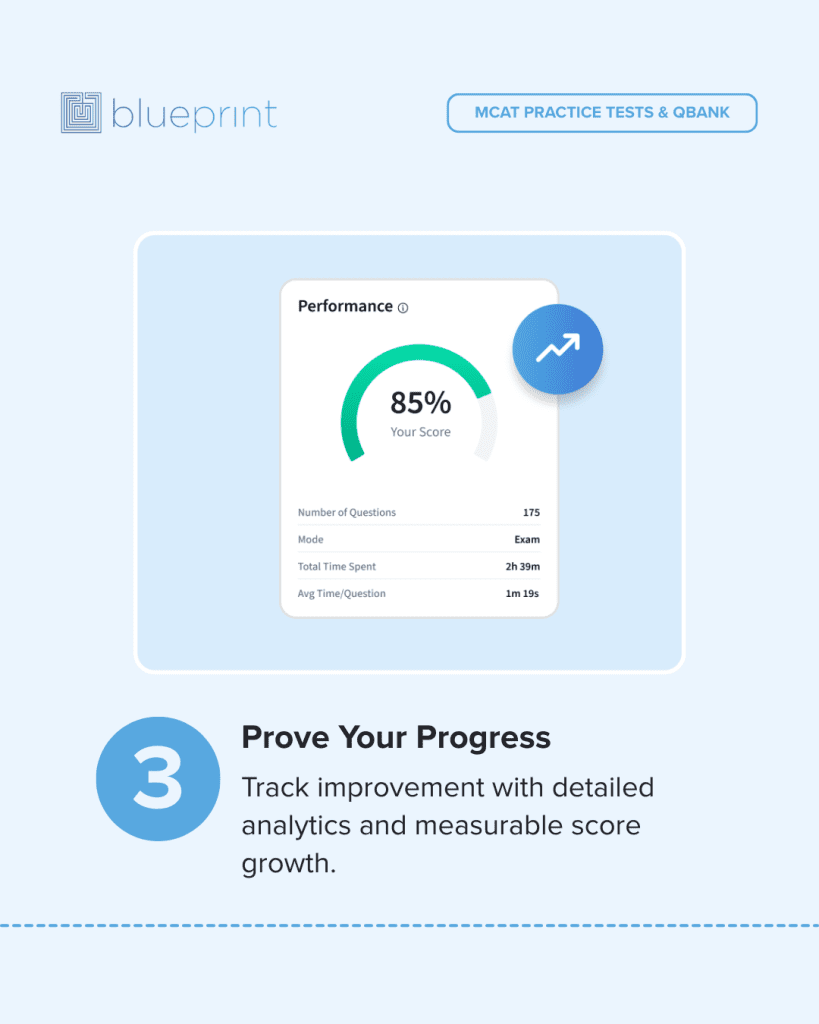
- Take another exam and measure your progress
Each cycle helps you refine your focus and strengthen the skills that matter most for your score.
Your Next Step: Get Started
Improving your MCAT score isn’t about doing more random practice. It’s about creating a study system where every step builds on the last one. Ultimately, MCAT prep tools work better when they work together.
That’s the idea behind Blueprint’s MCAT Practice Tests and QBank. With five full-length practice exams (plus one already in your free trial) and 5,000+ QBank questions, you’ll have everything you need to measure your progress, identify weaknesses, and practice the skills that move your score.
If you’re ready to dive in, you can explore the full Blueprint MCAT Practice Test and QBank system today.
Or, if you’d rather try it out first, start with a free Blueprint trial and get access to:
- A half-length diagnostic exam
- A full-length practice test
- Access to the QBank
- 10 modules from the Blueprint MCAT Self-Paced Course and more!

Further Reading
💻 How to Set Up MCAT Test-Day Conditions for a Practice Exam: Here’s a detailed guide to creating an MCAT test-day schedule for your practice exams that will help you feel prepared and confident when the real day arrives.
🤔 How Many Full-Length MCAT Practice Tests Should You Take?: Is more always better? Not when it comes to MCAT practice tests.
😫 Got a Low Practice MCAT Score? Here’s What To Do Next.: Getting a low MCAT score on a practice MCAT exam can be discouraging, but don’t worry. Discover what to do next to increase your score.