

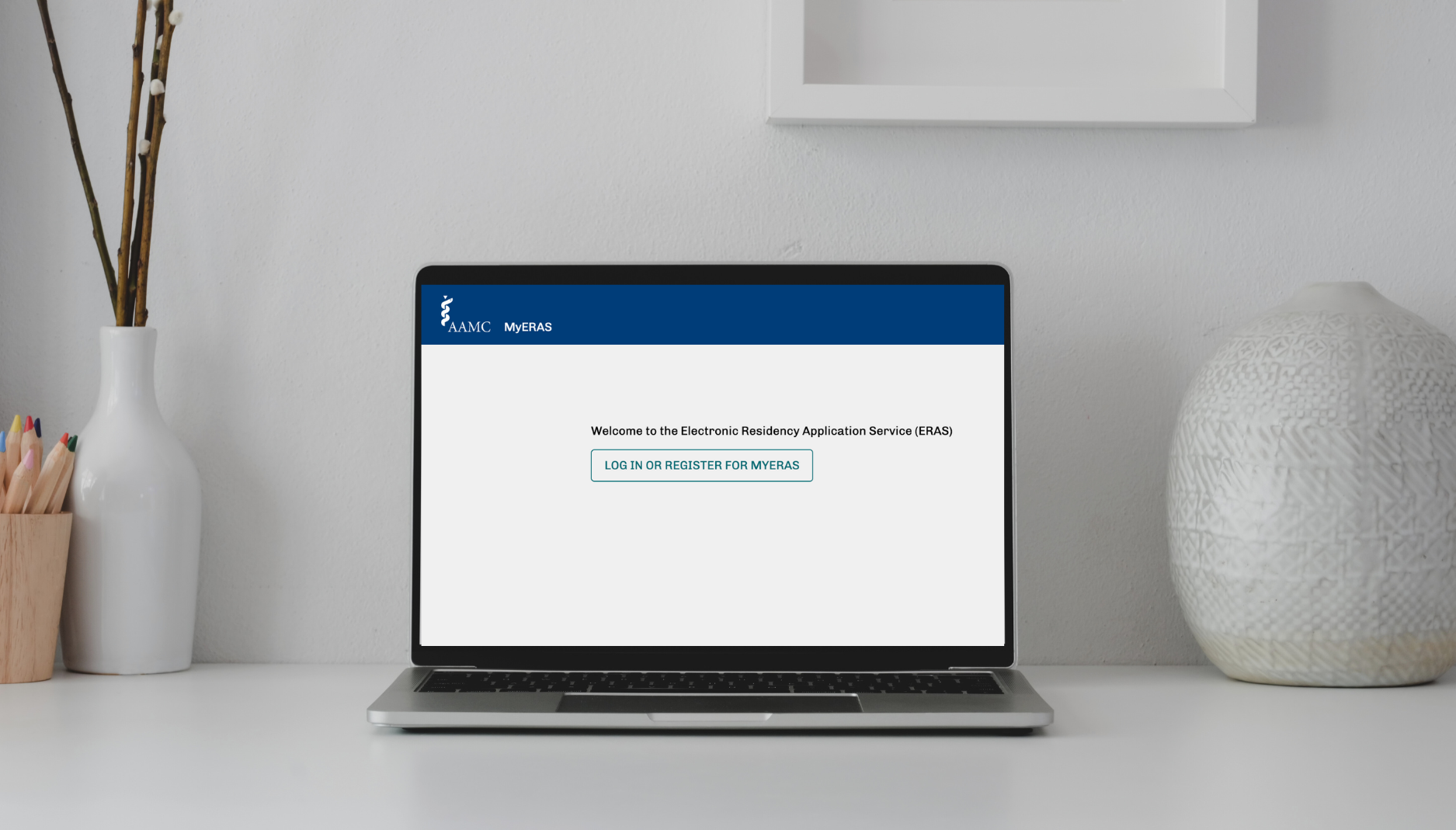
As the academic year progresses, the journey of aspiring medical professionals reaches a critical juncture—the process of applying to residency programs. Each year, the Electronic Residency Application Service (ERAS) undergoes updates to enhance the application experience for hopeful applicants and streamline the selection process for residency programs’ staff members.
For the 2026 cycle, there have been changes made that we will discuss below in the form of a hypothetical dialogue between a medical student and a residency advisor, the purpose of which is to explore these changes to the 2026 ERAS application. Let’s dive in!
For more personalized support through the residency application process, consider working with a residency counselor! Our experts will guide you through personal statement editing, interview prep, CV assistance, and more. Start your free consultation today!
Navigating the 2026 ERAS Application: A Counselor and Student Dialogue
[Scene: A cozy study room, adorned with medical textbooks and a whiteboard filled with colorful diagrams. A fire dances in the background as a seasoned residency counselor sits across his oversized armchair from a curious yet anxious cross-legged medical student, both eager to delve into the updates to the 2026 ERAS application…]
Residency Counselor: Good morning! I understand you’re applying for residency this year—congratulations on your journey thus far! I wanted to talk to you about some changes to the ERAS application for the 2025-2026 cycle and how they can impact your application process. Let’s discuss them to make sure you’re prepared to navigate this year’s process successfully. Tell me, are you familiar with the updates?
Medical Student: Good morning! Yes, I’ve heard that there have been some changes to the 2026 ERAS application, but I’m not entirely sure of the specifics. I would appreciate any information and advice you can provide.
Does the ERAS application change every year?
RC: That’s why I’m here! Each year, the Electronic Residency Application Service (ERAS) and the National Resident Matching Program (NRMP) implement updates to the residency application and match process in response to the evolving needs of medical students, residency programs, and medical education as a whole.
These changes are largely driven by feedback from prior years from students, advisors, program directors, and medical school deans who provide insights into what is working well and which aspects could be improved. The goal is to create a system that is more equitable, efficient, and better aligned with both applicant and program priorities.
Medical Student: That makes sense and sounds good, but can you give an example?
RC: Sure, one reason for these changes is to support a more holistic review of applicants. As the medical education landscape shifts—particularly with the transition of USMLE Step 1 and many medical schools changing to a pass/fail scoring system—programs are looking for additional ways to assess candidates beyond focusing solely on USMLE Step 2 test scores.
ERAS has responded by introducing new features in 2023 such as geographic preferences, program signaling, and the ability for applicants to highlight meaningful experiences. These tools help applicants better convey their individual strengths and fit with specific programs, while giving residency programs more context to make informed decisions.
What are the new updates for the 2026 ERAS application?
Specialty-Specific Questions
For 2026, the new ERAS application has introduced a few key changes to streamline the application process and make it more effective for both residency applicants and program directors. One change includes the new specialty-specific questions.
MS: I see. Can you tell me more about it and what I and my classmates can expect? How will changes to it impact my application process?
RC: Let’s talk through it. In the 2026 residency application cycle, ERAS will have new specialty-specific questions for applicants to Neurosurgery, Anesthesiology, and Plastic Surgery-Integrated. Applicants are required to provide responses to specialty-specific questions before sending applications to programs in these specialties.
These questions are designed to allow applicants to articulate their specific interest, motivation, and fit for the specialty in a focused and structured way. Importantly, the responses to these questions are only visible to residency programs within that particular specialty, which allows for more candid and targeted reflections.
MS: OK. Could you elaborate a bit more on how this will specifically impact my application?
RC: Sure. Essentially, the goal of these new questions is to give programs deeper insight into why an applicant has chosen their field, what experiences have prepared them, and how they align with the culture and expectations of the specialty. This change reflects the increasing emphasis on demonstrated commitment to a specialty and the importance of intentionality in the application process—particularly in highly competitive fields.
Because of this, applicants should take these questions seriously and avoid generic or recycled personal statement content. Instead, they should be ready to reflect thoughtfully on their journey toward the specialty, highlight relevant clinical or research experiences, and clearly express what draws them to that field. This is an opportunity to stand out and show genuine passion, preparation, and self-awareness—qualities that specialty programs value highly.
Non-ACGME Postgraduate Training
MS: Gotcha, are there any other noteworthy updates?
RC: Yes, there are changes to the Education Section as applicants for the 2026 cycle will be able to document non-ACGME postgraduate training, including details such as the accrediting body and program ID.
This change particularly will benefit international medical graduates (IMGs) or those who have completed training in nontraditional pathways. By sharing, this new feature allows applicants to fully represent their postgraduate education and clarify the scope and legitimacy of their additional training, even if it falls outside the U.S. ACGME system.
Interruptions/Extensions
Additionally, the “Interruptions/Extensions” section of the application has been expanded. 2026 applicants will be able to provide detailed explanations for any academic or professional gaps, including leaves of absence, delayed graduations, or time away from clinical duties.
Program Signaling
MS: Is program signaling still part of the application?
RC: Yes, the 2026 application will still include program signaling, which allows applicants to indicate strong interest in a limited number of residency programs. This helps programs identify candidates who are genuinely interested and may prompt a closer review of their application, potentially increasing the chance of an interview. The number of signals varies by specialty, and each program only sees whether it received a signal—not where else the applicant signaled.
Additionally, for the 2026 ERAS cycle, applicants to Anesthesiology and Plastic Surgery–Integrated will be required to submit a brief Program Signal Statement with each program they signal. In addition to selecting which programs to signal, applicants must include a short explanation—usually limited to a few hundred characters—describing why they are specifically interested in that program. This allows programs to better understand an applicant’s motivations, rather than a simple signal as was the case in years prior. The aim for implementing these statements is to help programs distinguish genuine interest and can support a more holistic review.
Geographic Preferences
MS: What about geographic preferences?
RC: Yes, geographic preferences will be available for certain specialties. Applicants will have the opportunity to list up to three preferred U.S. regions and optionally explain their reasoning for doing so, whether it is an area they trained in or a hometown. This helps programs understand an applicant’s location priorities and commitment to training in specific areas. Both tools are meant to improve application transparency and alignment between applicants and programs.
Additionally, for 2026, Otolaryngology and Orthopedic Surgery programs will pilot the ability to opt out of receiving applicants’ geographic preferences. This means that while applicants may still indicate their regional or location-based preferences in the ERAS application, programs in these two specialties that choose to opt out will not see that information.
The goal of this pilot is to assess whether removing geographic data can help reduce bias or overemphasis on location, encouraging programs to focus more on applicants’ qualifications and fit. For applicants, it means your geographic signals may not influence interview decisions in these specialties as much as they might in others.
What about residency interviews?
MS: Anything else?
RC: Yes, starting this July, the AAMC will partner with Thalamus to streamline the residency interview process for ERAS applicants. For the 2026 cycle, once you’ve registered your ERAS token, you’ll receive an email from no-reply@thalamusgme.com with instructions to create your free Thalamus account.
The aim is to provide a centralized platform (Thalamus) that simplifies interview scheduling, confirmations, and communication—all in one place. You’ll also have access to a mobile app (available on Apple and Android) so you can manage interviews on the go.
Reminder: These ERAS and Match-related changes are not yet final and may continue to evolve. It’s important to stay up to date by following official sources like the AAMC. For the most current updates and guidance on applying smart to residency, visit the AAMC website!
Final Thoughts
Stay informed, check regularly, and always consult your mentors or advisors when navigating new application features.
If you’re looking for more (free!) tips from Blueprint tutors to help you navigate the residency application process, check out these other articles from the blog:
- How to Make a Statement with Your ERAS Personal Statement
- Quiz: Should You Consider Residency Counseling?
- How to Maximize Your Chances of Matching With Your Dream Residency
- How to Get Standout Letters of Recommendation for Your Residency Application
- Residency Interview Tips & Tricks: The Ultimate Guide