


The USMLE Step 1 exam changed from a numerical score to a pass/fail scoring system in January 2022. While this came as a relief for many students who otherwise would have felt pressure to achieve a certain score, it also created some confusion. For example, even if there’s no Step 1 passing score, what do you have to do to obtain that all-important pass? Additionally, how do you interpret score reports for a pass/fail exam? And how do you know if you’re ready to test based on your NBME practice exams?
To address the concerns many students now have about Step 1, this article will cover the different score reports a student can receive from the USMLE and NBME, what constitutes a Step 1 passing score, and when you can feel relatively confident about being ready to take Step 1.
Let’s start by taking a look at how you should interpret a score report for either Step 1 or an NBME practice exam.
Breaking Down Step 1 Pass/Fail Score Reports
So, you just received a score report, either from the official Step 1 exam or an NBME mock exam. How do you read and interpret it?
What does a Step 1 passing score result look like?
Below is an example of a passing score report on the USMLE Step 1 exam:

If you see this, congratulations! Needless to say, you’ve passed the exam. Many students then search for more information about the margin by which they passed. If you do, you’ll be disappointed, as the USMLE doesn’t release any performance metrics with a Step 1 passing score report, including percentiles, percentages, or three-digit scores.
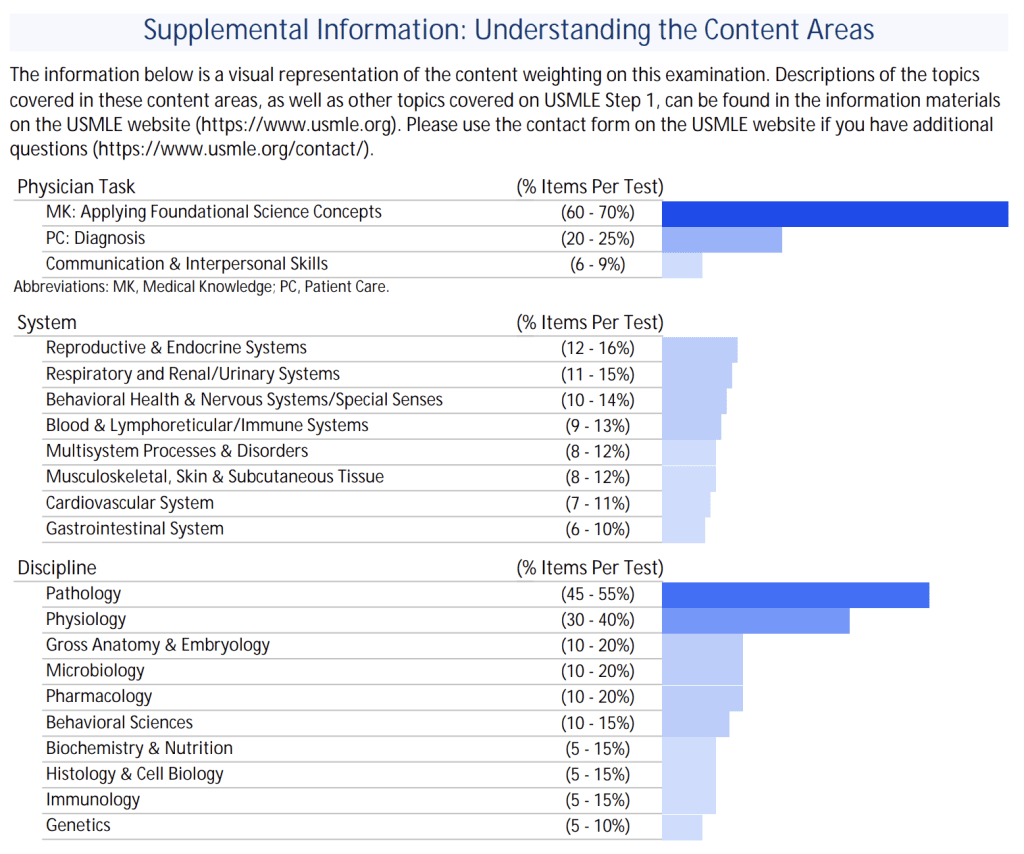
Supplemental Information
The Supplemental Information section highlights the different subject areas that Step 1 tests, breaking them down by Physician Task (e.g. Communication & Interpersonal Skills), System (e.g. Cardiovascular System), and Discipline (e.g. Pharmacology).
Don’t be fooled by the bars—they’re simply the weight of each subject area present on the exam, not your performance on them.
What does a Step 1 failing score result look like?
The failing score report is a little bit more informative:
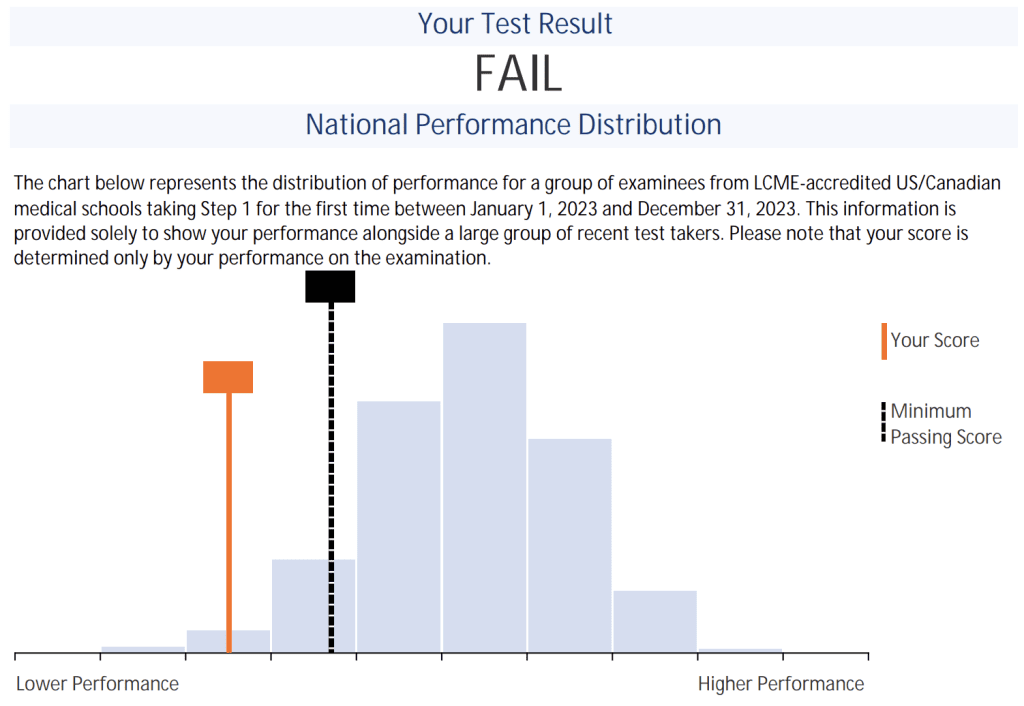
Below the test result, you can see a national performance distribution. This is a histogram of scores from recent test-takers at LCME-accredited institutions in the United States and/or Canada. You may look at the lower axis and wonder why there are no numbers. This graph is intentionally left vague and visualizes roughly how far you were from the passing standard and hopefully provide some insight into how you can structure your preparation for the retake.
Content Feedback
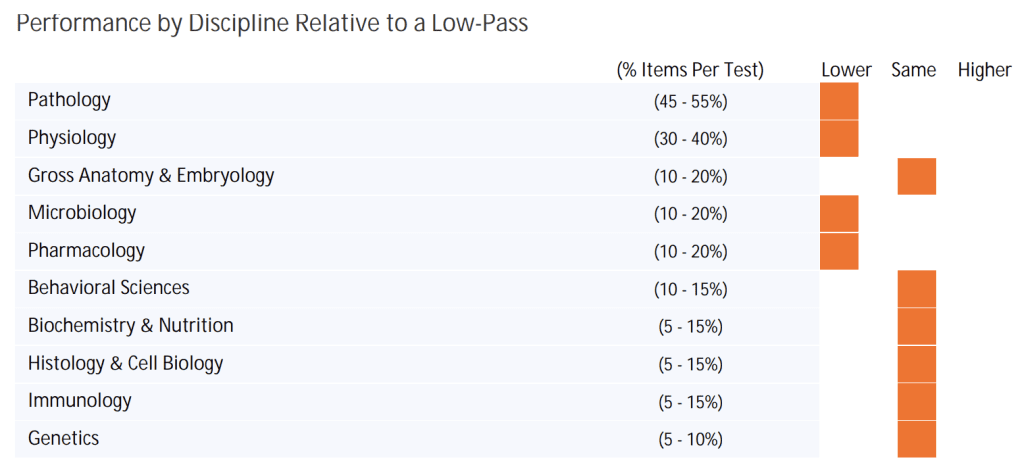
Although you won’t receive a three-digit score, a failing score report also includes content area feedback with information about whether you scored lower, about the same, or higher in that particular subject compared to someone who narrowly passed the exam.
For example, here’s a breakdown of how a person who failed the exam did in various content areas:
If it were still a graded exam, what would the Step 1 passing score be?
According to the USMLE, “On the three-digit score scale, the Step 1 passing score is 196.” Granted, this may be difficult to interpret—when completing Qbank blocks or an NBME/CBSE mock exam, you’ll likely receive a number equal to the percentage of questions you answered correctly.
Based on score reports from the NBME and historical data, a 65% correct rate is roughly equivalent to a 196 on the three-digit scale. Keep in mind that you won’t see any numbers on the official USMLE Step 1 score report. As we showed above, you’ll only see either the pass designation or a histogram showing your general relative performance.
Of course, receiving a 65% on a single Qbank block probably isn’t enough to convince someone they’re fully prepared to take the exam. You’ll want to take practice exams that simulate the real thing before sitting for Step 1.
With only six forms of practice exams offered by the NBME, many look to third-party resources to supplement their studying and gain more insight than they would from the NBME forms.
Additionally, the NBME forms only offer four blocks of 50 questions, while Blueprint Med offers two full-length Step 1 practice exams. As part of the tutoring package, our Step 1 practice exams have seven blocks of questions (40 questions in each block) in order to more faithfully replicate the test day experience.
Interpreting Your NBME Step 1 Mock Exam Report & Probability of Passing
Now that we’ve covered the score report you would receive from the official Step 1 exam, we can compare that to what you might receive on a mock exam report from the NBME.
The NBME score report looks very similar to that of the failing Step 1 report, but you’ll receive the histogram whether your performance is equivalent to a pass or not. Additionally, you’ll see a “Total Equated Percent Correct Score,” which is roughly the percentage of questions you answered correctly, adjusted for slight variations in exam form difficulty.
You’ll also receive an estimated probability of passing Step 1 if you test within a week. In the example above, it’s 87%. If you score above the range defined as LP (low pass), your probability will automatically be 99%.

Keep in mind that the passing probability is generated simply using the mathematical distribution across the histogram. In reality, everything from variations in your exam to unexpected test day events can influence your actual performance, so don’t take this percentage as a guarantee. As a rule of thumb, you generally want to be scoring at or above LP consistently for a few weeks leading up to test day.
Finally, much like if you had failed the official Step 1, you’ll receive content area feedback. Better to know on a mock exam where you have room for improvement than the real thing!
Further Reading
Best of luck on the road to USMLE Step 1! For more (free!) resources from Blueprint tutors, check out these other posts on the blog: