

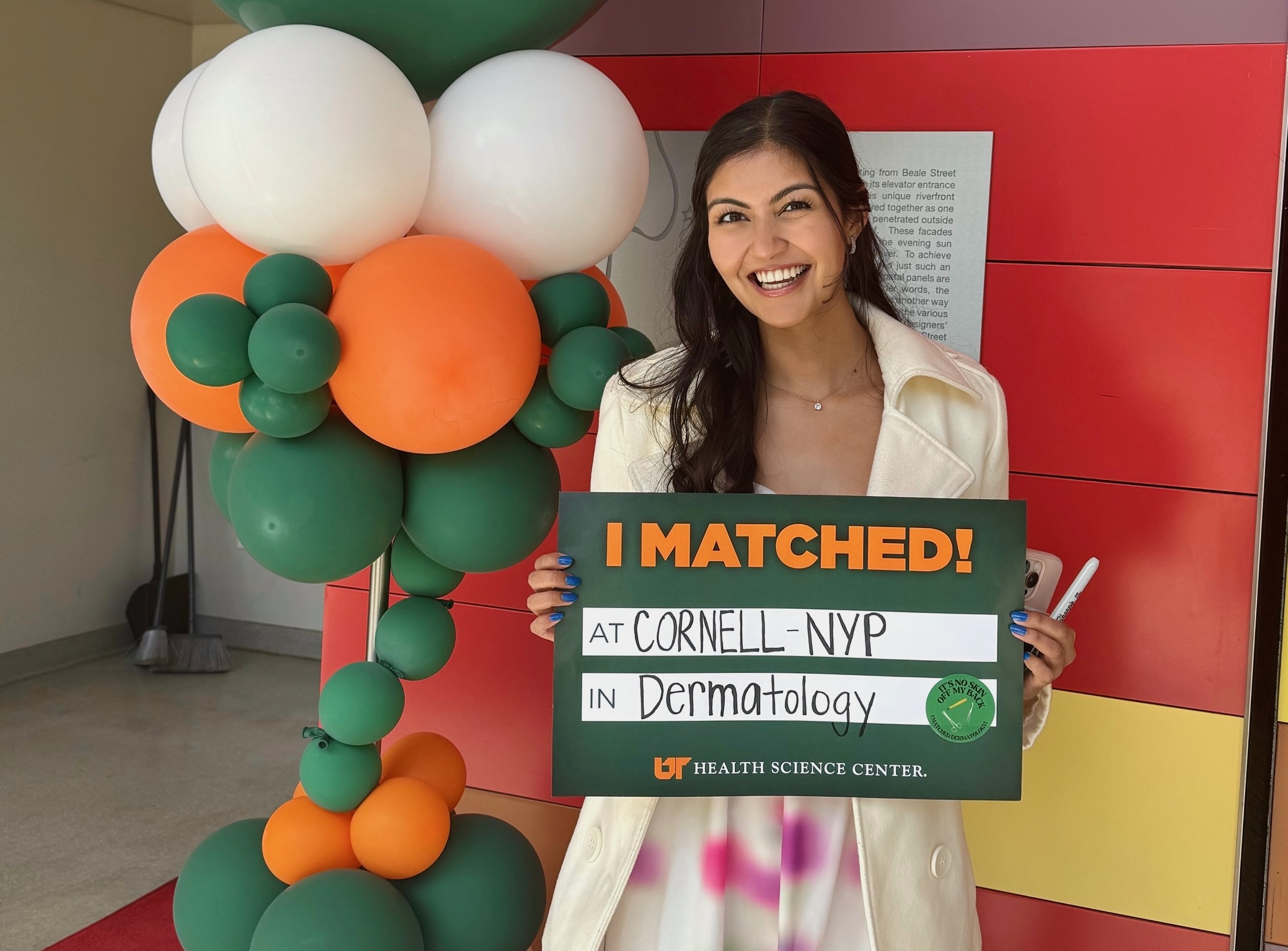
If you’re a med student interested in dermatology, you’ve probably seen the stats about how competitive this specialty is. While it can be daunting, with the right effort and preparation, you can also be on your way to landing a spot in a dermatology residency program!
My name is Nupur Singh, and I applied to dermatology during the 2024-2025 application cycle. To share a little about myself, I graduated from Washington University in St. Louis in 2021 and then went to my state school for medical school, the University of Tennessee Health Science Center. (Go Vols!)
Currently, I’m a PGY-1 resident completing my preliminary IM intern year at Lankenau Medical Center near Philadelphia, PA. Next year, I’ll be headed to New York City, where I matched into dermatology at Weill Cornell-New York Presbyterian!
Having recently gone through the application process, I can tell you firsthand: matching into dermatology isn’t a walk in the park! It can, however, be done. In this article, I’d like to help pass the torch forward, just like my inspirational mentors did for me, by sharing a bit of what I’ve learned from my journey.
How I Decided to Pursue Dermatology
During my first two years of med school, I realized I had a particular interest in histology and pathology—something I later learned wasn’t all that common. I was drawn to the fast-paced, detail-oriented, and nuanced nature of those subjects.
As I moved into my clinical years, I got a glimpse of the wide range of things dermatologists do day-to-day. From procedures to visual diagnostics, I really appreciated the patient interactions in the clinic, especially how patients could actually see the impact of their conditions and treatments. I also loved internal medicine, and seeing how fields like infectious diseases, rheumatology, and oncology all intersected with dermatology reminded me how interconnected medicine really is.
Those connections—along with everything else I’d experienced—were what pulled me toward dermatology. I knew it wouldn’t be an easy path, but it felt right. I officially decided I wanted to apply for dermatology in January of my M3 year.
Of course, your path to choosing a specialty won’t be the same as mine, but if my story resonates with you in some way, then dermatology could be for you!
If you think dermatology could be a good fit, it’s important to have an idea of what the road ahead will look like. To give you a better sense of the application process, let’s start by having a look at some basic stats when it comes to applying for dermatology residency.
Dermatology Residency: By The Numbers
The past 2024-2025 application cycle was one of dermatology’s toughest, with around 523 matched spots and 993 applicants (for a roughly 53% total match rate). Needless to say, given the stats, hard work and dedication are bare minimums when it comes to matching into dermatology.
Of course, you’ll want to do everything you can to maximize your chances of matching. But what, exactly, does that mean? It can be confusing and difficult trying to figure out what you need to do, so here are a few tips and tricks I learned along the way that can help you match into a dermatology residency program.
How to Get Into Dermatology Residency Programs
If you decide to pursue dermatology, you’ll need to do everything you can to be a competitive applicant. My advice would be:
1. Have (at least) 5 publications by the time you apply.
I knew coming into medical school that I wanted to give myself the best shot for all specialties, which meant trying my best in my preclinical courses and getting the highest grades possible.
I also started research projects soon after beginning medical school, and while they were in the non-derm fields of oncology and infectious disease, a lot of the skills I learned could be easily applied to dermatology research.
Upon starting school, I looked for journals that were indexed in PubMed and had no article processing fees (APCs). Sometimes I would email them and ask for a waiver since I was a student. I had to reach out to 20+ journals to find ones I could actually submit to, so be prepared to put a good amount of time and energy into this.
By the time I applied, I had ~15 PubMed indexed publications, which included multiple first author and dermatology-focused research papers.
Trying to get at least 5+ PubMed indexed publications by the time you apply for residency helps you stand out from other applicants and shows that you’ve participated in a variety of research projects.
Ideally, one of these should be in dermatology and you should be the first author on at least one publication, which highlights your initiative and completion of a project from start to finish.
To increase the number of papers they’re on, many students take a research year. This is becoming increasingly common, and it’s a personal decision whether or not to take one. For me, it wasn’t the right move. While I enjoyed research, I decided not to do it since the majority of research years are unpaid/underpaid and I didn’t want to take out more loans and further delay my training.
People who do take a research year often find it to be a positive experience. I’ve spoken to a few of them, and a lot of them found it incredibly valuable, both for the research parts of their application and for finding mentors and connections.
2. Aim for 260+ on Step 2.
Grades and board scores are obviously key parts of any dermatology residency application. With Step 1 now being pass/fail, programs place a lot of emphasis on your Step 2 score. I wanted to prepare for Step 2 in the best way possible, which meant studying hard for each shelf exam. If I did well on them, that would be great practice for Step 2.
I had a goal score of 260+ for dermatology and I knew this would mean a tough and unexciting dedicated study period. I went through my entire Step 2 Qbank during rotations and completed the full set again during dedicated. I took every possible practice test offered by all prep companies and the NBME and really prioritized my learning and test-taking skills at this time. Step 2 tutoring also helped me prepare for the exam with personalized support.
In the end, all the effort paid off: I got a score of 270+ on Step 2, which was a huge relief and something I was really proud of!
While scores aren’t everything, they’re definitely a key part of the application (especially now that Step 1 is pass/fail!), so it’s worth putting in the effort to do your best.
3. Find great mentors.
Finding good mentors is crucial to succeeding in dermatology! I was fortunate enough to have a home dermatology program, and my mentors here were extremely supportive. I was able to meet with them for advising appointments, work on (and finish!) a couple research projects with them, and get their advice on how to get into dermatology residency programs.
I also reached out to alumni from my school to learn about their application experiences. My two main mentors outside of my home derm program were a private practice dermatologist who does clinical research in Nashville, Tennessee and an infectious disease research mentor who could speak to my determination and work ethic when it came to research.
I focused on quality over quantity of mentors and found that it was more beneficial for me to ask the handful of people that knew me both professionally and personally for advice and guidance.
Questions I asked my mentors included: how to match in a region I have no direct connection to, whether or not to take a research year, and which programs I should consider applying to for away rotations and residency. I’d email my mentors every couple of months with updates regarding my research projects, cool experiences I’d had on my medical journey thus far, and any recent conferences I was able to attend. I found this to be a great way of staying in touch with them since they were able to celebrate my accomplishments with me along the way.
4. Complete your away rotations at programs you’re interested in.
The recommended number of away rotations for students with a home program is two (per the APD guidelines), and three for those without a home program. I chose to only complete the suggested two rotations, since away rotations can be incredibly stressful and expensive.
Deciding where to complete away rotations can be tricky. I’d recommend picking around five programs where you’d be truly ecstatic to complete rotations and ultimately match. Treat away rotations like an audition for your residency. (One of my rotations, Cornell, is where I ended up matching!)
Choosing Your Away Rotations
Choosing away rotations can be based on geographic location (I wanted to be in a big city), personal ties, or specific aspects of a program that interest you. I applied to five, accepted the first two invites I got, and withdrew my other applications.
Deciding how many to apply to is a personal decision, and I’d recommend getting guidance from a trusted advisor or mentor to assess what programs are the best fit for you. I also reached out to current residents at the programs I was interested in, and got to hear more about their reasons for choosing their programs.
At your away rotations, it’s essential to practice kindness and emphasize your interest in the program (without overdoing it). Be nice to your fellow away students as those are your future colleagues (and friends) in the field!
I tried my best to make a unique and memorable presentation on a more complex topic, like skin cancer screening recommendations in transplant patients or drug-induced leukocytoclastic vasculitis, instead of simpler diagnoses that maybe wouldn’t be new education for everyone.
5. Use your tokens strategically.
Applications for dermatology residency are vastly different now due to the program signaling process that started in the last few years. I had 28 tokens to give programs: three gold, and 25 silver. To me, these tokens were like hints to the program along the lines of, “Hey, I’m super interested!”
In the end, I chose to apply to only 28 programs, since I thought the likelihood of receiving an interview or matching at a place I didn’t give a token to was very, very low.
I think the token system is helping students focus on programs they’re really interested in, which means programs get fewer applications so they can go through each one with a little more consideration. Although it’ll be a few years before any data can be truly analyzed to see the effects of the token system, I think in theory it’s supposed to benefit both the programs and the applicants.
How I Used the Token System
In my case, I knew I wanted my application to be centered around academic dermatology and the intersections of dermatology and internal medicine, so I looked for programs that fit this mold. I felt like all dermatology programs were “reach” programs, so it was hard to narrow them down to 28.
Additionally, I knew I wanted to stay in the southeast/midwest/northeast areas, which ruled out all West Coast programs. I then looked at programs in cities I liked, namely New York City, Boston, Chicago, Atlanta, and Philadelphia among others. I also looked at programs that I thought were great fits for me as someone who’s interested in skin of color exposure and med-derm academia.
Finally, I attended a lot of the info sessions that programs often host at the beginning of application season to get a better understanding of how residents interacted with each other and with their faculty. Getting to see their enthusiasm for their program really helped motivate me to work on my application and see where I could truly fit in.
All this ultimately gave me a mixed competitive range of programs totaling to my 28 signals.
6. Trust your gut when it comes to rankings.
When I applied, dermatology interviews were released on three specific dates. By the end of the last release date, I had a total of 10 interviews from my 28 programs!
The most surprising part of the process was seeing how programs were similar to or different from what I envisioned. Most programs pleasantly surprised me with their congenial atmosphere and positive learning environment. I was impressed with how some programs, namely the bigger ones like Mayo and NYU, worked for under 10 weekends the entire residency.
I also looked into which programs had the most support for administrative tasks, such as call backs to patients or filing prior authorizations, since those things can often detract from time spent learning and studying.
Ask Questions During Interviews
A few questions I asked during interviews were about the lecture style for each program, and if they were on block systems (at the same place for a certain amount of time) or if it was a more potpourri style, where each half day can be something different.
I also remember asking what our personal clinics would look like, and how often those took place. Also, how much time would we have in specialty clinics and in-patient doing consults? Finally, how were residents mentored from faculty, and supported by the program during life events?
How I Decided Which Programs to Rank
Deciding where to rank programs was a huge decision, one I didn’t take lightly. I focused on how I felt with the residents and faculty, where the program was located, and if I felt like I fit in. I reminded myself it’s not possible to find a program that has everything you want, and that gut feeling matters most above all.
This led me to ultimately rank Weill Cornell Dermatology Residency in New York City as my top choice program. I felt like I really got a good sense of the community, loved its medium size, the in-patient exposure, and that I really fit in. I also hoped to experience other aspects of medicine like consulting and influencing, and thought there’d be no better place for that than New York City.
Key Takeaways
Overall, my main takeaways from this journey would be:
- It’s important to have a focus. For me, having a passion for academic med-derm and skin of color helped me narrow down which programs I’d be a good fit for.
- Even as a new med student, I focused on producing as much tangible research as I could. Presentations at national conferences and turning out PubMed indexed articles were my main priorities.
- Finding mentors that believe in you can be tricky, but I found them by reaching out to my home program faculty, my school’s alumni, random Google searches, and LinkedIn messages.
- Staying positive, kind, and optimistic truly does make a difference!
Remember, getting into a dermatology residency program is hard, but with the right dedication and focus, it can be done! Hopefully, these tips will help you achieve your dream of becoming a dermatologist.
Good luck on your journey, and be sure to reach out to Blueprint if you need any assistance preparing for the USMLEs. Our experts will help you score higher on Step 2 (with an average +38 point increase)!