

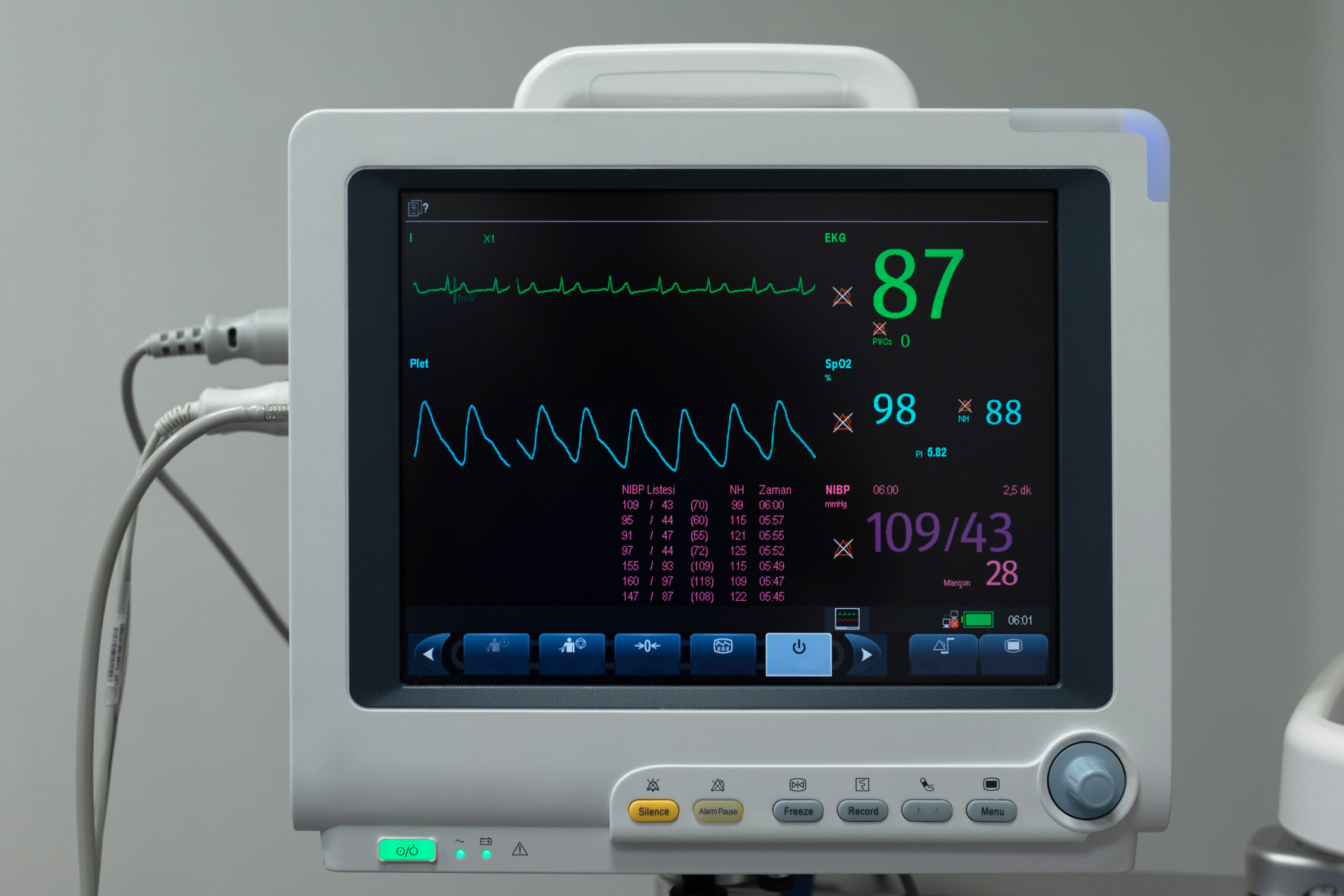
Electrocardiograms (ECGs) are a vital diagnostic tool used to assess the electrical activity of the heart. Despite their importance, ECGs are often among the most dreaded topics to learn in medical school. Many students find ECG interpretation challenging, as it requires a comprehensive understanding of cardiac physiology, complex arrhythmias, and pattern recognition.
I found ECGs to be a tricky topic at first because I tried to memorize the patterns instead of taking a structured approach to each one. Now, I feel comfortable reading most ECGs because I have an approach that can be applied to any of them.
In this blog post, we will explore why ECGs are challenging and provide tips for mastering ECG interpretation.
Why are ECGs so challenging?
ECGs are difficult for several reasons. They require a good understanding of cardiac physiology. Without this foundation, it can be challenging to recognize abnormal patterns on an ECG. ECGs can also be deceptively simple, as they only display a few lines and squiggles.
However, those squiggles represent complex electrical patterns within the heart that require an in-depth understanding of cardiac electrophysiology. Students must learn to recognize specific ECG patterns and associate them with specific cardiac conditions. Regardless of which field you decide to pursue, being able to recognize common patterns may give you the chance to improve a patient’s care.
Imagine, for example, that you are the surgeon/OBGYN/IR seeing a patient first thing in the morning. A concerned nurse hands you an ECG or telemetry strip and asks if the team should postpone a procedure because it is abnormal. But fortunately, you recognize it’s sinus arrhythmia and benign!
ECGs may not be heavily tested on USMLE exams, but you should still expect to see the more commonly tested findings such as atrial fibrillation or an acute STEMI.
Five Tips for Mastering ECG Interpretation
Tip 1: Create a structured approach
The most commonly used method consists of determining certain characteristics in a stepwise order, like so: Rate, Rhythm, Axis, Intervals, Ischemia.
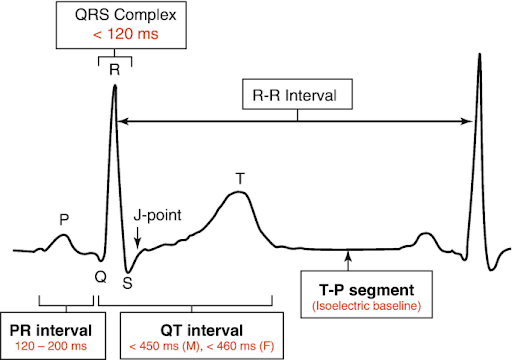
Rate can be determined by dividing 300 by the number of big boxes between R-R intervals (ie- 4 big boxes apart would be 300 / 4 = 75 bpm. You can also multiply the number of QRS complexes by 6, since the ECG is 10 seconds long, to get to the number of beats in 60 seconds.

For rhythm, determine if there are P waves before every QRS, which would signify the rhythm originates from the sinus node.
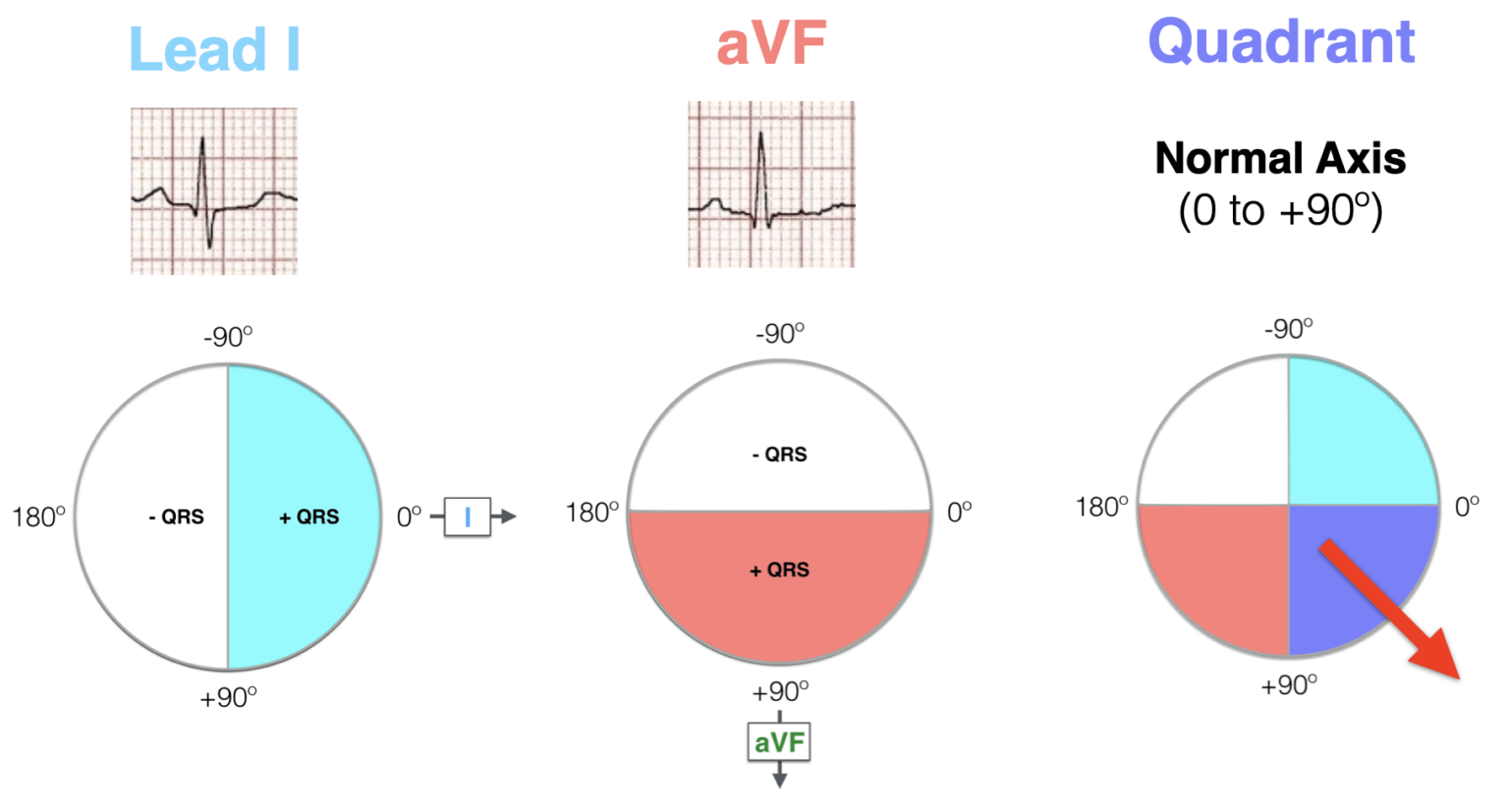
The axis is normal if the QRS complexes are positive in leads I and aVF.
The normal intervals to memorize are the PR (120-200ms), QRS (80-120ms), and QT (<500ms).
Look for ischemia in the form of Q waves and ST segment changes, whether they be T wave inversions, ST depressions, or dreaded ST elevations.
Tip 2: Develop a strong foundation in cardiac physiology
A solid understanding of cardiac physiology is essential for interpreting ECGs. Make sure you review cardiac anatomy, the cardiac conduction system, and the electrical properties of cardiac cells. It is also helpful to understand how different leads correspond to different areas of the heart.
Tip 3: Familiarize yourself with ECG patterns
Take the time to learn the different ECG patterns associated with specific cardiac conditions. For example, the S1Q3T3 finding in right heart strain and acute pulmonary embolism; or how about the delta wave and Wolf-Parkinson-White syndrome? You can use online resources or textbooks to practice pattern recognition. The most high-yield patterns include atrial fibrillation, STEMI, and heart block.
Tip 4: Practice, practice, practice!
The only way to become proficient at interpreting ECGs is by doing as many as you can. Start by practicing on normal ECGs to build your framework and then gradually work your way up to more complex ECGs. Get started here with Blueprint’s video on high-yield ECG topics for COMLEX and USMLEs.
You want to start with ECGs with very clear patterns since the ECGs you’ll see in practice are never quite as straightforward. You can use ECG quizzes to familiarize yourself with ECG patterns or Anki flashcards to reinforce your knowledge.
The key is to regularly use these tools (as opposed to cramming at the last minute!) to guarantee you’re really grasping and retaining the material.
Tip 5: Work with a study group
Group discussions can help you clarify your understanding, identify knowledge gaps, and learn from your peers’ experiences. You may even look for an ECG workshop at your school that provides hands-on training and feedback from experienced instructors. These workshops can be an excellent way to supplement your learning and receive guidance from experts.
ECG interpretation is an essential skill for any healthcare provider. Although it can be challenging to learn, by following these tips, you can improve your ECG interpretation skills and become a more competent healthcare provider. Remember, practice is essential to mastering ECG interpretation, so keep at it, and you will get there!
Additional Resources
Still looking for more support to strengthen your understanding of ECGs? We’ve got you covered. The key to feeling confident on exam day is knowing you executed an effective study plan with comprehensive prep resources.
That’s where Blueprint’s Med School Study Planner can be a lifesaver for test-takers. This tool reduces the stress of study planning, allowing you to create a personalized study schedule in minutes so you can see exactly what to study each day and know you’re on track!
And for even more (free!) tips to help you in med school, check out these other posts on the blog: