
Pursuit of Practice Episode #1: How to Get Into Medical School (Part 1): Medical School Personal Statements, Primary Application, and LOR Tips You Need to Hear
From choosing which medical schools to apply to crafting that perfect medical school personal statement, every decision carries weight when applying to medical school. What makes the process even more challenging is that much of what medical school admissions committees value most isn’t always clear, leaving many applicants unsure about what really helps their application stand out.
In this episode, Pooja, Blueprint MCAT instructor and MD candidate, sits down with Holly Proffitt, Blueprint Medical School Admissions Advisor, to break down what admissions committees are really looking for. With experience as both an admissions advisor and a medical school curriculum director, Holly shares insider insights that give applicants a rare, behind-the-scenes look at how admissions decisions are made.
Holly shares specific strategies for making your medical school application stand out authentically, explaining how admissions committees actually evaluate candidates, and offering practical advice for everything from timing your MCAT to securing strong letters of recommendation. By the end, you’ll understand not just what boxes to check, but how to present yourself as the unique candidate you already are.

Liking the podcast? Take the next step toward becoming a competitive medical school applicant with Blueprint MCAT Prep. From personalized study plans to expert-led courses, we’ll help you build the skills and confidence to reach your target score.
What You’ll Learn:
- Why finding your authentic voice matters more than following a perceived “magic formula” for medical school applications.
- How to identify and showcase your natural strengths instead of trying to fit a predetermined mold.
- The real role of MCAT scores as threshold elements and when they stop mattering in the process.
- What admissions committees actually look for beyond grades and test scores.
- How to use the MSAR tool to build a strategic, data-driven school list.
- Why context matters more than being “impressive” when writing activity descriptions.
- Practical strategies for getting meaningful letters of recommendation, even from large lecture professors.
More Resources
- Holly Proffitt | LinkedIn
- Medical School Admission Requirements™ (MSAR®) for Applicants
- How To Be a Top Medical School Applicant Free eBook: Download Now
- Premed Must-Haves Checklist: Download Now
Full Episode Transcript

Pooja: Regardless of where you are in the medical school application process, chances are you’ve got a ton of questions, and you’re not alone. In our very first episode, we tackle the ones you’re asking, plus a few you didn’t even know you should be.
The path to becoming a doctor is a whole range of things: exciting, confusing, anxiety-inducing, and gratifying, probably all at the same time. And the truth is that no matter how isolating it may feel, you’re not in it alone. Welcome to Pursuit of Practice, your go-to space for expert advice, real stories, and the kind of support that shows you what trusting the process actually looks like.
Welcome to Pursuit of Practice, the podcast for anyone on the road to becoming a physician and seeking a little or a lot of help navigating the way. The study of medicine and the pursuit of a career as a doctor can have a lot of unspoken rules and inside knowledge that could be hard to acquire until you’ve been through it. This can make navigating everything from choosing your premed courses and getting through the medical school application process to your starting days as a resident overwhelming, confusing, and isolating. Our goal is to help you get the answers to the questions you’ve been afraid to ask, find comfort in knowing you’re not the only one who is struggling, and build strategies and confidence in your, pun intended, pursuit of practicing medicine.
This show is brought to you by Blueprint Prep, one of the most trusted names in MCAT and medical school prep. I’m your lead host, Pooja Sonikar, an MCAT instructor with Blueprint and an MD candidate at Columbia University. In each episode, my co host and I dive deep into the real and raw challenges that many students face in their physician journey. We share honest stories, tackle tough topics, and dish out practical strategies for success. We’re here to give you the advice we wish we had heard when we started and remind you that you’re not doing this alone.
Today, we’re breaking down the med school application timeline and reflecting on our own experiences through the process. Joining me today is Holly Proffitt, one of Blueprint’s admissions advisors. She was born and raised in Fayetteville, Arkansas, went to school in Westminster College and has been extensively involved in mentorship ever since. She graduated with a degree in business administration and marketing, and English literature and got a master’s degree in journalism with a focus in public relations and communication. She also has a PhD from the University of Mississippi in higher education and administration with a research focus in career decision making behavior of medical students. She currently works as a curriculum director at an MD school in Fayetteville. She’s been working with medical students to assist them in their path to residency for the last 7 years, and she’s been described by her students as their med school mom and not only understands the hustle of balancing school, work and play, but is also known for giving advice to students that uplifts and motivates them. Holly, thank you for joining us.
Holly: Thanks for having me.
Pooja: So, we have a lot to talk about, but first for our listeners, I would greatly appreciate if you could walk us through your experience with admission so far.
Holly: Sure. My first role in higher education in general was I worked as an admissions counselor for undergraduate education, so working with students who wanted to do anything from agriculture to premed. So I worked with premed students a little bit there of what’s the right college for you and that was at a state school in East Arkansas. And then I transitioned into medical education. So since I had that background in admissions, even though I wasn’t an admissions advisor by title, I was actually the registrar and then the career advisor, I was always helping out with admissions.
So I was reading applications, I was communicating with students and giving them feedback on how they can improve their education. We hosted interview days. I would give feedback when we were looking at who are we going to admit. And so for 7 years at that school, I was part of that process. And now at the institution I work at, I actually serve as an interviewer for our admissions committee. So I’m not making the final decision, but I’m giving input on students, on when they’re coming and interviewing at this school, whether we should take them or not. So I don’t have the final say, but I definitely am giving input on that. So I love sitting on committees and getting to know students and helping them through their med school journey on both sides and now I do that for Blueprint as well. I’ve been a Blueprint consultant for 3 years. I’ve had a lot of success, thankfully. They send me really great students that I just get to help across the finish line. I had an MD PhD candidate last year get into Temple University. I’ve got some really great ones that are going to some really amazing schools. So, I can’t put it down is the problem.
Pooja: I mean, listen, it sounds like you shouldn’t. It sounds like you’re doing great work. And I also will say I appreciate you walking through all of that because I think it tells me and it tells our listeners that you are an expert in the room, right? You have a lot of authority in the space and you know what people are looking for from that other side because I think from our perspective, it just seems like the admissions committee is this holy deity of people who ultimately determine your fate. So it’s nice to have the curtain removed a little bit. So thank you very much for joining us.
Holly: We’re ominous for sure, but happy to show you how the sausage is made today.
Pooja: You guys are very nice people. In terms of the application timeline and primary applications, when someone asks you, how to make their primary application stand out? What is the first thing that comes to mind?
Holly: The first thing that comes to my mind is who are you and who do you want them to see? So a lot of times students think that there’s this magic formula of, I have to have this much research or I have to have this much clinician shadowing or I have to have this or that. And those things are true. We are looking for those things as threshold elements. But the most important thing to me is what do you want this who do you want them to see on paper? Because if you think about the admissions process, it’s like a meal. So the application is an appetizer and then the interview is the entree and then the acceptance is the dessert, right? Because that’s the best part. So really if you’re thinking about what do I want people to know about me, this should be the appetizer that really gets them ready for the meal. I want you to know my passion. I want you to know my interest in medicine and here are some things that I’ve done to demonstrate those things over the course of my life.
So the biggest challenge honestly is finding your voice and finding what do I want them to see about me? Do I want them to see a consistency of leadership? Do I want them to see a consistency of academic excellence? Do I want them to see that I’m very humanistic? All of those things can be there and happen, but if you don’t know the part of yourself that you’re trying to display, you’re not going to be successful in your application because it’s just going to be messy and it’s not going to be something that people want to dig into.
Pooja: Yeah, absolutely. So in terms of the different parts of yourself that you could display, you mentioned a couple of things. Can you give us a little bit of an overview of options that people can choose from? Obviously, everybody’s different and there will be a unique combination, but I think for those of us who are drawing a blank on even what to show about yourself, I think an overview would be super helpful.
Holly: So we can take you back to 22 year old Holly, which was many moons ago. But if I were applying to medical school, which I actually did consider for a half a second, and then I got into premed biology and I was like, I got a B, but this is not my natural strong suit. I’m not going to do this. But if we were back at mid 2000s premed Holly, if I was going to look back at my college experience, my college experience was really marked by leadership and who helping others. So if I’m looking at my resume, I wrote for the school newspaper. I was on SGA leadership. I was a leader in my sorority for all 4 years. I was a mentor, an academic mentor. All of those things were service to other people, right? I got paid to write for the newspaper. I got paid to be the intramural chair for SGA. I didn’t get paid to be a mentor, but all of those things were about helping. They were about informing, they were about supporting other people, they were in service to other people. But they also were things that taught me how to work effectively with others. They taught me how to manage difficult situations. They taught me things that are important for life.
And I think the biggest thing is looking at your tradition of what you’ve done. Literally, take a piece of paper, type, write, what have I done in college and where can I clump these things together? And honestly it was and then take them to a friend and say, what do you think this does about me? So one of my best friends said when I was looking for jobs and I was getting my masters, she was like, I don’t understand why you’re not a teacher. And I took that as the type of teacher that my partner is, of he teaches PE, a classroom teacher. I don’t want to do that. But no, I’m an educator at my heart. I’m an educator and all of these things that I’ve done have been a theme to that. And I think it’s just important to look at the things. For example, if yours is academic excellence, if you have excelled in every single course you’ve ever taken, if you were a tutor, if you were a researcher, if you were these things, put them in a group the best that you can and have that be the theme of your application so that you know who you are and who you stand for and what you stand for.
And the reason I say that is because when we start to look at building your application list for your medical school, there are certain schools that value certain things, right? You’re at Columbia. Columbia is an Ivy League institution. We know it’s a large academic institution. We know that they value research. We know that they value scholarship. So it’s important to know who you are to make sure that you’re making a good fit for the schools that you’re applying to. I mean, obviously you’re going to have onesie twosies. I was on the Dean’s list. I didn’t graduate with special honors. I value academic excellence, but I wouldn’t say that’s the hallmark of who I am. And so once you know that, you can also know how you’re going to address other things in your application where maybe you don’t feel as strong about them and how you’re going to compensate for those.
Pooja: Got it. Okay. So it sounds like the way for someone to stand out isn’t necessarily by trying to be this figure that they think is the best applicant, rather it’s better to lean into the strengths that you naturally have and accentuate those as much as possible.
Holly: Yeah, if you want to get real nerdy about it, there’s actually literature that in soft science, we call it soft science because you smarty pants do the hard science of the basic science. But in our social sciences, in our soft sciences, there’s actually literature that suggests that if you are aligning your career goals with what your natural strengths are, you’re going to have better success in your career overall and a higher level of job satisfaction. And so we say that with medical specialties too, when I was a career advisor, there are all these resources that say what are the things you’re naturally good at? How do we align that with the specialty that you choose? And it’s the same thing. Knowing who you are and having confidence of who you are as an applicant is going to translate into all the other parts of your application. So that’s why I would say just what are you trying to say? What, if you had to if you had to summarize yourself in three words based on your activities, what would they be? And if you’re having a hard time with that, then maybe we need to do a little bit of soul searching. And that’s not a bad thing. It’s just a, let’s look at it as a whole.
Pooja: Okay. Yeah, that makes a lot of sense. And it sounds like from what you’re saying that it is important to include that in the primary application and not just save that for other parts, correct?
Holly: Correct. Absolutely. Yeah. Okay. And that helps you decide what are your experiences going to be, because you only get 15. It may have been different when you were applying to med school, but now you only get 15 experiences that you can do. So what of all these things that I’ve done, what fits this theme of who I want to be to the admissions committee?
Pooja: Right. No, absolutely. Okay. So in terms of what premeds, let’s take a big picture of what premeds understand. Do you think that most people understand what the admissions committee are looking for when they’re assessing a primary application?
Holly: To be honest with you, no. I think the admissions committee seems like the Wizard of Oz. Oh, we’ve got to have this magic formula and it’s not. I mean, it’s there are threshold elements, right? We need to see that academically you’re qualified and by that I mean sometimes there’s a minimum MCAT, sometimes there’s a minimum GPA, sometimes there’s a minimum science GPA. Those are minimums, y’all. There are averages, right? There are some things that we know statistically if you don’t have XYZ, you’re not going to be able to sustain the rigor of medical school.
But the other things that I don’t think that students realize that we’re looking for are people with unique experiences, people who are demonstrating their passion and a commitment to service because medicine essentially is a service field. You’re serving your patients, you’re serving others, you’re serving your community. We’re looking for people who are going to enrich the academic environment that you’re in. When we start to talk about secondary, I’m in full on secondary season with my Blueprint client. And one of the things that we’re constantly seeing is how are you different? What are you bringing that is going to enrich the classroom and educational environment that you’re in with your classmates. So knowing that and being able to show that, showing that you have a consistent track record of service, of leadership, of academic excellence, it’s a lot of things. You are not just your MCAT score, you are not just your GPA. You are all of these things and demonstrating those things. So I don’t think that students know that. I think it’s a box check… and I’m going to say the R word Reddit. People are on Reddit and they’re like, I have this and I have that. Should I get in? Well, I don’t know because I’ve seen people with really great scores not get in because they go to their interview and they’re ugly. And by I don’t mean physically ugly. I mean that’s a southern term for their personality of their arrogant or their pompous. And they don’t play well with others. So it’s way more than just these boxes that you’re checking of I have this many service hours or I have this or that. It’s the whole package. So I don’t think the students know that.
Pooja: Yeah, no, I appreciate that explanation because I think that one piece of advice that I was given was that the personal statement activities and interview, the interview that you give, should all be cohesive with one another and that you’re being yourself and that self, that authentic self is present in every single thing that you submit to a school. Does that match the advice that you’ve given and that you’ve seen help with people succeed?
Holly: Absolutely, absolutely. Because, let’s talk about the hot topic right now, AI chat GPT. Yes. If you have AI or Gemini, Chat GPT, whatever your preferred large language model is, write your personal statement and it doesn’t sound like you, and then you go to your interview and they’re like, who is this? That’s going to turn people off for real because they’re going to be like, who is this person? I think that I always tell my clients what are you when they’re writing their secondaries or anything like that, what are you trying to say here? Because you’re jumbling up what you think I want to hear or what you think the admissions committee wants to hear versus what you’re actually trying to say about who you are as a person. And so that precision of knowing who you are and what you’re trying to bring up. One question you get a lot is, tell me about how you grew up. And students are like, do you want the time of day I was born? Do you want what do they want? And that’s the point. It is supposed to be broad for you to say, I grew up as a, I grew up upper middle class as in the South as with two parents who were a stockbroker and an X-ray tech. a first generation college student on my mom’s side, they want you to analyze who you are and be able to bring that because at the end of the day, student development wise when you’re in medical school, we want you to eventually be actualizing to that person of what kind of doctor you’re going to be. That’s your professional identity formation, which is really important to us. And so not to get too deep, but that’s what we’re looking for. We’re looking for those seedlings of are you going to be able to do that in a very stressful environment, in a pressure cooker?
Pooja: Yeah, I mean, listen, Holly, we’re here to get deep, you know? So I appreciate that because I think it’s a misconception that I think a lot of people have. And you alluded to it earlier too that there’s this checklist of things that you feel like you have to have. But I’ll tell you right now, in my class, there are a lot of people who didn’t do research and there are a lot of people who didn’t necessarily have the top MCAT or the top GPA. But everyone who is a member of my class, I think has a very strong sense of who they are and what they bring to the table. And I think that’s really important and I think as you progress through medical education, you apply for residency, you apply for fellowship, you apply for jobs, that’s going to be more and increasingly more important. Even if you don’t know what exactly you’re going to do with your life, knowing who you are and what you value, I think is an important characteristic that never truly goes away.
Holly: Well, and as you are submitting your residency application next week, this is going to be the same thing of, okay, so now we’ve gone from this broad thing of I want to be a doctor to now I want to be this type of doctor and I want to be in this type of environment. And it’s just the whittling. Think of yourself as a big thing of clay and we’re whittling and making who you are. That’s part of life as becoming a professional. And it starts with your application. And that’s where we can see the maturity of this person’s ready to embark on this journey and we feel like they can handle it versus someone who is not quite there yet. And it doesn’t mean not now ever, just maybe not yet. There’s a little bit more soul searching, a little bit more activities and that’s why we want you to do activities. That’s why we want you to do these things so that you can narrow down that focus and show us that maturity.
So it’s not just putting stuff into boxes, y’all. Medicine is a journey. It is a financial commitment. It is a time commitment. It is an emotional commitment. It’s sacrifice. You can speak to all that, Puja. You’re living it right now and you got that ahead of you in your residency. And that’s we really are looking for those things on the application to see do you want this enough to give up all those things that we’re asking you to give up.
Pooja: Yeah, right. I completely agree.
Holly: Because it’s our responsibility. It’s our responsibility to ensure as much as you’re capable to be ready for that commitment. That’s a big responsibility for us.
Pooja: It is. It is and you guys you handle it well.
Holly: We try. Sometimes better than others when you’re up to your eyeballs and applications trying to decide who to interview and who to accept and all that. I mean, we take that seriously. It’s a big responsibility for the school and for your future success, but also for your future patients. Because I mean, I’m a curriculum director. I take very seriously what I’m teaching my students because that affects their future patients. And that affects generations of people who are going to see these people as physicians. So it’s a big deal.
Pooja: It is, it is, it is. So I want to move ahead into our second segment which is about the MCAT. And we’ve talked about it already, but I feel like there are there’s a lot of data that is built into your application. And the MCAT can be seen as an objective data point. And you mentioned, people will go on the R word Reddit, right? And they’ll talk about it and premeds love freaking out about it and it seems like a centerpiece of the application almost. And I wonder from your perspective as people are thinking about preparing their applications and applying to medical school, let’s start from the very beginning and just talk about when you think is a good time to take the MCAT.
Holly: So, I have to answer that question with a question. How much time do you need? So, I am not a strong standardized test taker. I need a lot of prep time. And so it depends on what application cycle are you looking to go for. There’s really this fine line of that and you can speak more to this than me. I never took the MCAT thankfully. that there are certain things on the MCAT that you need to have learned. So, do you need to have taken at least one semester of organic chemistry to be successful on the MCAT? I don’t know, do you? You feel like you do?
Pooja: I think so.
Holly: Okay. So typically, if that’s the case, that’s in your sophomore year, right? of college. So what I would recommend then is really sometime in your junior year, if you’re wanting to go forward with an application to start medical school as a traditional student, going from straight from undergraduate to graduate school or to professional school. So I say that in that maybe we start doing some prep in your sophomore year, just some questions or a self Kaplan course or whatever is provided through your institution. But really taking the exam in spring, early spring of your junior year of college because you will have had most of the things that were required on the MCAT. And then you have time that if you get your score in January or in February, March, applications open in May, if you need to take it again, you can because the last score that schools look for is October.
So unfortunately, I’ve got a client right now who she did not do as well as she wanted to, and now we’re having to talk through, are we applying this year to certain schools or are we taking a whole another year to study for the MCAT? And so it’s this really fine line of how much time do you need, where are you scoring on practice exams, are you going to take a prep course, being able to build that time in. So it really just depends if you know straight out you’re going to do a gap year, cool. That’s fine. No pressure. We’ve got time to be able to take the MCAT. If you are not going to do a gap year and you want to go straight in from college, then or even if you’re a non-traditional student and you’re doing a postbac, you got to back it up to the application opens in May, the last MCAT they’re going to take is in October. So how much time do I have to prepare in that amount of time?
Pooja: Yeah. No, absolutely. That makes a lot of sense.
Holly: It’s a really a weird game to play.
Pooja: It is a weird game to play. And I wonder we’ve talked about MCAT scores, so I think we should address the elephant in the room which is does the MCAT score actually mean something to an admissions committee and what can it mean?
Holly: As a threshold element. Just as a basic threshold element. So it can it can be the yes or no. It really can at a minimum. It can be the difference at a wait list versus a yes immediately. So most schools, and we this is the time to talk about the MSAR, which is the medical school application requirement tool for the AMC. The MSAR is a application you can pay $29 a year to be able to have access to this website and it provides information on all LCME accredited schools. So that’s your allopathic institutions in the United States and Canada. So I can go in and I can see wherever, whatever school I want to look at, Columbia, I can see what their average is and if they have a minimum. So if I’m looking at Columbia and their minimum is, I don’t know, let’s just call it 510, but their average is a 525, I know that if I don’t have a 510 at Columbia, I’m probably not going to get a look. But a 510 at a lot of state schools is you are in. What else do you want? What do you need? So that’s where you really have to decide of how much time and energy am I going to put in to get either, depending on what’s kind of school you want to go to. A lot of people want to go to Ivys, a lot of people want to go to MD PhD’s. Some people are like, I want to be an MD or a DO in my home state.
So that varies greatly. So it’s a threshold element to see if you’re going to get an interview and then a lot of times it’s a leveling out of, I would take a lower MCAT sometimes or recommend a lower MCAT person versus someone with a higher one if they were a better fit to the mission. So it’s a yes or no for a threshold element, but it’s a really a sliding scale once you have applied and have interviewed on whether it’s accepted or not. It becomes less of a value add when you get past the interview in my opinion.
Pooja: Okay. So it seems like it’s a threshold to decide whether or not you interview, but then afterwards, that number doesn’t necessarily matter as much as the context of the person and whether or not you said it’s a fit to the school’s mission.
Holly: Yep, that’s what I to tell people in residency too, they’d say, oh, I have lower board scores. And well, that doesn’t matter. If you get to the interview, we’re not worried about that anymore. You don’t even bring it up. Unless they ask you, you’ve passed that part. Same with GPA. If you’ve passed the threshold of the minimum to get an interview, don’t talk about it anymore. Box is checked. We will handle the rest. And before we get into interviewing, there’s a most schools have closed file interviews, which closed file means that if I’m interviewing you Pooja at my institution, I have no idea what your stats are. I have trusted the admissions committee that you have met those elements and I am purely here to get to know you and make my recommendation about your passion and your interest in medicine at my institution. So a lot of students think, oh my gosh, everybody’s going to look at my MCAT and GPA. Mostly only the admissions committee.
Pooja: So speaking of MCAT and GPA, I know those are metrics that people can use to evaluate how competitive they are for certain schools and meeting that threshold. I wonder if you could talk a little bit about the MSAR tool and how students can use that to understand where they fit in a school’s typical score range.
Holly: So I love the MSAR for a lot of reasons. One, you can pick your schools. and by the way, we’re not getting paid by the AMC. No, no funding to Holly or Pooja for promoting the MSAR. It’s just a really great. I have no conflict of interest to disclose in this presentation. But it’s a really great tool because then you can build your stats around where am I? Where do I fit with other people that they’ve accepted before and what’s their threshold element.
So I love the MSAR to be able to start to build that list because people will say, well, there’s so many medical schools, I don’t know what to do. I tell students to talk about region, where do you want to live, what kind of patient population do you want to serve, things like that. But then we can go to the MSAR and we can say, okay, here’s the GPA, here’s the MCAT, here’s the average GPA of the accepted student from last year and here’s where I fall. And then what I tell my students is, if you’re a certain percentage under, that’s a reach school. If you’re right at, that’s a mid-level school, we’re probably pretty sure you’re going to get an interview and get in. And then one’s where you’re well over are typically safety schools. And so then we build our application strategy based on that. If we’ve got a lot of reaches, okay, what are we doing here? Let’s start to work back through this.
Unfortunately, there isn’t a tool like this for osteopathic schools, but a lot of osteopathic schools you’ll just have to do a little bit more research and go to their websites or ask admissions what, are their averages? And what I would tell students, they would say, well, I don’t know why I got in or didn’t get in. And I’d say, well, did you ask them what their averages are? And they’re like, oh, it was this. And oh, and you had this. So read between the lines. We can tell that the MCAT was or the GPA was the thing that we were missing. But it’s really important to guide your list based on data because then you can save yourself some money, you can save yourself some heartache of having an accurate self-appraisal of where am I in my readiness to apply this year based on these things.
Pooja: Yeah, no, absolutely. And for those of you who are Googling this as we’re talking about it, the MSAR tool is the medical school admissions requirement and it’s a portal that you can pay for. I think it’s like 50 bucks or something for a year subscription which
Holly: Oh, I think it’s 20, 39.
Pooja: Even better. Even better. But it’s roughly like $39 or so for a subscription for about a year and you can use it to access the data that Holly described and so for anybody who is interested in that, I definitely recommend it because it just allows you to be more informed in making your decision. Especially because Holly was saying, there is where you fit in the application process, but then there’s also the idea of how do you fit to the school’s mission? And I think both of those things combined ultimately determine a lot of your application and how you’re going to present yourself and present different components. And I know for me, it’s something that I used pretty extensively.
I definitely used the MSAR to evaluate, okay, I need to have, I think I divided it into thirds, so I had a third reach schools, 1/3 match schools and then 1/3 safety schools. And I found it to be super helpful in creating that list because then once I had my school list, I then looked at the missions and was like, all right, these are the things that I need to do and I worked backwards to combine what the schools I’m applying for are looking for and what I have to bring to the table. And I think that’s a really smart way to go about it for any of you who are working from scratch at the very moment.
Holly: Yep. It’s $28 and I paid $2 in tax. So it came out to $30.73. So for me, that’s four less, three, four less coffees from Starbucks.
Pooja: So, that’s so depressing.
Holly: I know. I know. But we could budget that appropriately to get the MSAR if we really needed to.
Pooja: Yeah, absolutely. So, in terms of our next segment, I wanted to jump into the personal statement. Because we’ve been talking about it a lot and especially in the context of the primary application, but the personal statement I find is can cause a lot of panic and I know it’s certainly did for me because the process of writing a personal statement and balancing what we think admissions advisors want to hear versus what we think is true to ourselves can be really tricky. And so I wanted to ask you first, if a personal statement covers topics that are cliche, is that okay? So for example, I wrote about a sick grandparent and a lot of people in my school actually wrote about grandparents. And so I wonder, is that okay to write something that a lot of people are covering or is that not ideal?
Holly: Sure. It’s fine if your perspective is unique. So what are you trying to say about your grandparents? I see a lot of my grandparent had cancer and I watched the providers and that’s why I want to be a doctor. Fine. But what specifically did you see about the providers? Was it that they were caring? Was it that they were committed to service? Was it their medical knowledge? It can’t just be this bad thing happened to me or this sad thing happened to me or this person was really great. If I was going to write mine about my grandmother, it would be that her work ethic was undefeated and I am so proud to have that quality because I know it’ll make me a great physician.
So I don’t have a problem with people talking about the same kind of things. It’s a matter of how are you going to talk about those things to make you unique and to draw a parallel to why you’ll be a great physician. So another one I see a lot of is that there was an emergency and I felt helpless. Okay. So why does that helplessness matter? Why does the helplessness, how is that going to make you be a better doctor? Because you want to serve a community that is often underserved and they can feel helpless at certain times. You just have to unpack it more. So topics are only cliche if they follow the same pattern of not being unique to your story and why it’s important to you.
Pooja: Now that makes sense. That makes a lot of sense. I guess I wonder in terms of topics that are cliche and things. Another misconception that I think a lot of people have is about the hook. And I think people obsess over having a hook that is catchy and that brings the reader in. Is that really necessary?
Holly: I actually would be opposed to it, having a hook if it’s not going to relate to the rest of your story. So I have it all the time. I see personal statements and what does this story have to do with anything else in your document? Literally nothing. And so you could have a hook, but it has to relate and weave through the rest of everything else. So if we were going to talk about my grandmother, I would start with the features that she had. So my parents are very fair complected, blonde hair, blue eyes, hazel eyes, and when I was born, I had jet black hair, which I now color to be a little bit darker, but not it’s not jet black. And my parents were like, who’s baby is this? This does not look like us. Well, it was very obvious I looked like my grandmother. And so I would probably tell that story about being born and the fact that I don’t look like my parents, but if you look at a picture, you can tell I very easily look like my paternal grandmother and that my paternal grandmother gave me more than looks like her. She gave me a strong work ethic. She gave me a belief in myself and the ability of what women can do. And so you can see there that I took this hook of a baby being born and not looking like their parents to these qualities about this woman that will make me a great physician.
I had a student who I was reading their personal statement yesterday, growing up and talking about growing up in a house of educators, but then the rest of the personal statement didn’t have anything to do with education. So what’s the point of you telling that story? And why just needed a hook? Okay, well, you also talk about growing up in a rural part of the state. What if we made these qualities that you’re talking about in your personal statement relate to a rural environment because she talked about adaptability, having grace with each other and teamwork. So we changed it to be, it takes a village to be successful because statistically people from rural areas don’t go to college or they don’t go to medical school. And that’s nothing against them. It’s just you don’t have the resources to do so. So we changed the hook to be that instead and it made her personal statement flow so much better. It was just this small change. And so you have to ask yourself, does the hook make sense with the rest of the stuff that I’m trying to tell? Or else we read it and what? Why are you telling me this story? It doesn’t go. You got to think about the bigger picture. It’s the same thing I said about your application. What do you want me to learn about you?
Pooja: Got it. Okay. That is super helpful. Thank you for outlining all of that. And I feel like it does seem like a catchy hook is helpful, but not at the cost of creating a cohesive application, sort of like what we talked about earlier. If you have to choose between a catchy hook and a cohesive application, the cohesive application that is true to yourself wins every single time.
Holly: Absolutely, because we can see that consistency and we can see that effort throughout the entire application.
Pooja: So I have another question and I ask this partially for our listeners but also partially for me because I’m working on a personal statement. I’m looking to submit it in a couple of days but it’s hard to know when is the personal statement done?
Holly: I actually answered this question yesterday for some students when you can literally give no more. So my husband is a coach I said and when we work out, it’s to failure. And I know failure sounds like a nasty word, but it literally is I can give no more of myself. And as an advisor, I can tell when a student, when I’ve sent it back for edits and the changes aren’t happening anymore and I have to say, okay, your muscles are tired, we’re done. Is this your best effort? So to give an anecdote from my dad, my dad when I was in college, I did not do so well a couple of semesters, had a little too much fun and my second semester that I had a little after a conversation that it was if you don’t do better, you’re going to come home and go to community college. I got a 2.8 and the rule of my dad was a 3.0. And he said he called me, I was on my way to go see a friend and in tears waiting for this call for him to rip me out of college and tell me I have to come home. And he asked me, he said, did you give it everything you had? And I was like, no, I didn’t. And that’s the problem. Do better. The next semester I got a 4.0.
So I have to say to my clients, did you give it everything you have? Even if it’s not perfect, even if it’s not the Pulitzer Prize winning, if they can look me in the face and say yes, and then we’re done. We’re done. You just have to ask yourself, is this my best effort? Is this the best I can produce? And if the answer is yes, then it’s good enough because you literally can do no more. So it’s the same thing when you’re studying, there’s a point of diminishing returns. We just got to be done. So that’s what I tell people. It’s to failure. It’s to I literally have given you everything I can. If you haven’t given me everything you can, then you have another revision in you.
Pooja: Got it. Okay. That is that is helpful. And I also feel like that’s a pretty good end marker for a lot of people too being like, all right, I literally can’t think of anything else that I can add, take away, edit. Therefore, I’m done. I know another follow up question I guess I have about it is for those of us, as you know, many premeds and med students are type A perfectionists. What do you say to the person who feels like it’s never done even if they feel like they have nothing to give?
Holly: Without being sarcastic, I would say, welcome to life and growth. That is life as a professional. There are going to be times where, I’m a mom of four, I work full time, I’m married. There are some days that I just don’t do a great job in one of those three things or in all of those three things. But I have to keep moving on. So I would say, it’s to whose standard? Is it not good enough for you? Because you have unrealistic expectations or it’s not good enough because there’s a lot of errors in it or the ideas aren’t unique or you haven’t put in your best. And so what I would say is that’s when you need to seek wise counsel. That’s when you need to have someone who knows you well, look at it, who’s going to be honest with you. You need to have someone an advisor at your school or something like that or a mentor look at it and see what they think. Because if it’s just an idea formation, sure, that’s fixable. But if you’re being unrealistic with yourself that it’s going to be the most perfect, beautiful thing you’ve ever written, that’s unrealistic. I was told during my dissertation, the best dissertation is a done dissertation. A best for the best personal statement is a correctly done personal statement. It’s never going to be perfect in your eyes because you’ve got too much weight put on it. This is the thing that’s going to get you into medical school. Uh it’s a part of the whole. So I would say is it the effort statement or is it the fear and the anxiety of the weight of this statement? I can’t really help you with the latter. You have to accept that.
Pooja: Okay. Yeah. I mean, listen, nothing about this is easy, but I think that’s part of the process.
Holly: Well, that’s the maturity thing again, right? You got to know when you got to be done. You got to know when it’s time to walk away and be good with it.
Pooja: So, another final question I have about personal statements is what is the biggest mistake that you’ve seen in them and is there anything that you think as a general rule people should avoid doing?
Holly: Yeah, I’d say the biggest mistake is not putting enough effort in. And so that can mean a lot of things, not enough effort in your idea formation, not enough effort in your editing. So having mistakes, spelling mistakes, grammar mistakes, y’all, you heard my bio, I majored in English and I have a degree in journalism. Punctuation goes inside quotations, not paying attention to things like that we learned in sixth grade grammar, using the wrong there they’re their. Those things show a lack of attention to detail or just a lack of general knowledge that give pause. So I would say the biggest thing to avoid is just not putting the appropriate amount of effort into it because you don’t want to or you don’t think it’s necessary. It’s same thing goes for your application, reading over it with a fine tooth comb. People make mistakes, that’s okay, but not doing what you need to do to make sure it’s the best it can be, that’s a death sentence.
Pooja: Yeah. No, absolutely. I completely agree with that. And I think it makes a lot of sense that there’s two levels of effort. There’s the actual mechanical structure of your application, and then there’s also the content of it. And so it’s important for people as they’re going through it to make sure they’ve gone through both. And I know for me, I wrote several different versions and had many revisions and had many eyes on it. And for my residency applications, I’m literally doing the same thing all over again. But it’s that amount of effort that’s really important. And truthfully, I think there’s a lot of strength that comes from putting a lot of effort into your personal statement because it forces you to think about who you are and how you want to come across in the rest of your application and in your interviews and in everything. And it kind of at least for me, helps me do the soul searching that is necessary when you’re applying.
Holly: Yeah, it’s that precision.
Pooja: Yeah, exactly, exactly. Now that we’ve talked about the personal statement, I want to dig into the activities and experiences because it’s on the primary application and it’s a big part of it. But the focus of it, like we’ve alluded to earlier, is a little different and it seems easy, but writing those blurbs can honestly be deceptively hard because you have less characters to do it. Why do you think students struggle the most with the activity section?
Holly: I think it’s because they can’t decide how it needs to be done. There’s a couple different facets of that of what do you think we want to hear and what’s important and then how do I actually write it? So a lot of times, when I’m looking at applications, I get folks who are trying to be super narrative and tell me, and this is how I felt when I walked into the operating room for the first time as a scribe. Don’t care. You can tell me that story in an interview. That’s great. I do not need to know that on your application. I need to know what did you do and what was the context of it.
So scribing is a very common activity on a medical school application. I want to know what kind of an environment were you in? How many patients did you see with your physician in a day? How many physicians did you work for? What was the patient population? Because when I’m looking at your activities, I’m looking at what is your fit? What is your fit to this institution? What is your fit to preparation to medical school? And if you’re giving me a narrative about my heart was beating out of my chest, that tells me none of that. That tells me that it was good for you for that physiological response. So it really, I think students get really challenged on what’s important to show us and how do you actually do it.
Pooja: Right. No, absolutely. Okay. And I guess with that in mind, with especially when we’re talking about impact and we’re talking about the number of patients and the actual metrics of it, what would you say to someone who doesn’t think their experiences are impressive enough or they think I didn’t see that many patients or I didn’t do this many things.
Holly: I guess I would ask you a question, impressive to who? Because that’s… not most people don’t do those things, right? Like 1% of the population are physicians. So the fact that you had that kind of job, the fact that you had that kind of experience that you went out of your way. And honestly, we’re not looking at it being impressive, we’re just trying to understand. So, I you know, you live in New York City. I live in Arkansas. If I were to talk about an emergency room in rural Arkansas, it may only be one provider for 10 beds. But if that one provider for 10 beds serves a five county radius, that’s kind of equivalent to your New York City neighborhood. I mean truly, but with less resources, right? So it’s about context. It’s not apples to apples. It’s about what do you do with what you have.
And then the cool thing about the application is that you get these most meaningful experiences. So then you get to tell me why it was important. So it was really important for me to serve in the as a scribe in this rural emergency room because I got to see one, what a lack of accessibility to care does to patients and their visits to the emergency room. And two, how resourceful these physicians could be. I care way more about that. I care way more about what you learn from that experience. And it could be the same thing or a different thing in a New York City emergency department, right? Like I got to see what drug dependency does to an unhoused population. That could be the exact same thing in a rural environment. It’s just it’s just the setting is a little bit different. And so really we just want to and I didn’t mean that was not supposed to be a sweeping generalization. We just know that there are certain things that happen in urban environments versus rural environments. But the that’s what we want to know. We want to know the context so that it’s just a pure understanding because that goes with the fit.
And so people would say, well, I’m from a rural environment, they’d never let me into Columbia. I don’t know, maybe they would because can you draw a parallel between that urban and rural have a lot of the same problems or suburban have a lot of the same problems. It’s about context so that we can say, okay, this person gets it and they will do well here. It’s not about being impressive. But that’s the that’s the ego side of us of that am I good enough? Yes. Yes, you are. Just show us that.
Pooja: Yeah. No, absolutely. I completely agree and I also will say for your point about rural to an urban school, like Columbia, one of my classmates is from the University of Mississippi. Like there are people who come from rural populations. I think a lot of what a lot of people I think failed to realize is that just because you come from a certain environment doesn’t mean you’re not a good fit for a different one. Because I think that in any sort of training, you benefit from the diversity of your peers as much as you benefit from the diversity of your patients. And so I think there’s something to be said about being able to bring a perspective that a lot of your peers may not have. Um and so I think it’s just a matter of like you said, drawing parallels, being able to spin that, be able to say, I want to bring my rural perspective into this urban institution. And I want to learn how I can take elements of urban care and bring it back to my rural future or something like that. Yeah, I think it’d be really valuable.
Holly: So exactly what you said, you know, when we talk about secondaries, they’re going to ask you a question of like, what makes you unique? Like what do you bring to this area? And a lot of students will say, well, I don’t know what makes me special. Well, we have very different backgrounds. And the background that I didn’t grow up with a lot of ethnic or religious or racial diversity shows me that I need to be in an environment where I can learn those things and I’m recognizing those things. But if you grew up in an urban environment, you don’t know what rural people go through and I get to bring that to you and say, do you know what it’s like to have to travel 45 minutes to the doctor to be able to get care. And you can say, no, actually I can go to a doctor on the corner and it will be just fine. Or a doctor that looks like me or believes the things that I believe or things like that. And so the all of this, I’m hoping that people see all of this weaves together to be that you’re the same person that values these things in your personal statement, in your application, in your secondaries. and that’s why it’s important. So it’s not, am I good enough? It’s, what is my story and how do I fit to this institution?
Pooja: Yeah. Yeah. No, absolutely. I think it’s really important as you said to play into your strengths. And I think that’s the theme that I’m gathering from a lot of what you’re saying is that it’s important to understand what you bring to the table and play that up as much as you can. In terms of our final segment, I want to talk a little bit about letters of recommendation.
So, letters of recommendation in my perspective and a lot of people’s perspective is a pretty scary thing because they seem like things that are out of your control. And one thing that premeds and people in general love are things that are in your control. And letters of recommendation can feel like they’re not. But I feel like I would argue and I think you would argue as well that they’re not completely out of your hands, right? Because when it comes to letters of recommendation, there’s a couple of questions that I wanted to walk through, but I want to bring this agenda on my end that you do have some control over the letters of recommendation. It isn’t just something that’s out of your control. So to go through them one by one, the first question I want to ask is who do you ask for a letter of recommendation because there’s a lot of options to choose from.
Holly: Sure. So that’s going to depend on what your school provides and what medical schools require. So some schools provide a committee letter. So a committee letter is where you go to the premed committee and they’ve got this panel for lack of a better word of people and they say, hey, tell me, they’ve got all your materials in front of you. And they write a letter as a committee to endorse and then there are individual letters from each of those people. And ideally those people, the way they’ve set the committee up is that those people have had you in class. So maybe one of them is the organic chemistry professor or one of them is the physics professor or something like that and then the other one is the overall premed advisor. So sometimes those are staff members or sometimes those are faculty members. And they will write what’s called the committee letter that has all of these things. So the first page will be, we recommend Pooja based on these qualities that we rank based in our in our department or in our college. And then each person will say, I had Pooja in class and she did XYZ or I was Pooja’s advisor for the academic Honor Society and she did XYZ. And so that’s one thing. If you submit a committee letter, you don’t have to have any other academic letters. That can be sufficient. You may want to include a physician letter if you if you shadowed, but there’s no other academic letters that are needed.
If your school does not do a committee letter, which a lot of schools don’t, you need two science faculty. So that can be chemistry, biology, physics, one of those basic science faculty members and then a physician or anybody else or an advisor or a boss, a supervisor if you had a job, a research mentor, whoever. And so the magic number is three in that way, but they want two science faculty. They know that not everyone has access to a physician to shadow. They know not everybody has access to a research partner. So I’ve written academic letters for students for their residency applications, just as a narrative to say, this is who they were in medical school, this is why they’re great, this is why they would be a wonderful resident. I’ve written them for sorority members of this is who she was as an advisor because all of those qualities still matter. So I don’t want people to hear, oh, well, I don’t have a physician, so my application’s not going to be great. Not true. Anybody who has a strong relationship with you who can speak to who you are and what you’ve done can make a huge difference in your in your recommendations.
Pooja: Okay. So it sounds like regardless of the background of your letter writer, as long as they’re able to speak to who you are and they at least know you on some level that kind of creates a strong and specific letter from a person.
Holly: Absolutely. Yeah. And their endorsement.
Pooja: Let’s say you have to have a science letter and the only science professors that you had were people who had large lectures of 200 plus people and you barely talk to them and you don’t know them quite well. How can you help that person who has to write your letter? How can you help them make the letter less generic?
Holly: So there’s a couple things you can do. One is being intentional. So if you know you want to go to medical school and you know you have these big labs is to go to the professor. And this is the same thing I would give to a medical student as advice for someone who’s going to write them a letter of recommendation for residency is go tell them, Dr. so and so, Professor so and so, I’m going to ask for a letter at the end of this course. Okay? We’ve got an entire semester to get to know each other. What do you need to feel good about that to make that happen? And ask them, put them on the spot. Well, I need you to perform this well on your exams. I need you to do check ins with me, ask them specifically what they need from you to feel good about it, to know your name and to not give you a generic letter.
The other thing you can do is provide them with resources. So whenever I write a letter of recommendation for students, I always ask for their CV because I may not know them in the other things that they do, but I can speak to it and I can speak to the qualities that they’ve demonstrated. So I had an intern at my previous institution that she had asked for a recommendation for an award she was getting and then she’s also asked me to recommend her for a master’s program. It’s a master’s program and what I have my PhD in. So I wrote about her and I said, she was I wrote about the extent of our relationship. So she was my intern, she helped me with this kind of work. And then I would say, I also knew her because of her activities and her successes outside the classroom. She was a leader in her sorority. She was recommended for this prestigious award because of her work ethic. I can tell you that those qualities as someone who is a practitioner in this field will help her be successful in the course work for this master’s degree. So even though I didn’t know her as a Chi Omega or as a whatever, I can talk about those qualities and how those qualities translate to what we’re doing.
So it’s the same thing of if you are someone’s supervisor, even if you weren’t and didn’t go to medical school, you know medical school is hard and it takes work ethic. So I can speak to your specific abilities to work hard and finish things on time and show up on time and do those things, which are things that we expect of you as a medical student. So I don’t want people to harp on the like, oh my gosh, it’s not a doctor, if it’s not this or that. It does not matter. We know the qualities that we can write about you to make you a good doctor, that are required to be a good doctor. It doesn’t have to be this heavy science. So the two things, ask them what they need to write a successful letter and show up for those things. And then provide them the resources that they need to be able to write a thoughtful letter on top of the things that they already know about you.
Pooja: On top of the CV, is there anything else that you think people should consider giving their letter writers to help them write the letter?
Holly: I mean, I think a good conversation goes a long way. Asking them if you can meet for coffee at a public place on campus and say, hey, can I just tell you my story? Can I tell you why I want to be a doctor? Can I tell you what that motivation is? Because getting to know people on a human level makes a huge difference in being able to do that. And I recommend that for when you’re asking for one, even if it’s a boss that you’ve had for a long time. Hey, can we take some time and I can just talk to you. I know you know I want to be a doctor, but can I tell you why so you can understand this deeper understanding. And that puts the impetus on you too to be like, okay, now I got to get my ducks in a row of what do I want to tell this person about what my motivation is. And then they can be really honest. I’ve seen Holly demonstrate these qualities. I’ve seen her commitment or I understand her commitment to want to do this career and I believe that it’s genuine and sincere.
Pooja: Yeah. Yeah, absolutely. And I guess the final question that I have about letters of recommendation is when is the latest that someone should ask for a letter if they’re applying this upcoming cycle?
Holly: So, most places will not interview you without a completed application, which includes your letters of recommendation. So you want to work backwards again. So when do they typically start doing interviews? MSAR has that. So if they start sending out interviews in August or September, you definitely want them in by then. So, the application is open in May, people are on vacation, they aren’t looking at it. I mean, maybe they’re starting to look at onesie, twosie applications, but I typically give people a deadline of mid-September. That if you’re going to tell somebody, hey, I need this letter in mid-September, ask them how much time they need to be able to do that for you. And just be honest with the expectation of, hey, the applications are due at this time, this is when I’m looking to submit. Will that be doable for you? And it’s better for someone to tell you on the front end that it’s not doable than for you to be waiting for them and then be in a hissy when you don’t have the letter that you need to be successful.
Pooja: Yeah, no that makes a lot of sense. Being proactive and being prepared is super important and having it prepared like months in advance seems to be the best recommendations for that.
Holly: Okay. Yes. It’s going to save you a lot of stress in an already stressful situation.
Pooja: Totally, totally.
Holly: Can you speak to that with your application being due on Tuesday?
Pooja: You know, yeah, I fortunately, I am very lucky that my letter writers have all they’re all amazing people and very proactive. So they’ve already submitted things, but there are some things that I’m still waiting on and so I know that I know that they’re going to come. I’ve been told that they’re going to come, but it is definitely stressful because I’m just sitting here like, it says incomplete on my portal. I want it to say complete now. But yeah, I could definitely attest. The more the earlier you do things the better. And even now, I’m I’ve most of my application is done, but I have to put things manually into the portal and I’m like, why is typing things into something that I’ve already written out so stressful, but it is. It is stressful.
Holly: That’s why I’m saying alleviate the stress as much as possible. Give people leeway, give them people just want to know a deadline. Like if you tell me that something’s due October 1st, I’m looking at my calendar, I’m like, okay, I have like two weeks to get that done. If you tell me an indefinite time frame, it’s going to the back burner. I’m being real. It is the last thing on my mind. And so do people a favor and say, hey, I’m really looking to submit by this time, well, is this doable for you? And they can say yes, because if not, my husband’s a football coach, this is a terrible time of the year for me personally. And so if you ask me to do one more thing right now, the answer’s probably no. So it’s better if you can give me a leeway and I can be honest with you to say, yes, I can absolutely do that. Thank you for giving me that runway because it’s a big ask to invite someone to write a letter. We love to do it because we know it’s going to help you, but to do it well, just give people boundaries and give them timelines and that’s on you as the person asking to do that.
Pooja: Absolutely. Absolutely. I couldn’t agree more. That makes a lot of sense. So, let’s really quickly before we end this episode, just run down our favorite takeaways from today’s conversation. So for me, I feel like the biggest takeaway is making sure you’re staying true to who you are and being genuine and by doing so creating a really cohesive application. I think that to me is the biggest thing that I think helped me stand out when I was doing this process myself, hopefully will help me stand out when I’m doing this process all over again. And I think it’s something that a lot of people have a misconception of because they obsess over that checklist. Holly, is there anything that you feel like you took away?
Holly: Yeah, I think just giving this the respect and attention it deserves. So a lot of times when I start working with students, they’re like, oh my gosh, this is so much work, so much more work than I thought it was. And it is, it is, it’s a lot. And a lot of that is the test to see if you’ll put the work in to do what you need to do. And so go in eyes wide open to know that this is not a one and done. This is not the common app applying to college. This is time and effort and thought and respect for your future career and for the process that you’re going through. And that then you submit the application and then you do this and I know we get that into that in future episodes, but it’s a long process. So being aware of that it’s going to take a minute and it’s going to take time and it’s going to take effort and giving it the effort that it deserves.
Pooja: All right. So to our listeners, thank you so much for joining us and thank you for sticking to the end of this episode to hear us out. We hope you learned something because I know I certainly did. Next episode, we will be digging into what happens after you submit your primary application once it’s verified and you get to those next steps, which are the secondary application and the interviews. Thank you guys so much for listening to Pursuit of Practice brought to you by Blueprint and we will see you next time.
Meet Our Host
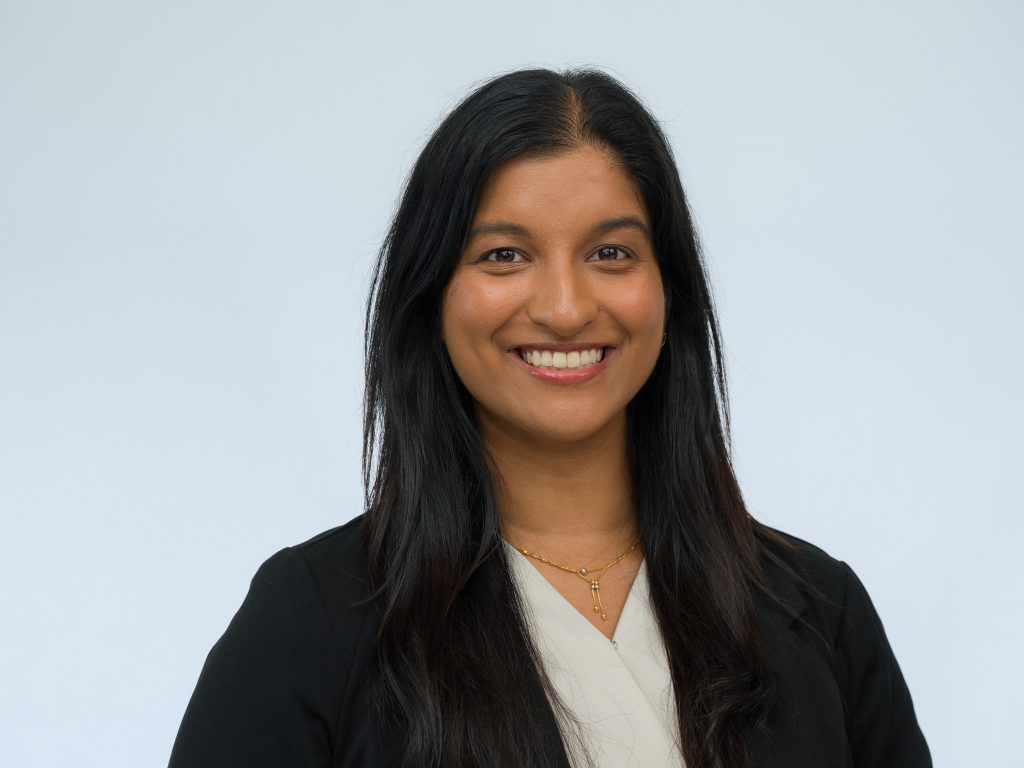
Pooja is a fourth-year medical student at Columbia University Vagelos College of Physicians & Surgeons applying to internal medicine residency. She’s been an MCAT instructor with Blueprint since 2020 and has tutored in the sciences since 2018. A Boston University graduate in Human Physiology, she also spent a year as a fellow on the CDC’s COVID-19 response. Pooja is passionate about equity in medical education and hosts this podcast to share mentorship-style advice with future physicians. She loves helping students discover how they learn best — and using that to help them reach their full potential. Outside of medicine, she enjoys musical theater, running, fitness, and cooking with friends.
Enjoy the Show?
Don’t forget to listen and subscribe on Spotify and Apple Podcasts.
No matter where you are in your premed journey, Blueprint MCAT is here to help when you’re ready to take the MCAT. Whether you need the flexibility of a Self-Paced Course, the instruction of a live 515+ Course, or the 1:1 attention of a private MCAT tutor, Blueprint MCAT has the MCAT prep option that works for your learning style!
Get started with a free MCAT diagnostic, one free practice exam, and tons more MCAT prep resources.