

Pursuit of Practice Episode #12: Dual Degree Diaries: An MD-PhD Story
Thinking about a dual degree during medical school, but not totally sure what that actually means for your life?
In this episode of Blueprint Prep’s Pursuit of Practice podcast, we’re sitting down with Camden MacDowell to break down what pursuing a dual degree looks like—specifically, an MD-PhD.
If you’re a premed who loves both science and patient care and keeps hearing “you should consider a dual degree,” this conversation is for you.
Cam walks through:
- What pulled him toward both research and clinical medicine
- What MD-PhD training actually looks like (hint: it’s not just “med school + extra classes”)
- The trade-offs of a longer, more intense training path
- How this choice can shape your residency options and long-term career
We also get honest about the big question: Is it worth it?
If you’re trying to figure out whether an MD-PhD (or any dual degree) fits into your future in medicine, this episode will help you gut-check that decision with real insight.

Liking the podcast? Take the next step toward becoming a competitive medical school applicant with Blueprint MCAT Prep. From personalized study plans to expert-led courses, we’ll help you build the skills and confidence to reach your target score.
What You’ll Learn
- Why some medical students choose to pursue dual degrees like an MD-PhD.
- How MD-PhD programs are typically structured during medical school training.
- The most common misconceptions people have about dual-degree programs.
- Why persistence and curiosity are critical traits for physician-scientists.
- How dual-degree training can strengthen communication between research and clinical medicine.
- What pursuing a dual degree can mean for residency applications and research opportunities.
- How to think about whether a dual degree aligns with your long-term career goals.
Free Resources
- Camden MacDowell | LinkedIn
- 🎧 Burnout in Medical School: Less Hustle, Better Time Management
- 2️⃣ Exploring M.D. Dual Degree Programs
Full Episode Transcript

Cam: Let’s say you’re a sophomore or junior right now, if you’re listening in college. Keep pushing the research for a bit. See what it’s like. Because that’s the vibe that then will lead to this idea of, ooh, I want to go combine these sort of things. Alternatively, if you’re like, I’ve already been an EMT. I’m a freshman or sophomore in college. Oh, I really like this class on neuroscience. Or I really like this class on XYZ. And let me talk to the professor afterwards. How about we… Actually, let me join that research project. And you are joining because you’re curious and not because you’re just trying to check off a box. If you feel the passion, follow the passion. That is my best advice for anyone who thinks about pursuing an MD-PhD.
Pooja: The path to becoming a doctor is a whole range of things: exciting, confusing, anxiety-inducing, and gratifying, probably all at the same time. And the truth is that no matter how isolating it may feel, you’re not in it alone. Welcome to Pursuit of Practice, your go-to space for expert advice, real stories, and the kind of support that shows you what trusting the process actually looks like.
Okay, welcome back to Pursuit of Practice. Today, we’re talking about dual degrees in medical school, what they are, why some students choose them, and how pursuing one changes your experience of training.
For a lot of med students, dual degrees come up at some point, whether it’s through classmates, advisors, or just trying to map out your long-term career goals. And they can offer additional skills, perspectives, and opportunities, but they also take time, energy, and capacity. And frankly, they’re not always the right fit for everyone.
Cam is joining us again for this episode. He completed medical school with a dual degree, and we are going to be talking through why he chose that path, what the day-to-day reality looked like, and how it ultimately shaped his experience in both medical school and beyond. If you’re considering a dual degree or you’re simply trying to understand whether it’s something worth exploring, this conversation is meant to help you think through the benefits and the tradeoffs and ultimately to decide what makes sense for you.
If you caught our episode about time management and burnout, you’re going to know all about Cam already. But for those of you who may not be familiar, Camdon McDowell is an interventional radiology resident. He grew up in Anchorage, Alaska, and he went to Emory University in Georgia for undergrad before completing his PhD and his postdoctoral fellowship in neuroscience at Princeton University. He then earned the title of being a double doctor after getting his MD from Rutgers. And while being a resident, he has been working at Blueprint for over four years and has been widely engaged with medical education programming and has served as a senior tutor for the USMLE step exams. Cam, thank you so much for joining us.
Cam: Thank you so much for having me. It’s always a pleasure.
Pooja: Of course. Of course. Okay, so let’s jump right into it. So the first question I want to ask you is why did you get a dual degree?
Cam: Yeah, so basically, I did a dual degree initially because I was a little bit unsure when I started undergrad. And I realized when I started undergrad that I really wanted to pursue research and a PhD and whatnot. And then as I pursued farther through undergrad, I was like, oh, you know what I like doing? Talking to people and communicating and engaging. Not to say that research doesn’t do that, but it’s a different style of doing that and having that clinical aspect became really important to me. And then honestly, I would say by my junior year of college, I realized it was going to be I had to do the merge. I had to do the combination. Oh, also, because both were also really fun.
Pooja: Okay. So it sounds like you wanted the pros of research and the pros of the MD, and you wanted something that included both of those. So it’s the research side as well as the day-to-day of being a physician.
Cam: I want to eat my… have my cake and eat it too. Exactly.
Pooja: Well, sounds like you’re getting there because you did it.
So, a little bit more broadly speaking now, what would you say are the reasons that listeners would want to consider getting an MD-PhD?
Cam: Yeah. So as I said at the very beginning, sometimes folks might be indecisive. I wouldn’t say I was indecisive, I just was unsure moving forward. And those are two very separate things. And I think the reasons you would want to get an MD-PhD is because it’s something where you want to have the ability to affect a lot of people at the same time as you want to have the ability to intimately affect a small population of people. And the kind of combination of both of those is really what makes an MD-PhD like it’s the essence of the degree is you can treat millions or at least hundreds or tens at least at the same time that you treat individuals. And so that’s what attracted me to it. In reality, it’s different, but that’s what attracted me to it.
Pooja: Okay, got it. So it sounds like it was a scope of impact that really led to that appeal.
Cam: Totally. Totally.
Pooja: Okay, that makes sense. So, it sounds like MD-PhDs are pretty good for people who are interested in having that intersection of being able to have your research inform patient treatment and your patient treatment be inform your research, right? And being able to treat everybody, including those that you don’t directly see. Does that sound right?
Cam: 100%. That’s a slam dunk. Actually, I love that phrase. It’s a reciprocal relationship. Your patients inform your research and your research informs your patients, and the conglomerate of that is better health for everyone.
Pooja: Yeah, yeah, exactly. So before we dive into misconceptions about dual degrees in med school, I want to give a little bit of an overview for people who are listening and are thinking, I’m thinking about other dual degrees, not necessarily a PhD. Can we run through that a little bit?
Cam: Totally. I’ll start off. So the basic way that most MD-PhDs work is that graduate undergrad, you either go directly in or you take some time, and you apply directly to what are called MSTP programs. There are also non-MSTP programs, but you apply to those programs. All that nomenclature means is that it’s government-funded in the United States.
I actually am in the U.S., Rutgers and Princeton, not MST-funded and MSTP-funded. It doesn’t make a difference. But those are the sort of programs you apply to.
After that, then, you get in, and the vast majority of programs, you do two years of med school. So your M1 and M2, your preclinical years. Then you do your PhD years. For some people, that’s two years or two and a half. For some people, which is on the shorter end very much, the average is four to five years of PhD. And then you return back to med school for M3 and M4.
And then when you return, everyone’s always, yeah, it’s a fun process to return because you’re like, oh, I haven’t talked to people. I’ve been in the lab and now I’ve got people here.
Pooja: Right, right. A lot of those social skills and interactions and even like clinical skills, I’m sure, have to come back to you.
Cam: It’s like riding a bicycle.
Pooja: Right, right. Okay, so that was a really helpful overview for the MD-PhD and the structure of it. In terms of other programs, I’ll give a quick overview of what other dual degrees look like, and then you tell me if I’m right or wrong. Okay? So there’s MD-MBAs where you basically leave to go to business school, and then you come back. So it’s a very similar structure to the MD-PhD in that you do have to leave for a little bit. I think actually every single dual degree works that way because there’s the MD-MBA where you get your Master’s in Business Administration. There is the MD-MPH where you get your Master’s in Public Health. You can get an MD-MS in a particular Master’s of Science, and that availability, I think, depends on what offerings your school has. So some schools will offer epidemiology, others will just offer clinical research, some will offer biostatistics or whatever. And then there is also MD-JDs. Those are like the real big overachievers because those are the people who do med school and law school. And for that, you have to leave to do law school and then you return. But the pattern that you kind of see across all these programs is that you do preclinical with the rest of your peers, you leave when your classmates continue their clinical years, and then you return, at which point you rejoin the class that is now applying for residency. Does that sound right to you?
Cam: 100%. I actually should acknowledge this for the listeners. It is changing for almost every single one of those degrees in the last five years where sometimes the preclinical years are shortened. So say you do one year of M1/M2 and then aggressively go into the next spot so that you have about two and a half to three years after you graduate.
Pooja: Oh, interesting. So the idea is to shorten the preclinical to allow more time for the electives? Is that what it is?
Cam: It’s the same time frame. It’s more just to give more time for clinical time.
Pooja: So it sounds like across all of these degrees, right, the MD-MBA, the MD-JD, the MD-MPH, the MD-MS, there seems to be interest or people who want to do it. They’re the folks who are interested in that overlap between those two career paths, regardless of what they are. Does that sound right to you?
Cam: Yeah, yeah, I think it’s not just an overlap. I think it’s, I like to think of it actually as a translation. Like MD-PhDs in particular, I would say one of our biggest roles of those that want to be translators, someone who is never going to be the perfect runner of a lab or the perfect runner of the clinical scenario, but is someone in between that allows people to communicate because that’s how you’re going to get that larger job done that I actually alluded to at the beginning of the scenario, which is treat not just individuals, which you do with your MD, but also treat populations, which you do as a translator.
Pooja: Right. Okay. And that makes sense because I think the other example that I’m more familiar with is the MD-MBA, which is people who do it oftentimes serve on executive boards and other things of hospitals and medical offices because they can serve as that kind of liaison between the people who only know the money and the people who only know the medicine. And it sounds like MD-PhDs are similar.
Cam: Yeah, I shouldn’t say translator. Liaison is a very appropriate term. Yeah, I think liaison is an accurate description. You’re a liaison between medicine and science.
Pooja: Okay, yeah, that makes sense. So now that we understand a little bit about the reasons for those who want to consider a dual degree, you want to serve as a liaison, you want to live in that overlap between the two fields of interest. What would you say are the most common misconceptions that you’ve encountered about dual degrees in med school? Is there anything that you thought was going to happen going into it that didn’t end up actually occurring as you were pursuing your MD and your PhD at the same time?
Cam: Biggest one, 100%, that we’re indecisive. We may at times be unsure, but everyone is unsure. But MD-PhDs are not pursuing MD-PhDs because they’re indecisive. It’s because they have two passions that they want to fuel into one. Some might be, but the best MD-PhDs I’ve ever seen are the ones that are genuinely passionate about science and genuinely passionate about clinical care and are desperate for a way to merge the two.
Pooja: Got it. Yeah, those, like you said earlier, who want to have their cake and eat it too.
Cam: The other thing is that people think that we’re nerds. Frankly, like I’ve noticed this, I’m in a place that is one might consider kind of nerdy. And sometimes folks are like, you’re the nerd of the nerds. It’s like, no, I’m the most persistent of the nerds. And so persistence is more important than and this doesn’t just go for MD-PhD, this goes for everything is persistence matters way the heck gosh darn more than having an innate intelligence. And MD-PhDs, the vast majority of I’ve met are truly just persistent because remember, you’re making your medical education 10 years or nine years at a minimum.
Pooja: Right, right. And it’s that idea of having a vision that is strong enough that you’re willing to continue doing that for that long of time.
Cam: Yeah, and it’s realize that’s during your early 20s typically. Your mid-20s. Oh, by the way, it also extends to your late 20s. Oh, and your early 30s. Yeah, and then you finish up and you’re like, oh, now I’m in residency and I have another seven years of that or five years of that or three years of that. That’s not a negative thing, but I think it’s important you recognize that when you walk in.
Pooja: Yeah, it sounds like that’s one of the realities of choosing a dual degree and the that extended length of time and that period in which you’re going to be a trainee is going to be a little bit longer for you than it will be for other people. So I want to transition now into our next section, which is really talking about the reality of the dual degree, right? And you talked about the period of time. And I’m wondering, I’ll ask a little bit of a broader question in a second, but to follow up on this, I’m wondering, something that I’ve heard MD-PhD struggle with is going through their degrees and watching the people who entered medical school with them graduate, complete residency, start being an attending. How did that feel for you?
Cam: Yeah, it’s an interesting feeling, I must admit. You are, I was fortunate to be roommates with a bunch of people actually that started med school at the same time as me and none were MD-PhDs. And here I am struggling in lab in the middle of the night on like a Sunday on or I guess match day was sometime in March in 2019, somewhere in that age. And they’re all matching. And I’m like, I have another five years. And that can be hard, but at the same time, I wouldn’t trade a place with one of them because you can be envious for a moment, but it’s also just a different frame of mind. They wanted to get out there and go about their careers and I understand that. I wanted to get out there and go about my career but in a different way. It’s for people that want to be a little bit a little bit different, frankly.
Pooja: Yeah, so tell me a little bit about how you imagined your career being different in like as you kind of were progressing. Like, why did you, why were you feeling okay? Because you acknowledge that your trajectory was different than theirs. Like, what thoughts allowed you to do that?
Cam: Professional and then personal. Professional thoughts, I would argue, was the fact that I research is play. It’s like if someone gave you a bunch of LEGOs, and I’m this is not meant to in any way disparage research, but it truly is, the best research is devolved from curiosity. And the best thing from curiosity is play and to discover and to try new things. And medicine, the best medicine is devolved from not trying new things necessarily. That’s the research side. Research, you try the new things. Medicine, you apply the things that we’ve discovered. And so it was fun to spend a lot of time on that more discovery aspect rather than the application aspect. That was a motivator for me. Frankly. The other was personal. MD-PhDs, I think, lend themselves, in my experience, my personal as well as the people I know, lend themselves very well to those that have families. And I do, and so it was helpful for that. There’s a little flexibility.
Pooja: Right. So it sounds like there were different periods of time where, and I mentioned this because I know you a little bit more than some of our listeners do, that you have children and it was nice to have some time where you could be with them in their early stages of your partner’s pregnancy as well as their newborn stages because they were timed such that it was in periods with med school where you didn’t necessarily have to be in the hospital every single day. Is that correct?
Cam: Exactly. That is 100% correct. I actually stayed after my PhD to do a postdoc almost 70% so that I could spend more time with my new daughter, who at that point was two years old, or one and a half years old.
Pooja: Yeah, yeah, and see, it’s interesting because I think I appreciate you mentioning this because sometimes people think about, you know, oh, they’re losing their 20s, they’re losing their 30s. I actually, I used to get so annoyed when people said that to me when I was in med school, like in the early years of it, because I just felt like it wasn’t true. Like I felt like I was still able to live my 20s and still able to have a lot of the memories. Maybe because I’m not someone who goes on a rager every single weekend, I feel like that’s not sustainable. But I do, I did have some classmates who there were chunks of time where they could go out every weekend. Like there were periods of med school where I was going out a lot and was experiencing a lot of New York City where I am now. And so I think that this whole notion that you lose or you’re sacrificing your 20s and 30s is just straight up not true. And it sounds like you also didn’t have to give that up because you were able to have your family and able to spend time with them in the ways that you wanted to without sacrificing anything.
Cam: That’s a point that’s near and dear to my heart. So I’m so glad you asked that. I think actually, if you check out some of the Blueprint Instagram videos, there might be some of me commenting on this in the past. In med school, you do not lose your 20s. And your 30s. You gain your 20s and 30s and a lot of debt.
Pooja: Yeah, that one, that one, that one. Yeah, that’s fair. That’s fair.
Cam: No, no, but it’s true. You gain your 20s and 30s because you have frankly more flexibility than the vast majority of our peers. We can be jealous left and right of our peers that are as MD-PhDs of our peers that are doctors, our peers that are literally just living day-to-day jobs, the best jobs out there. But what you’re losing or sorry, what you’re gaining is a flexibility, frankly, despite the long hours that a lot of folks don’t have.
Pooja: Yeah, I agree. Like, you could go to a workout class at 11 a.m. in certain parts of med school where if you have a job that you have to go to every day in person, you’re not going to be able to do that. And so, I agree.
Cam: Like, you work long hours, but your hours are weird.
Pooja: Yes. And that’s okay. And that’s that’s just the reality. That is just the reality of getting a medical degree. And I think it’s even more true if you’re getting a dual degree because you’re prolonging that period of time where, yes, it’s long, but it’s also flexible. So, okay, that sounds good.
Cam: Grad school, I’m going to speak one more thing to that is grad school is wild. Your PhD, like, what I mean by that is your hours are yours to conquer. You can go out and, you know, go and have an adventure in the middle of the day on a Tuesday, but your bacteria are growing on the petri dish dishes and they’re going to need about 48 hours of direct surveillance in a day from there. So, grad school is the PhD phase is not for the faint of heart, but it is for the ones that love flexibility. It’s a lot of work when you’re working. It’s, but you dictate when you work typically.
Pooja: Right. Yeah, yeah, yeah. It’s like very self-directed because you’re the length of your training is all dependent on your ability to complete your experiments and come up with results that you can present and defend for your thesis, is that?
Cam: And things go wrong, etc., etc.
Pooja: Right, right. Things go wrong all the time, but you have time to adjust and make changes.
Cam: Yeah. Exactly.
Pooja: Aside from the length of time, like the prolonged period of training, was there anything else that was more difficult about pursuing a dual degree compared to your MD-only peers?
Cam: I personally felt that the PhD was much harder than the MD.
Pooja: How so?
Cam: In the MD, you learn many, many things, and it’s back to what we said earlier, actually. In one, you have to be creative and generate new knowledge. In the other, you have to apply knowledge. This is important in the era of AI in particular because in one field, like, look, we have to know a lot of stuff and have clinical acumen and things for medicine. But a PhD is a very distinct desperation, like desperate desperation for knowledge about an idea that you know 99.9% of your experiments are going to fail and you just have to persevere and persevere, persevere. And often, you’re a little bit less of a team than you are on the MD side. So I think that’s something that surprised me, but something that I really valued coming out of it.
Pooja: Right. So it sounds like cognitively, it was more difficult because of that generation of new knowledge and how much more individual it felt compared to being a physician.
Cam: Yeah. Yeah, that sums it up.
Pooja: Yeah. All right. So I want to move into another section now or another topic really where I want to talk a little bit about the sustainability of the program, how you manage stress, because it sounds like there were definitely times where the PhD portion or the pursuit of both was stressful. And I also about burnout. So let’s get into that a little bit. Now, first question I have for you. Do you think that dual degrees can push students past what’s sustainable? So like, have you experienced stress either in yourself or seen in your peers to a point where it’s not sustainable and it leads to burnout?
Cam: I think anything leads to burnout, frankly. Like if you if you do the same thing a thousand times, then you’re going to be a little bit burned out by it. I don’t think there’s anything unique about the MD-PhD or the additional degree that leads to burnout. I think you have to be really, in my personal experience, you have to be very deliberate about why you do the degree. If you do it for reasons that excite you, Yeah. And you know you’re going to excite you for a long time and that you’re curious about, I think it’s a it’s it’s advantageous and burnout is going to be put on the back burner. But if you do it just because you’re unsure and decisive, which I think we got to earlier about that’s like one of the main critiques of an MD-PhD is you’re indecisive. If that’s your rationale, then I think it’s a recipe for burnout, frankly.
Pooja: Yeah. Yeah. No, that makes sense because you don’t you don’t love it enough to continue doing it even when it’s hard and that can create the burnout.
Cam: I love that phrase. That’s a great phrase. If you’re going to do this, do it and have enough background experience to know that you’re going to love it even when it’s hard.
Pooja: Yeah. Yeah. Amazing. Amazing.
Cam: And it’s fun.
Pooja: It is fun. It is fun. You said it yourself. It’s like LEGOs. I say this as if I’m also doing the MD-PhD. I am not. But I feel like everyone I know who’s doing it loves it, and I feel like it’s for very similar reasons. They have a strong reason. They love the research that they do and it carries them through even when it’s difficult.
Cam: And I do want to say, there’s one thing we haven’t talked about. This came up a couple of days ago actually with some colleagues who are who just went straight med school route is you don’t have to have the goal of being a lab rat of working the rest of your life in a lab. That is not what MD-PhD is about. It’s not. And so it’s more about having the translational ability that I talked about earlier, all of those things. So don’t say no just because you don’t want to work in a lab. I may not work in a lab. I don’t know, but the curiosity is what is going to continue.
Pooja: That makes sense. And I think that advice kind of spans to the other dual degrees as well because you don’t necessarily have to be an expert in law, for example, if you’re doing the MD MDJD, but if you again, know enough to be that liaison to be that overlapping person between the two fields, that creates that makes you an asset and also makes you someone who can make a lot of difference in the those fields of choice because you have those combined skill sets and it sounds like the MD PhD is very similar.
Cam: 100%.
Pooja: Amazing. So I want to ask you, from what I know about an MD-PhD, right? You have to complete your thesis in order to graduate. You have to be able to defend it to say, this is what I’ve been doing over the last couple of years. This is my research result, the things that I’ve learned. This is how it’s making progress in the scientific medical field, right?
Cam: Yep.
Pooja: And it sounds like there’s a lot of pressure that might be associated with that because like you mentioned, it is self-directed, right? If there is an error in your experiment, it’s up to you to figure out how to fix it. And there isn’t a strict deadline, but ideally, you don’t want to be pursuing your MD-PhD forever. So there’s a little bit of a time pressure there as well. So how was that experience for you?
Cam: Yeah, it’s super institutionally dependent. I’m going to be honest.
Pooja: Okay.
Cam: From what I’ve heard, yeah, it’s it really depends. And it also depends on if you’re doing the PhD at the same institution, which I did not do. Or if you are doing it at a combined program with another institution, that’s, you know, Harvard and MIT, I believe have a group. Rutgers and Princeton have a combined program. I would argue they’re both fantastic programs, but it’s a different thing because when you do your PhD, you are exclusively pretty much with PhDs, not MD-PhDs. And that’s not a disparaging term towards anyone else. It’s just there are some differences in the programs. And so that’s something to ask about in your interviews is like, how long is the average time for someone to graduate? You know, what are the expectations? And how is your committee formed?
So, you know, remember your PhD, basically, you have to get your master’s, which is the first year or so. So basically, you start your research during your summers of M1, M2, you go rotate in labs, then you choose your lab, and they choose you. It’s like a mini match. And then you spend a year there, you do some classes. I was in a very class light program because our credits carried over from med school. Then you pass your generals. Your general exams are like your proposal for your project basically and showing that you’ve thought about it and thought about plan A, B, C, D, E, F, G. Boom, you get your master’s. If you’re not liking it at that point, that’s the time to get out, frankly. If you’re loving it, I was loving it, then you keep going. And now there’s less classes and it’s all about the research. It’s about not publishing papers. That’s not what it’s about. It’s about doing the research and if the good quality research comes out, then papers will be published. But you never want to do, or sorry, create papers.
Pooja: Right, right, right, right. Okay, that makes a lot of sense. That’s that’s super helpful to know. So, it sounds like that stress and that pressure that kind of came from that, right, wasn’t necessarily something that you couldn’t manage. It was something that you were aware of and kind of were able to work around because of your love for what you were doing. Does that sound right?
Cam: Yeah, that sounds totally right. Yeah, and I think if I’ve seen my peers, the basic idea is that, you know, the stress is manageable if you love it, you know, just like meds, it’s no different than med school.
Pooja: Yeah, exactly. Exactly. Okay, so it sounds like there’s, even though you’re doing a different day-to-day and you have a little bit of a different priority in terms of what your cognition, like what your brain is really doing, like are you working in a team and talking to patients every day or are you solving problems and figuring things out on your own? Although that part is different, a lot of the other things, the pros, the cons, the good, the bad, the ugly, all that, that’s similar.
Cam: It’s all the same.
Pooja: Okay. Okay. That’s good to know. You just deal with it for a little longer.
Cam: Yeah, you just deal with it a little longer and again, I cannot I cannot say just how much for anyone who’s listening, how fun it is. It’s it’s a great time. I think the, yeah, it’s a great time. You just have to appreciate you have to be really good at troubleshooting, dealing with getting things wrong and trying and trying and trying again. What is it, the definition of insanity is trying things over and over again?
Pooja: And expecting the same results.
Cam: Yep. Yeah, that’s a PhD.
Pooja: Well, you heard it here, folks.
Cam: Please don’t tell my advisor that.
Pooja: No, no, no, no. Just kidding, I’m going to find his name and I’m going to send this right to him. Okay, so shifting gears a little bit. I want to ask a little bit about the benefits that you’ve experienced from this MD-PhD. I know you’re in residency right now, so a lot of the benefits that researchers tend to experience, I totally get happen when you’re an attending. So I would love for you to speak on that if that is more appropriate to answer this question. But where would you say that your dual degree has added value in either residency or what you imagine to happen in the future?
Cam: Yeah, so I think there’s a couple of a there’s a couple of spots that it’s become readily apparent. One, frankly, for anyone out there, having an MD-PhD is helpful for applying to residency. It’s not going to hurt you. Yeah. It’s not going to hurt you. And it’s and, but don’t do it for that reason, first of all. But having an MD-PhD is not going to hurt you as you’ve talked to you go into residency. And if that is your story that you can convey to residency advisors, a lot of them are very receptive. It doesn’t matter if it’s a community hospital or a large hospital or a big academic institution. If you’re passionate about something, that’s what matters. So I would say the MD-PhD helped me on that.
Pooja: Yeah. Yeah, yeah, yeah. I can only imagine how much of a benefit it is. Because again, like, there we have an episode on the residency application process. And for those of you who are interested, would definitely encourage you to take a listen. But globally, it sounds like a lot of the things that make you a stronger residency applicant are being able to be good at your job as being a resident. And by having an MD-PhD, having passion, having interest, having additional skills, you are better. You’re more you’re well-poised to be a good physician compared to others on at baseline.
Cam: It is a demonstration of your perseverance.
Pooja: Yes. Yes. Yeah. Exactly.
Cam: So, objectively, that is one thing. Personally, what I found is that it helps a tremendous amount with communication. I alluded to this earlier with the idea of MD-PhD is you’re not a medical and science doctor. No, you’re a translator between complex fields. You know, I can speak the language of computer scientists, mathematicians, or maybe not mathematicians, but people that are very interested in machine learning and AI and all of that. I would feel confident doing that.
Pooja: Yeah. Statisticians.
Cam: Yeah, statisticians and then people, you know, biologists, neuroscientists, obviously those are my backgrounds. At the same time that you’re communicating with the patient’s family who you’re trying to discuss about enrolling in a research study. So, I think I like to call it the like the great translator. Like that’s your goal. That’s my goal, personally. I don’t know about others, but I think that’s kind of the way to think about it.
Pooja: Yeah, no, that makes a lot of sense. And aside from the obvious, you know, bonuses in terms of experiences that you got for residency applications and aside from that ability to be a better translator between researchers and patients and physicians, what other skills do you feel like you were able to gain? I know you talked about being able to speak the language of mathematicians or statisticians and computer engineers and whatever. Do you feel like there were additional skills that you were able to acquire from the MD-PhD?
Cam: 100%, stats. You’re going to be years above your peers in the in the med school realm. If you compared to your peers in the med school realm, your idea of how to understand studies and do statistics will be far beyond. I’m not saying I’m a statistician, but I have, you can code, do all the background stats, everything that your peers can’t do, which is really advantageous, frankly, for those younger in the audience, that it allows you the opportunity to basically help on a huge amount of research projects where the limiting factor is not doing the research. The limiting factor is doing the analysis.
Pooja: Right, right.
Cam: And so personally, that’s something that I’ve seen.
Pooja: Yeah, absolutely. It sounds like a lot of people, I know from experiences of peers and myself that having a statistician be too busy can be a rate-limiting step in the publication process. And because medicine, for better or for worse, is a numbers game with a lot of these things and if you want to be someone who can be a prolific researcher or someone who can rise through the ranks of academia or whatever it is your goal is, there’s a lot of things that are dependent on having a certain number of publications and it’s beneficial to be able to be self-sufficient in that regard. Does that, does that sound right to you?
Pooja: I’m not super familiar with academia. I’ll be honest, in terms of like the research requirements and stuff, but…
Cam: Yeah, yeah. I just, quality is always better than quantity, which often gets misconstrued. I must say.
Pooja: I mean, listen, that is a whole other podcast episode. That I agree with you, but that’s a whole other podcast episode.
Cam: But I think the reality is that I don’t know what I’m allowed to say on the podcast. There’s a lot of things to start with the letter after A and you know, S. Yeah. I mean, listen, we can we can redo that one.
Pooja: No, I think that’s completely agreed. And I feel like we should probably make that an episode in the future, like the quality versus quantity thing and what it actually means to do good research.
Cam: Oh, I totally agree.
Pooja: But I do, I do feel like for those of, for those of us who are, you know, applying to residency, people have the thing of get at least one publication in before whatever.
Cam: There’s a game. Or, or yeah, yeah, whatever it might be. No, no, then there is a, you know, unfortunately you do have to play a bit of a, frankly, of a of a of a checkbox of a game. And I think that’s one of the reasons that the MD/PhD does help you in that process. Is it worth doing five years if you don’t like it and adding five years of that? No, it’s not. You should only ever do it if you love it. But if you love it, you should only always do it.
Pooja: Right. Like, it’s an unintentional pro, but that’s not the reason you’re picking it.
Cam: Oh, never. Never. No. Yeah. It would be a very silly reason to pick it.
Pooja: So let me ask you this. Are there any routes as a physician researcher that do not require the PhD?
Cam: Definitely. You can 100% do research as a physician without the PhD. However, and also anyone out there, actually, before I answer this, anyone out there that’s listening, if you are thinking of applying MD/PhD, you better be ready to answer this question.
Pooja: Yeah.
Cam: And I’m a little rusty. It’s been 10 years since I’ve done this application process, but you better be ready to answer this question because you’ll be asked it a million times.
Pooja: Right.
Cam: So the short answer is, do you need an MD/PhD to do research? No. You do not. However, the best MD researchers who are truly doing the research, not just running the labs, but actually doing the research that their labs are producing, are those that have basically done an MD/PhD after they graduated like med school and became physicians and whatnot. And they did, there are tracks afterwards. If you’re unsure, you can go to the PTSP, physician training scientist program track, which is the residency version of the MSTP. That’s a thing. And you can do postdocs after residency. All of this, most people don’t because at that point you’re looking to start your career and you’re in your mid-thirties, etc. You, you don’t have to go to the MD/PhD route to do research.
Pooja: Yeah.
Cam: However, the MD/PhD, I am a firm believer, gives you a skillset that is unlike… I’m not trying to sell it up folks, but frankly, I think it gives you a skillset, particularly if you do your PhD in a basic science field, not clinical, like a basic science field, that you will never be exposed to ever again in the rest of your life, that you don’t get anywhere else. Anyone who’s looking at it doing MD/PhD, actually, we can get back to that, but I strongly think it’s best focused on basic science because that is the most removed from the clinical aspect and it’s the one that kind of allows you to make that translation that I was talking about earlier.
Pooja: Right. Right. And I, and I will say for the other, you know, dual degrees, I can’t speak to them directly because I haven’t pursued one myself, but it’s, it’s a, there’s a similar, there’s a similar perspective there as well where the additional training gives you a depth that you cannot replicate, but if you’re just looking to kind of be on a precursory level involved in both things, for example, like policy advocacy or administration of a healthcare system, you don’t need the degree, but if you want to be the person who’s actually on the front lines, like doing both, then you need the degree.
Cam: Yep. Okay. Yep. And, and, uh, yeah, I totally agree. And it’s going to be really hard to be on the front lines doing both degrees, frankly. But that’s a discussion for another day.
Pooja: Yeah, there’s no such thing as an even 50/50. Like there will be periods of your life where you’re doing more of one and then periods of your life where you’re doing more of a, more of another, and that’s okay.
Cam: Actually, I would encourage anyone who’s listening to this, there is unbelievably good data, like in vast amounts of data from the AMC that actually documents the outcomes of MD/PhDs. And may sorry, it may not be the AMC, it’s one of the MD/PhD medical like groups that you can Google that will document their trajectories. How many went pharma? How many went private practice? How many went academia? How many went all of that? Yeah. I wish I’d looked it up before here because I would have the link, but it’s a very helpful way of having an idea and frankly, I think it’s a small proportion, about not, don’t quote me, somewhere on like 25% actually end up going a pure MD/PhD route.
Pooja: Right. Right, right, right. Yeah, like there’s always, it’s a spectrum.
Cam: Yeah, exactly.
Pooja: Yeah, makes sense. Okay. So to wrap things up, I kind of want to bring it back to the person who’s listening and is thinking, okay, this is great. This is all a lot of food for thought, but how do I know whether I should commit to the dual degree? What advice would you have to a pre-med student who’s trying to figure out whether or not this is the right path?
Cam: Should have started with this question at the very beginning. This would be, you know, hooked all you listeners. No, I think I have excited advice and precautionary advice.
Pooja: Mm, okay.
Cam: So if you are someone who your first thought is, I want to do a PhD. I’m excited about this. You know, I research, you know, I, I’ll tell you my own path is you know, I started as a, I was slicing brains out, like little bird brains on a cryostat for a paid work study, you know, for 12 hours a week and then you expanded that to, “Oh, I ran into the guy down the hall who’s an MD/PhD who’s 12 years older than me and he was like, “You should check this out.” And I was like, “I’ve never even heard of this.” I thought I was, I had no clue what I was going to do with my life. And then I was like, “Oh, wait, PhD. That sounds interesting.” This research is fun. Like I talked about earlier, that analogy to Legos and building and creating. If that gets you excited, then keep pushing with that excitement and see, let’s say you’re a sophomore or junior right now if you’re listening in college, keep pushing with that research for a bit. See what it’s like because that’s the vibe that then will lead to this idea of, “Ooh, I want to go combine these sort of things.” Alternatively, if you’re like, I’ve already been an EMT. I’m a freshman or sophomore in college. “Oh, I really like this class on neuroscience or I really like this class on XYZ.” And let me talk to the professor afterwards. How about we actually let me join that research project? And you were joining because you’re curious and not because you’re just trying to check off a box.
Pooja: Yeah.
Cam: Then you are both of those careers. You guys are destined to be MD/PhDs, frankly. Now, if you’re doing it because you’re like, ah, I want to get into med school, check off that box. No, I’m sorry. Like not disparaging. Like totally, you’re good. Like I understand it. That’s better just don’t take your own time and go the other route and just go MD and there’s nothing wrong with that at all. in the slightest. I think that’s my piece of advice is if you feel the passion, follow the passion.
Pooja: Yeah.
Cam: That is my best advice for anyone who thinks about pursuing an MD/PhD.
Pooja: That makes sense. Like, if you are passionate about it, it will be the best thing you do for yourself, but if you’re not, then you will probably drag your feet through the whole process.
Cam: Yep. I think that’s exactly right. Yeah.
Pooja: So what advice do you have for the people who are considering MD/PhDs just because they are worried about having sufficient research for their career beyond medical school? So they’re worried about doing it because they’re interested in a competitive residency, or they want to be a prolific researcher beyond residency. What would you say to those people?
Cam: The thing to remember is, why was the MD-PhD created? It was created to make physician scientists. two parts of a whole. And that is not an easy thing to do. And it’s evidenced by the fact that I think if you looked actually at some of the data, a lot don’t fully use those two degrees to their full extent. That’s not saying there’s anything wrong with that. It’s just the reality. I think if you are looking to do those two things and combine those two careers, one, you need to have the passion. Passion for both. That’s a you have to. And by passion, I mean, like, wake up in the morning and just go for it. Like, you cannot wait to get in the lab to figure out what happened to your petri dishes of bacteria or something like that. Right. Or you want to go industry. That’s another big part of that. industry is a huge part of this. But you have to have a combination of, I want to treat patients, solve big problems, and then go from there. And know that who the heck knows is going to happen in life in the future. And you’re willing to take that risk now that maybe it’s going to be five years that you won’t be a physician, blah, blah, blah, blah, blah, you know, making a physician pay. That’s okay. You get to follow your passion there and then go from there. I think if you’re unsure and you’re just trying to make a check box, it’s uh, maybe consider alternative paths for that because there are options.
Pooja: Yeah, that makes sense. So I think a good takeaway from that I’ve gotten from this conversation is follow your passion, fully pursue the other options to make sure that you’ve really thought it through. But don’t be afraid to lean into something just because people are saying, oh, it’s going to take a long time or, oh, it’s stressful. Because there are ways there are ways to manage that stress. And a lot of the things that are stressful about PhDs are also stressful about med school. So there’s nothing uniquely challenging about it aside from length of time.
Cam: I think length of time is a big thing. And I remember, I love the idea of leaning into it because I remember when I, I knew very few physicians growing up, very, very few, but even my pediatrician said, you’re doing an MD-PhD? Like, first of all, I was there when I was 21, so I was like, what, he was like, why are you still here? But if there’s anything like he was like, why are you doing a PhD? It’s not a fiscally and like good idea. Don’t do an MD-PhD, just go to med school, go forward. And I explicitly remember telling him, because I love it. So lean into it and you have to feel it here. And I don’t mean to be cliche. I know I’m a man who often sounds cliche and some of these things, but you got to you got to lean into it. Truly. And that’s going to lead you to the direction and who knows, you know, will you run a lab? I don’t know if I’m going to run a lab. Will you start a biopharma company? Maybe. But if you have a passion for it, lean into it because that is the best way to a, get into residency, or a, get into med school, b, get into residency, and c, enjoy your career.
Pooja: Got it. Well, Cam, I think that’s a good, that’s a good one to end on. Thank you very much for your time. And of course, for those of you who are listening, thank you for coming to the end of this episode. This is our final episode of season one. Woo. We did it. Cam, you were in two of them. Stay tuned for further announcements about what season two is going to look like and we will see you on the next one.
This is a podcast created by physicians and medical educators, but is no way to be construed as medical advice. All of the opinions shared are those of individual people and are not reflective of their associated institutions or of Blueprint Test Prep. That’s a wrap on this episode of Pursuit of Practice. Remember, you’re not in this alone. Head to blueprintprep.com for MCAT prep courses, board exam prep, free resources, and more to support every stage of your journey to and through medical school.
Meet Our Host
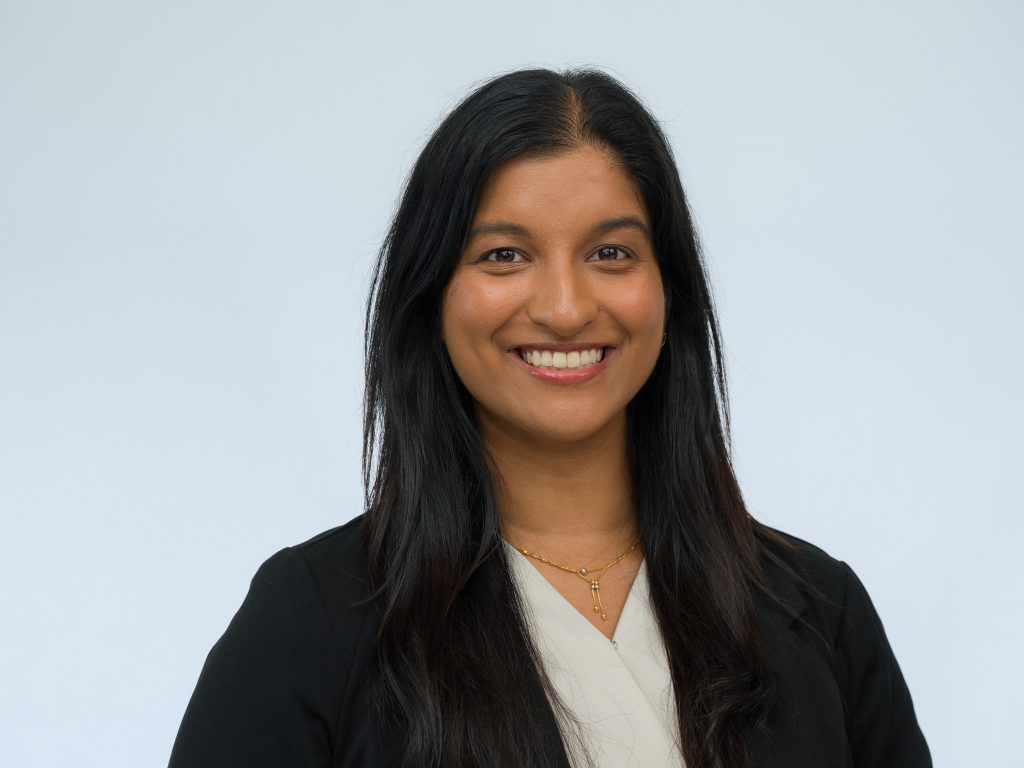
Pooja is a fourth-year medical student at Columbia University Vagelos College of Physicians & Surgeons applying to internal medicine residency. She’s been an MCAT instructor with Blueprint since 2020 and has tutored in the sciences since 2018. A Boston University graduate in Human Physiology, she also spent a year as a fellow on the CDC’s COVID-19 response. Pooja is passionate about equity in medical education and hosts this podcast to share mentorship-style advice with future physicians. She loves helping students discover how they learn best — and using that to help them reach their full potential. Outside of medicine, she enjoys musical theater, running, fitness, and cooking with friends.
Enjoy the Show?
Don’t forget to listen and subscribe on Spotify and Apple Podcasts.
No matter where you are in your premed journey, Blueprint MCAT is here to help when you’re ready to take the MCAT. Whether you need the flexibility of a Self-Paced Course, the instruction of a live 515+ Course, or the 1:1 attention of a private MCAT tutor, Blueprint MCAT has the MCAT prep option that works for your learning style!
Get started with a free MCAT diagnostic, one free practice exam, and tons more MCAT prep resources.