


You will mess up in your journey toward becoming a doctor. You’ll blank on an answer you knew five minutes ago. You’ll fumble a presentation. You’ll walk out of a patient room replaying everything you wish you’d said differently. And for a while, you might think those moments define you. Making mistakes as a doctor (even as a future doctor) can be terrifying.
In this episode of Blueprint Prep’s Pursuit of Practice podcast, host Pooja sits down with Natasha, a PGY-3 Med-Peds resident, international medical graduate, and Blueprint Medical School tutor, for an honest conversation about what mistakes really mean for future doctors.
Together, they unpack how missteps show up at every stage, from the premed years through medical school and deep into residency. But instead of treating mistakes as failures, they explore the quiet growth that happens in the moments we wish we could erase.
If you’ve ever:
- replayed an interaction over and over in your head
- wondered whether you actually belong here
- and/or felt like one mistake exposed you as “not cut out for this”
…then this episode is for you. Remember, in medicine, mistakes are inevitable. Growth is optional. And learning how to respond to missteps might be one of the most important clinical skills you’ll ever develop.
What You’ll Learn
- Why making mistakes as a doctor and in medical school and residency often feel personal, even when they’re a normal part of learning
- How shame and self-comparison can quietly limit growth during medical school and residency
- The role reflection plays in turning difficult experiences into meaningful learning moments
- Why many students avoid sharing fears or struggles and how that isolation impacts performance
- How reframing mistakes can help reduce anxiety and perfectionism
- What Natasha wishes she had done differently earlier in her training when facing self-doubt
- How to approach reflection as a practical tool rather than an emotional burden
More Free Resources
- 🎥 The Last Lecture – Randy Pausch
- 🎧 Worklife with Adam Grant podcast: Chess grandmaster Maurice Ashley on Why Mistakes Are Our Greatest Teachers
- 🌱 How To Tackle MCAT Prep With a Growth Mindset
Full Episode Transcript

Natasha: I wish I shared my fears more with my peers and my mentors. I think a lot of us feel the same guilt, the same shame, the same feelings of self-worth or we question our self-worth rather. And I think it’s very hard to share that at times, especially in the medical environment when a lot can feel like a competition. But I think part of navigating this is recognizing that a lot of us feel the same way and we continue to feel it. I remember seeing an attending make a mistake and watching them call the chair of the department to tell them, “Hey, I’ve made a mistake.” And I thought, “Oh my gosh, it just doesn’t end.” And that’s what allowed me to realize, okay, it’s acceptance that these mistakes are going to happen, but how you navigate it, how you handle it, how you talk about it is the one thing that we can control.
Pooja: The path to becoming a doctor is a whole range of things: exciting, confusing, anxiety-inducing, and gratifying, probably all at the same time. And the truth is that no matter how isolating it may feel, you’re not in it alone. Welcome to Pursuit of Practice, your go-to space for expert advice, real stories, and the kind of support that shows you what trusting the process actually looks like.
Hi, everyone. Welcome back to Pursuit of Practice. In medicine, mistakes can feel terrifying, like they say something about your ability, your intelligence, your future, or even who you are. Whether it’s bombing an exam, freezing during a SIM lab, missing a deadline, or fumbling with a patient in front of your attending, it is so easy to spiral into shame and self-doubt. But the reality is this: everyone makes mistakes on this path. And the students who grow the fastest, they aren’t the ones who avoid mistakes; they’re the ones who learn to reflect on them and get better as a result.
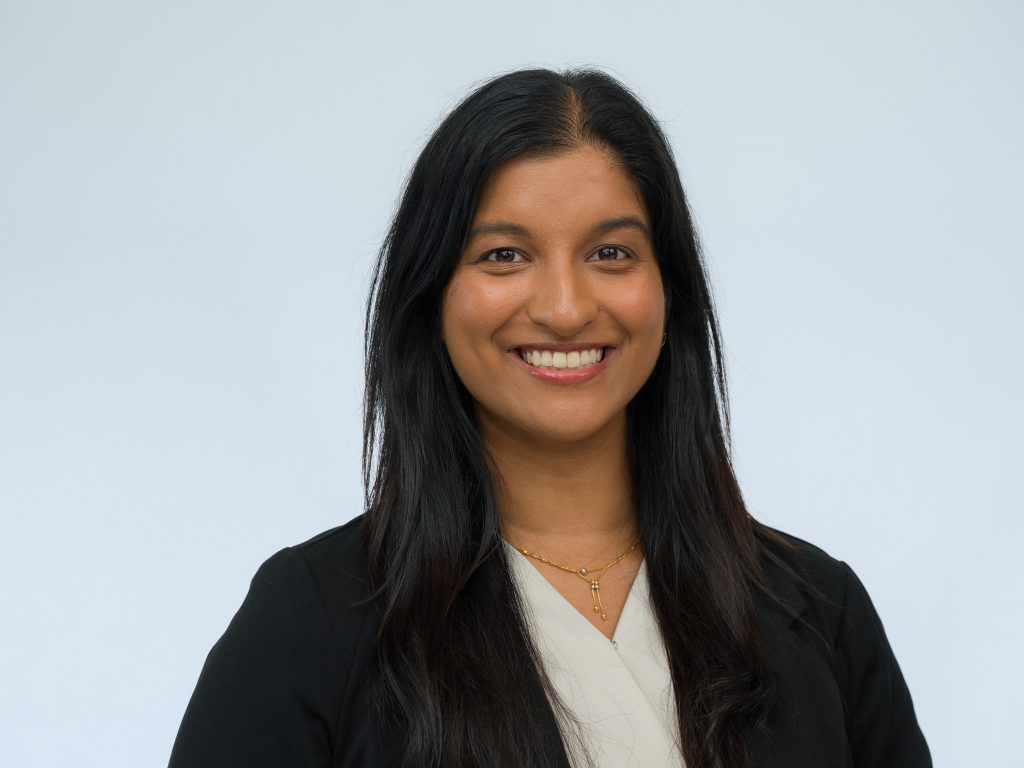
Today, we’re going to talk about how to do that in a healthy and constructive way with our guest, Natasha Puri. She’s a medicine pediatrics third-year resident at New Jersey Medical School. She was born in Toronto, Canada, and moved to New York when she went to NYU for undergrad, where she studied global public health as a pre-med. She did some gap years in adolescent and young health survivorship care and worked at a biotech artificial intelligence company. She went to medical school at St. George’s University and has been interested in a systems approach to medicine ever since. She has been involved in clinical work, research, biotech, and public health, and has pursued Med-Peds to expose herself to the full spectrum of patient care. Her interests are in global health, public health, and medical education. And if she’s not working, you can find her spending her time with her family and friends, playing soccer, squash, and tai chi, and reading, possibly outdoors. She’s been described as hardworking, thoughtful, and kind, and I have the pleasure to say thank you so much for coming to join us for today’s episode.
Natasha: Thank you so much. So happy to be here.
Pooja: Yay. Okay, so let’s go ahead and jump right into it. So, the first segment, I really want to focus on mistakes and how they feel inevitable. So, something that I’ve gotten exposed to over and over again, as I’m sure I will continuously as I progress through this career, is that mistakes are not only inevitable but that they’re an expectation. And I was wondering if you could talk a little bit about that perspective and how you’ve experienced it over the course of your career so far.
Natasha: Yeah, I think the way you articulated that is exactly what I’ve felt over time, and I had to learn that the hard way, that mistakes are part of the expectation in medical training. And I think when I started residency, I got the advice from someone that, “Look, on your first day, you’re going to make hundreds of mistakes, and on your second day, you’ll make one less one. And on your third day, one less one.” And I think that approach helped me understand over time that mistakes are the baseline. The only way to really learn is through trial and error in residency, or even just during clinical training in general, through medical school, through rotations, through residency, and even attendings. It’s all through trial and error. And accepting that early on, I think can work really well in trainees’ benefit because it allows them to reframe those mistakes as opposed to feeling discouraged by them.
Pooja: Yeah, absolutely. And I appreciate your approach about just accepting it and realizing that it’s a part of the training and that everyone goes through it. I think something that people often experience or the fear that people have about making mistakes, especially as they get more into clinical work, is that a mistake could end up harming a patient in some way. What would you say about those specific fears?
Natasha: Yeah, those are very, very valid. I feel that every day at work myself. I think it’s recognizing that mistakes are built in. Unfortunately, they’re built into the medical system. If we think of the Swiss cheese model to our systems, there are so many areas where mistakes can occur, and they usually are not because of one person. Just like our successes in medicine are not because one person has made a decision typically, and our successes are a result of many people, many systems working well together. I think our mistakes operate in a very similar way.
I also think it’s knowing that, unfortunately, this is how we learn in medicine. Mistakes like other diseases, I think mistakes count for the third most common cause of, or medical error is one of the most common causes of death in the United States. And so, I think it’s recognizing that, yes, this is a problem, but instead of seeing it as a burden, more as an opportunity, as we would see other medical conditions or other chronic conditions as an opportunity to treat, we should view mistakes in the same way.
Pooja: Tell me a little bit more about the Swiss cheese model that you were alluding to before.
Natasha: So, essentially, if you think about a slice of Swiss cheese, there are various holes in it. And so, in the medical system or in any system in general, if you think of a series of these slices of cheese, essentially for a mistake to occur, we imagine it as going through each hole to get to the mistake. And ideally, we have certain mechanisms or certain interventions in place to inhibit or mitigate a mistake before it’s happening. And so, in the medical world, sometimes we call that a near miss, that if someone has put in an incorrect order, perhaps it gets flagged by pharmacy, Epic or some sort of EMR will give you a heads up, and then the nurse has to verify it. And there are certain checks that go along the way.
And so that’s why I say that a mistake, yes, one mistake that someone can make can have an impact on a patient or patient care. But typically, it’s a result of many parts of the system that have failed. Just like I also believe if something goes well, it’s also because many further downstream effects of your action have also worked out in the right way. And so, I think it allows me at least that image and that model allows me to kind of take a step back from the things that go well and the things that go wrong and realize that I am not that mistake and don’t have to self-blame in the process.
Pooja: Yeah. No, I appreciate that. It almost sounds like from what you’re saying that, especially in the perspective of a trainee, because that’s kind of the audience that we’re mainly talking to here, that we can have faith in the idea that if we make an individual mistake, there are other people supervising or watching, even if they’re not our direct attending or resident, but just as part of the system to catch those mistakes.
Natasha: Yeah, and I think it’s not to take away responsibility, and it’s also not to say that one should be complacent that there’s someone else checking your work. That’s not the case. It’s more to recognize that mistakes are, unfortunately, a human-run system, and so, unfortunately, they are part of our training and they’re part of medicine. But it’s recognizing them that is more important and not letting it deter you because I think all the physicians that we look up to have made so many mistakes to get to where they are right now.
Pooja: Yeah, absolutely. I was wondering if you, if it’s all right with you, and I know this is a personal question, so you don’t necessarily have to answer if you don’t feel comfortable. But I was wondering if you could tell us a little bit about an example of a mistake that you had made that really ended up making an impact on you either because of what happened or because of what you learned from it.
Natasha: Yeah, without giving so many details on patient care and stuff, what I will say is there’s several. Throughout my training, from volunteering as a high school student to medical school, my rotations to as a resident, as a senior resident, I remember going into a wrong patient room my first day of clinical rotations and speaking to the wrong patient. I remember having a thorough discharge planning discussion with patients and how that had impacted clinical care and knowing what I missed in that conversation has informed every other conversation after that, putting in a certain order incorrectly that has always now forced me to double-check my work in that particular workflow. So, even in delivering bad news to a patient and knowing what didn’t sit so well, and now letting silence sometimes carry through a conversation, and sometimes silence is okay and what patients need or families need. But all of that has only been learned through learned the hard way and learned through doing. And that’s also why it’s stuck with me.
Pooja: Yeah. Yeah. No, that makes sense. I remember someone had told me once, and I think someone had told you as well, that the mistakes that are the hardest to learn are the ones that you don’t forget. And in a way, it could suck, right? Because ideally, you’re not making them at all, but honestly, sometimes mistakes can feel like a gift. You know, what a gift it is to be able to be in a learning environment where you are learning and you’re making mistakes, and then you could just continue to be better from there on out.
Natasha: Yeah. You’re right. I think recognizing it as a gift, I think that in our basic science years, we have a syllabus that we follow, and it’s very it’s easier to know where our gaps are in our knowledge, right? We get a question wrong, we know what we need to study. But going from our basic science years into a more clinical environment in our rotations, then in residency, that gap, you only recognize that when you don’t know something or when there’s a point of uncertainty or you reach a decision-making point when you’re like, “I don’t know what to do.” And that is the gap in which you actually learn. That’s kind of your syllabus.
But the challenging thing about that is that there continues to be more and more gaps as you go on. They just change over time. But I think what’s nice about being in an academic environment is recognizing that we have to have those opportunities where you don’t essentially know in that moment, but you learn or you figure out what to do. And that’s also how you know what to pay forward. And now when I have to teach medical students or interns, I think about, okay, we have this patient case here, but what are we thinking about in terms of complications? How are we making sure this patient doesn’t end up in the ICU? And I’m able to share that information because there was a patient in which or one of my patients who went to the ICU because I had missed something, right? So it’s a way of also paying it forward.
Pooja: Yeah, absolutely. Like teaching others the lessons that you learned from your own mistakes so that they don’t make them themselves. Yeah. Okay, got it. And I have one more question before we move into a little bit more of a shift in the conversation just to focus on the logistics, because I think a lot of what we’re focusing on here on this podcast is not only advice, but also the practicality of, okay, now that I know the principles of what I want to do, how do I actually do it?
But it’s really about this idea of pressure. So, as you kind of navigate, from undergrad, getting into medical school is really hard. And then from medical school, getting into residency is hard. And for you, I’m sure it was a million times harder because you were an international medical graduate, and I know that there’s a whole ton of pressure listed there. And as a resident, I’m sure that as a PGY-3, I’m sure you’re experiencing pressure now for the next step, whatever that may look like for you. And so I wanted to ask you a little bit and give you space to really talk about how pressure can influence your processing around mistakes that you have. Does it make it worse? Does it make it better? How does it influence it if at all?
Natasha: Yeah, I’ve definitely always felt the pressure. I think that’s part of being interested in medicine from such an early age and knowing that there’s such a long road ahead. But I think because I felt the pressure so early on, I learned how to work with it. And now it’s, yes, it’s part of the job, but I think the reframing around what that pressure is and using it to my advantage has been part of learning how to deal with the stress of residency and the stress of medical school. There’s this famous YouTube video, it’s a lecture by Randy Pausch. He’s a professor at Carnegie Mellon, and he gave this lecture called “The Last Lecture.” And he talked about these brick walls in life that you get you are faced with these brick walls, but you have to learn how to overcome them.
And I remember watching that lecture and realizing all the brick walls that came along my journey, whether it wasn’t getting into medical school initially, whether it was the grade that I got in organic chemistry, or it was not doing as well on a certain test, finally matching, or even just the stress of that whole process, and realizing that every brick wall that I confronted allowed me to, yes, in some ways there were detours for sure, but those detours have actually informed what I really want to do in medicine. They’ve given me opportunities that allowed me to actually match in the specialty that I’m in right now, and they wouldn’t have existed without those doors that closed when I wanted them to open essentially. And yes, while I felt the pressure, I think that pressure can also be momentum. It can keep you going, but you have to you have to keep going.
Pooja: Okay, so thinking about the pressure and sort of turning it into momentum as you said, to sort of force doors open even when you feel like they’re closed. Okay. And what’s the name of that YouTube video that you were referring to?
Natasha: It’s called “The Last Lecture.”
Pooja: Okay, got it.
Natasha: Yeah.
Pooja: Amazing. Just I wanted it to be repeated one more time in case any of our listeners were interested. I know I am. I feel like I’m in this residency match process, and I just have a lot of ample time where I just am trying to find things to fill my time, as you know. So thank you for that. Okay.
So now I want to talk a little bit more about specifics about things that have happened in your life that you’d be willing to share. So again, we could talk about whichever specific mistake or obstacle or any of the walls that you were referring to. But I was wondering if you could get into a little bit more detail about what you do when something doesn’t go as planned. How did you navigate that? Do you reflect? Do you journal? How do you go about not only the outcome but also the things that led up to that outcome? So if there are any mistakes that led to something not going as planned, how do you navigate that?
Natasha: When I was in high school and at this point, I knew that I was interested in medicine, I had a friend who was diagnosed with a very rare form of cancer, and I watched her go through her journey of being diagnosed at such an age where there aren’t a lot of resources for this age group, but also the diagnosis comes with a lot of psychosocial challenges. There’s a feeling of isolation because they don’t connect with a lot of the resources that are available. They have to deal with fertility, feeling behind in career or school. They often carry the weight of their family members and friends who are going through the process with them, self-esteem. There are so many challenges that are unique to this patient population.
And so I watched how the medical part of her diagnosis was one part of it, and there were so many other areas or things that she was dealing with that were kind of overlooked or she needed support in. And she’d always said to me, “You should work with my oncologist.” And she has all these research projects. And I was actually, I didn’t get accepted into a project that I was interested in or I had applied for the summer. I was looking for experience. And so I had reached out to her oncologist, and I ended up working with her oncologist for the summer. And she asked me to help start this adolescent and young adult program where we would offer services and basically initiated a consult service for any patients diagnosed with cancer from the ages of 15 to 39 and ensure that fertility discussions were happening at the time of their diagnosis and they had access to community resources that they would need.
And I was also shadowing this oncologist. So she was not only working at a children’s hospital, but she was also, so I was shadowing her during her clinic time at the children’s hospital. And then in the afternoon, we would walk over to the adult hospital, and she would see her adult patients there. And these were the patients who had kind of transitioned over. And so that experience actually built my resume because not only did I have this clinical experience, but I had all this research that I had the opportunity to do. And then I didn’t get into medical school and I applied initially, and that allowed me to do more of this research and speak at conferences and publish papers as well in several journals on this research and actually work as a research coordinator.
And that was really interesting because I got to think about what questions do I have or what are the gaps in medicine, and then how do I answer them? So I allow me to also be solution-oriented to think, “Okay, these are the mistakes that are happening, but how do we solve them?” And then again, I applied to medical school, and I didn’t get in the second year. And at this point, I had worked in a research institution, and I think sometimes there can be a lot of red tape and just more healthcare in general can be somewhat conservative. And I had the opportunity to work at a biotech company, a drug discovery artificial intelligence company. And I was basically doing marketing for them and translating all their science, all their scientific research into a way that was more approachable for investors and customers. And then now I was working at kind of the future of healthcare.
And so I got to experience two sides of the system and thought, “Okay, yes, this is great that these startups are doing amazing work, but how do we implement it in the institutions that we work in?” And all those experiences allowed me to recognize I need to have some research or work also on the private side in my career in the future because I feel like that’s where I can leverage the mistakes that I’ve made in a more positive way. And then I finally got into med school, and while I was going through my clinical rotations, and now I was in the US, I had stumbled upon this field of internal medicine and pediatrics, like randomly on a website. No one had told me about Med-Peds, and I got this is for me. This is what I want to do. It combines public health, knowing that we treat people throughout their lives. If I decide to work in research, then I can talk about, I’ve understood to do research for multiple populations. And then on the biotech side, I can speak to this spectrum of disease because I have experience in it.
But at this point, I was in my third year of med school, and as an IMG, I was kind of told, “Look, this is very competitive. It’s hard to get a visa. It’s hard to match in internal medicine-pediatrics.” But when I looked at my resume, all the work I had done in adolescent and young adult care and working with that physician in the kids’ hospital and adult hospital, basically my resume was all Med-Peds. So for years, I was almost preparing to be a Med-Peds physician without even realizing it because in Canada, Med-Peds doesn’t exist. So all those brick walls and all those detours actually helped me immensely match in a specialty that I’m very passionate about.
Pooja: Okay. Wow.
Natasha: So that’s kind of a long-winded way of explaining how some of these barriers and brick walls and rejections were certainly redirections for me.
Pooja: Yeah. No, not long-winded literally at all. I feel like you just took us on a story. I think something that’s really remarkable that sticks out to me about what you’ve said is that you didn’t let the initial rejections that I’m sure have to do with mistakes that kind of led to those rejections, I’m sure, and we could talk about that in a little bit because I think our audience and I also would want to know. But the thing is that it is so amazing and remarkable really that you didn’t let that stop you, right? You were like, “Okay, what is my path forward? Let’s just figure out something that works well for me right now.” And that ultimately led to the future that you have without, you know, even realizing it. So that’s amazing. And it speaks a lot to resilience, which I think goes a lot has a lot to do with making mistakes and being able to actually learn and grow from it. I feel like resilience is one of the R-words that we don’t talk about as much when we talk about reflection. But I just wanted to commend you for the amount of resilience that you clearly have demonstrated getting to this point.
Natasha: I owe all of it to the mentors and the people who guided me. They all kind of gave me the opportunities when I didn’t even realize what would be good for me or not. So I definitely can’t take credit.
Pooja: I mean, you should take a little bit at least. But that’s amazing. So I want to get a little bit more granular now. So tell me a little bit about how you go about processing and reflecting because there are so many critical moments in your career so far where you’ve had to do it. And so tell us a little bit more about what it’s looked like when you’ve intentionally reflected.
Natasha: I think I’ve tried various things over the years, but what has worked well for me has been journaling. When I started my clinical rotations, I started a journal, like on Excel because I had all these thoughts. I felt so overwhelmed by everything that I was learning, and it was just my way of writing down, “I learned this today. This is my this is what I learned from a patient. This is what I didn’t know.” And I’ve tried to keep that up as much as possible, even into residency. Oh, wow. And I’ve, yeah, and I’ve gone back and reflected on moments where the first surgery that I saw, the first time like maybe I fumbled in front of a patient when I had to deliver bad news, the first death that I saw, and like remembered what it was like to feel those things in that moment. It also helped me remember like what it felt like to not know things because I think as we move on with our training, things become so second nature that you almost forget what it was like to not know. So journaling has allowed me to kind of also see the arc of my growth over time, remember those moments when I wasn’t sure, which has allowed me to kind of connect with medical students also and not feel like just because I’m a few years ahead of them that I know more or anything like that.
But it’s also allowed me to like when the chaos of medical school and residency and dealing with life and death can kind of be overwhelming, journaling and writing has allowed me to acknowledge and not suppress my thoughts, but also try to find the clarity in feeling overwhelmed. So it’s a way to help reframe, a way to help transform that pressure into momentum. And I think sometimes in that reflection, I’ve thought about the quality improvement projects that I wanted to work on. I’ve thought about how to better deliver news that can be detrimental to a family. So I would say journaling for sure.
Pooja: Okay. Yeah. It sounds like journaling does a lot of things. Tell me if I miss anything. It sounds like it helps you process. It helps you remember what you were thinking about at the moment so that when you’re looking forward, you can not only recognize your own growth, but also better resonate with the experiences of those who are in your shoes or who were in your shoes at the moment when you were writing it. And it also sounds like it’s a time for you to really think about, “Okay, now this thing has happened, good or bad, where do I go from here?” And thinking about what your next steps are. And it sounds like a lot of the ideas that you’ve had in your career have come from moments where you’ve been journaling and reflecting.
Natasha: Yeah, definitely. That summarizes it perfectly. And I will say that through that reflection, it’s also made me think about what do I need to work on and what am I missing? And that has fueled those next steps like you mentioned.
Pooja: Yeah, that’s awesome. That is amazing. So it sounds like what you do now is very healthy, right? Like stability wishes she was you. But I wonder, were you always like that? Or was it something that you had to get used to or improve the way that you reflect over time? Because I feel like something that people can kind of run into trouble with is when that healthy reflection turns into unhealthy rumination. Like they perseverate over a mistake that they made so much so that it is no longer healthy for them to be doing so. And so I was wondering if you had any experience with that or if this was just something that you were always good at because I think some people, I know people who have just they’ve always been Zen. Yeah. But I wonder if that’s something that you’ve experienced.
Natasha: No, I have not always been Zen. I wish. I feel like because I’ve done the ruminating, I know or at least I know what reflection looks like now because I’ve experienced both. And I both still exist. It’s not to say that the ruminating doesn’t occur. I think now when it occurs, I’m able to get out of it a little bit faster. I’m able to recognize when I’m ruminating. And these behaviors like journaling, reflecting on what I didn’t know, seeing my growth now, that has helped me reflect more than ruminate, I would say.
I also think what has helped, which was different than being in medical school, now being a resident, is because in some ways, in medical school, you’re combining your studying time with your clinical time, and you don’t really have a true day off in some ways. But in residency, yes, you’re still studying and you’re doing clinical work, but I felt like I was able to make more time for my hobbies and my interests. And that has also helped me have kind of a nice separation but a healthy outlet in some ways to realize that I am more than just a resident or more than just a career in medicine. And those other things are also, they fill my cup, they give me joy, and so being, I think a good resident is also being a person outside of medicine too. So I go into work feeling happy and grateful and like ready to take on the day versus someone who’s been ruminating about it, which does happen too. But I think the more we practice the former, the easier it is to see the opportunities for reflection.
Pooja: Yeah, absolutely. So it sounds like making time not only for reflection, but the other things that fill your cup are important as well. Okay. Amazing. Thank you for that. I was wondering if we could shift now a little bit by talking about growth and how that happens a little bit. So the one thing that kind of happens mechanistically over and over again by virtue of being a student is feedback. And especially as a student, whether you’re a medical student or an undergrad or any other graduate school level student, feedback can often feel like a criticism of your person, like a personal failure, or you know, if someone says, “Read more,” it could feel like they’re saying you’re stupid, right? I wonder if you could talk a little bit about that and how people can use feedback, especially feedback that isn’t exactly glowing, and use it to grow rather than seeing it as a reflection of who they are or their abilities as a trainee.
Natasha: Yeah, I’ve definitely been guilty of internalizing these mistakes or feedback as personal failures.
Pooja: Yeah, we all are.
Natasha: Yeah, I think it was only until I had a few rotations in or like certain rotations I remember where I got feedback that was all positive or that was somewhat neutral. And I thought, but how do I know what I work on or how do I know what I need to work on? And I think it’s recognizing that, and this is unfortunately the way our medical training is structured, but we only learn when we’re when we’re faced with what we don’t know. We’re constantly faced with this uncertainty throughout our entire day. It’s pre-rounding, it’s when we round, it’s at the bedside, it’s when we’re trying to make a diagnosis. We’re always confronted with what we don’t know. And so that feedback is so important because it guides us, especially in an environment where we don’t have a checklist necessarily of I learned this today, I learned that today. Medicine is constantly evolving. Every day looks somewhat different at times.
So I think it’s recognizing the value of feedback, how feedback is truly a gift, even if it’s constructive, even if it’s somewhat negative. It’s also an opportunity to realize that you are working on your weakness. And if someone else didn’t get that feedback or that piece of constructive criticism, maybe that’s their strength, and that’s okay, but you are working on your weakness, and that’s only going to make you better and make you more well-rounded. And I used to think this when I was in my basic science years and I had been working for a few years, and so I had been out of college, and I had to remember all biochem and all the science that I had kind of forgotten. And I felt like my peers in medical school were far ahead from where I was. And I was like, “But I’ve just done a couple years in marketing and research, and these had become my strengths now.” But I would just reframe the thinking and remind myself, “No, I’m working on my weaknesses right now, and that will make me better in the long run.”
So I think recognizing that feedback is a gift and that’s how you learn is what’s helpful. And it’s only when I had rotations where I didn’t get like negative or sorry, constructive feedback that I was thinking to myself, “But how do I know what to work on? How do I be better the next time?” And so when you don’t have that direction, it can be harmful for your learning, for education, for patients at the end of the day. So I would say welcome it as much as possible.
Pooja: Yeah. I appreciate that reframe really because I think I think we’ve all had experiences where someone was just like, “Keep up the great work, kid.” And you’re like, “No, but really?”
Natasha: Yeah. And I think we know in general, I think as medical students, as residents, as trainees, we already know that there’s already so much room for improvement, right? We know that whether it’s our physical exam, whether it’s our developing a differential diagnosis, whether it’s our clinical reasoning, there’s always ways to improve. So I think realizing I have a long way to go already, but how do I know what to focus on? How do I get to where I need to be? That’s where the feedback comes in. And I think being more proactive about feedback has been helpful too. I think we kind of shy away from it. And so when it comes to us, it can feel negative. But if we open the conversation earlier on with our mentors, our senior residents, our attendings and say, “I feel like I can be better at this or I want to be better. What feedback do you have for me?” It already feels like such a different conversation, right? It’s not necessarily a reflection of your self-worth, but it’s a reflection of how proactive you are, how determined you are. And I think the medical students who show that initiative actually end up doing, even if maybe clinically they’re not as strong as some of the others, you see their growth over time and it accelerates because of that.
Pooja: Yeah, absolutely. I appreciate that advice about being proactive. I think it’s something that we often forget when we think about reflection and we think about just in general feedback because we’re so used to it being a reactive thing. Like reflection in and of itself can naturally feel like something you do in response to something, but by being able to think ahead, you’re able to take it and turn it into a superpower almost, it sounds like.
Natasha: Yeah, for sure. And I think sometimes you wait for that feedback at the end of a rotation, or we I also think that we kind of confuse feedback and evaluation. And we sometimes combine them. And so we get feedback when we’re being evaluated. And yes, there is some overlap, but I also think that feedback can occur throughout our rotations before we have a formal evaluation because how we respond to feedback and how we take feedback is actually what can give us a good evaluation or not. And even when I evaluate medical students, I’ve seen medical students at the end of their clinical rotations and the beginning. And I know like on day one or two, how do I expect them to know the things that someone who’s been in the clinical rotation for months to know, I can’t. It wouldn’t be fair to evaluate them based on that. But seeing how they respond to feedback, seeing how proactive they are, that’s actually what informs their evaluation more, at least from my perspective.
Pooja: Yeah, absolutely. And I think that’s a perspective that a majority of people take. So I’m glad you were transparent about that. I feel like it’s so rare that we get the perspective of someone who’s filling out the evaluations. Yeah. So thank you. Okay, so I want to shift into our final section, which is really about practical tips. We’ve kind of been talking about it a little bit already, and we talked about journaling. But I was wondering if as our resident reflector, if you will.
Natasha: I love that.
Pooja: Thank you. Straight off the noggin that one. I was wondering if you could give a few habits to our listeners who are thinking about, you know, taking something away from this episode and building reflection into their routine. What advice do you have for them?
Natasha: I think it’s so different for everyone, but what I will say is think about dedicating time, whether it’s once a week, every couple of weeks, or maybe at the end of every rotation to really reflect on what you did well, what were your areas of improvement, or maybe even what you wish to learn before you go into the next rotation. I think so often we get into, we get forced into the next thing without even having time to reflect. So I think being intentional about having that time and space is really important. I think talking to the right mentors and the right peers can also be really helpful.
I remember when I had lost my first patient, how I had to find the nearest stairwell. I so quickly learned that everyone has or many people have their spot where they just want to feel alone. And I remember one of my senior residents had seen me a little bit distraught and reached out to me and sent me a video on how to process grief and emotions, and that helped me a lot too. So I think being more open about these types of conversations, because we all experience it, we just don’t unfortunately talk about it as much. So talking to the right people can help. Finding a reflective practice that works for you. For me, it’s journaling. I don’t do it all the time, but I do feel like it’s something that I’ll come back to, which is a nice reset for me too.
I also think having interests outside of medicine. For me, I love reading. I even love reading medical books and seeing how physicians talk about or even narrative medicine. There’s physicians who write these books about medicine to make me reflect on the meaning behind the work that we do. And that can sometimes be my way of processing. So there’s so many opportunities to have a reflective mindset, but I think it’s about just making time for it.
Yeah. I was think to this podcast actually, Adam Grant, who’s a management psychologist professor, was interviewing Maurice Ashley, who’s a famous chess grandmaster, and he was saying that chess players, they love to make mistakes because they learn so much from their mistakes. They’re always watching their games, and they’re videotaping their mistakes because through their mistakes, they learn so much. And so the way in which he was talking about making mistakes and like, “I want to rewatch that video again and again and again.” I feel like it’s almost it was almost with passion. And so I think that approach in medicine can also serve us because I think the baseline around in these clinical environments can often be a lot of shame and a lot of guilt. But I think if we approach it with a little bit more passion, obviously with within the sensitivity we’re dealing with patients and patient lives, but kind of think about these things more as like, “What can I learn from this?” That can also help us.
Pooja: This isn’t a practical point, but I do want to pivot back to it because I just, I want to make sure we touch on it. For people who feel like mistakes confirm their insecurity, their self-doubt, their imposter syndrome, what perspective do you offer? What would you like to say to those people who are listening right now?
Natasha: I would say that nothing in this world, nature, none of us exist without our imperfections, without making mistakes. And I think that’s how we grow. If we didn’t have our imperfections, if we didn’t know what we did wrong, that wouldn’t allow us to grow, it wouldn’t allow us to be better. I think that there’s this quote like, “You don’t make mistakes, mistakes make you.” And so remembering that it’s so true, the mistakes that we make help us, they turn us or help us evolve into who we need to be, who we want to be. And also ruminating on mistakes, I think is a mistake. So the way to not make mistakes is to think more about how do I use this? How do I learn from this? You are not your mistake. I think the way that we talk to ourselves is also really important, the way we positively talk to ourselves. We can still acknowledge I’ve made a mistake, I’m going to take accountability for this, but it doesn’t serve us in any way to think about the past when we can’t change it. And so I also feel that if it’s not in our control, the only healthy or the healthy thing to do moving forward is to use it in a positive way, to leverage it in a way that’s meaningful, and yeah, I would just say you’re not your mistake.
Pooja: Yeah. Absolutely. It sounds like you are not your mistake, but then also actively asking yourself what you can learn from it seems like a big part of it as well. In that moment, you mentioned earlier about taking space and taking time, how that’s a critical part, but then when you are taking that space and taking that time, how are you talking to yourself about it? Because there is a reality where people are taking time and space to reflect, but they’re talking to themselves in a negative way or they’re calling themselves names. Like, I think earlier, I referred to myself casually as an idiot. And as a reality, we shouldn’t be doing that, right? And especially in moments of heightened stress, being able to show yourself some compassion sounds like that’s really important as well.
Natasha: Yeah. And it’s also recognizing that mistakes are happening at any given moment everywhere, all the time. And so I think it’s much more, and I think a mentor had told me this once, it’s much more dangerous to not recognize that you’re making the mistake, right? As opposed to because they’re happening, right? And yes, there are degrees to mistakes and we can categorize them and all of that is true. But it’s being aware that I think is the most important thing.
Pooja: Yeah. Absolutely. Absolutely. It sounds like that was a great mentor. Okay, so I want to wrap things up. I guess I’m thinking about the right question to ask you to wrap it up. But I guess what I would ask you is, is there anything you wish you had started earlier? Because I’m assuming that a lot of our listeners, a majority of them are not PGY-3s in the residency choice of their dreams. I’m assuming that a lot of people are earlier than that in their training. And so is there anything that you wish you had started at any point, whether it be the beginning of residency, the beginning of med school, or whatever?
Natasha: I wish I shared my fears more with my peers and my mentors. I think a lot of us feel the same guilt, the same shame, the same feelings of self-worth or we question our self-worth rather. And I think it’s very hard to share that at times, especially in the medical environment when a lot can feel like a competition. But I think part of navigating this is recognizing that a lot of us feel the same way, and we continue to feel it. I remember seeing an attending make a mistake and like watching them call the chair of the department to tell them, “Hey, I’ve made a mistake.” And I thought, “Oh my gosh, it just doesn’t end.” And that’s what allowed me to realize, okay, it’s acceptance that these mistakes are going to happen, but how you navigate it, how you handle it, how you talk about it is the one thing that we can control.
Pooja: Right. Right. Absolutely. Absolutely. It’s I guess I also wonder, what has sharing it more done for you? How has it helped you in combating the feelings that you ended up sharing in terms of your fears?
Natasha: I think more than combating the feelings, it’s allowed me to recognize them and validate them. And I think that’s part of being able to process them and find the clarity. It’s sometimes, I think we push, yes, there’s a push to understand, okay, what can I learn from this mistake? But I also think it’s allowing ourself to realize, “Yeah, that didn’t make me feel so good,” or, “I felt similarly when that attending said this to me,” or, “I wish I didn’t handle that as well,” and then having someone hear you out and say, “You know, I felt that way too.” I think a lot of this is feeling you aren’t alone. And that validation in an environment where we don’t feel validated mostly ever can be really helpful. And it also deepens your relationships. I think in intern year when I felt the need to kind of do everything alone and I was scared to say what I didn’t know, I kind of used that to my advantage moving forward as Med-Peds to say, “Look, this is somewhat new to me. I’ve just switched from pediatrics or I’ve just been on medicine for a few months. So these are all my gaps are.” And it’s allowed people to know where to support me too without them guessing. And that’s only helped me more in those rotations and stuff. So I think by sharing things more, it’s kind of, I don’t know, you don’t carry the burden as much alone.
Pooja: Right. Right. And it goes back to what you said earlier about being proactive too, how it allows you to take what you know your gaps are and turn them into strengths because you’re able to point that out for people when they’re giving feedback and when they’re looking for ways to support you.
Natasha: Yeah. Yeah, for sure.
Pooja: Yeah. Amazing. Well, thank you so much for joining us.
Natasha: Thank you.
Pooja: And thank you. I learned a lot. I’m sure our listeners have as well. And for those of you who stuck around to the end of our episode, thank you so much. Please stay tuned for our next episode, and we will see you next time.
This is a podcast created by physicians and medical educators, but is in no way to be construed as medical advice. All of the opinions shared are those of individual people and are not reflective of their associated institutions or of Blueprint Test Prep. That’s a wrap on this episode of Pursuit of Practice. Remember, you’re not in this alone. Head to blueprintprep.com for MCAT prep courses, board exam prep, free resources, and more to support every stage of your journey to and through medical school.
Meet Our Host
Pooja is a fourth-year medical student at Columbia University Vagelos College of Physicians & Surgeons applying to internal medicine residency. She’s been an MCAT instructor with Blueprint since 2020 and has tutored in the sciences since 2018. A Boston University graduate in Human Physiology, she also spent a year as a fellow on the CDC’s COVID-19 response. Pooja is passionate about equity in medical education and hosts this podcast to share mentorship-style advice with future physicians. She loves helping students discover how they learn best — and using that to help them reach their full potential. Outside of medicine, she enjoys musical theater, running, fitness, and cooking with friends.
Enjoy the Show?
Don’t forget to listen and subscribe on Spotify and Apple Podcasts.
No matter where you are in your premed journey, Blueprint MCAT is here to help when you’re ready to take the MCAT. Whether you need the flexibility of a Self-Paced Course, the instruction of a live 515+ Course, or the 1:1 attention of a private MCAT tutor, Blueprint MCAT has the MCAT prep option that works for your learning style!
Get started with a free MCAT diagnostic, one free practice exam, and tons more MCAT prep resources.