



As of early 2026, the PAEA has officially phased out the old version of the General Surgery End of Rotation™ exam in favor of the new Surgery End of Rotation™ (EOR) exam. This isn’t just a substitution in name only—you’ll also see the content blueprint for new surgery EOR has changed significantly from the previous version of the exam!
In this post, we’ll break down what’s changed, how to prepare, and why doing well on your surgery EOR is so important for your success as a future PA. Let’s get started!
Breaking Down the New Surgery EOR Topic List
The new version of the surgery EOR was introduced late 2024 for programs to use at their discretion, with the last day to schedule the old exam being December 30, 2025. Now, the only version of the surgery EOR going forward will follow a new content blueprint. (You can learn more about the changes in this post: Everything to Know About the New PAEA Surgery EOR Blueprint!)
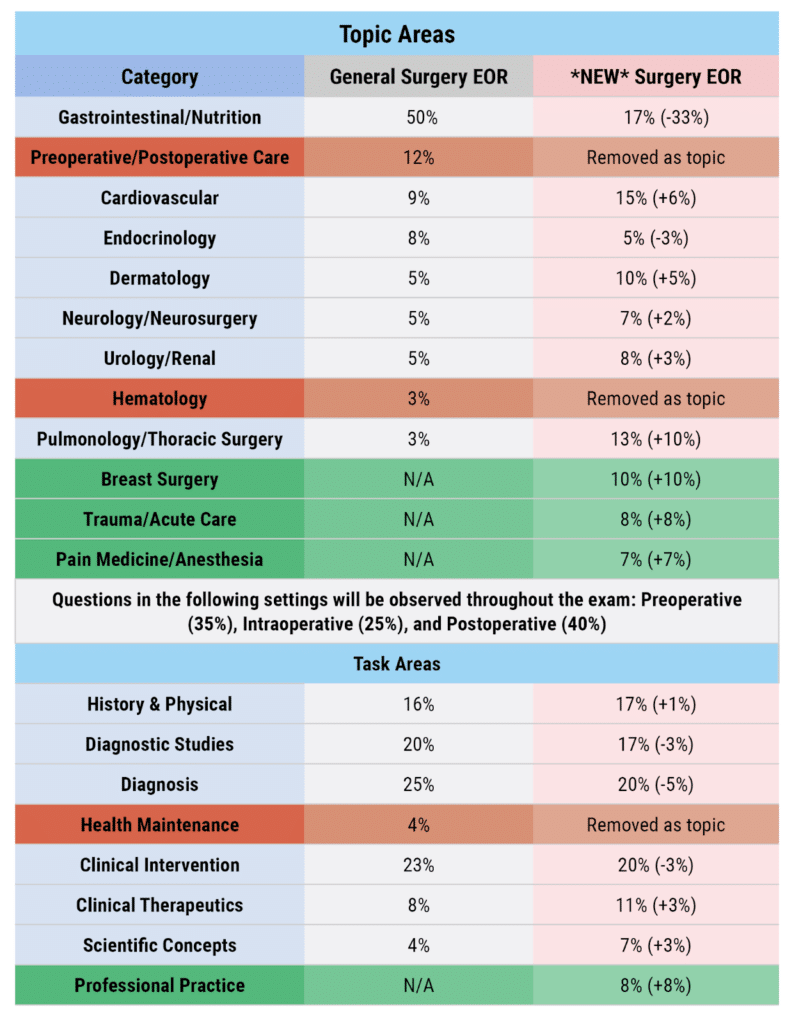
To summarize, the largest changes seen in the new topic list for the surgery EOR is the content. The old “general surgery” exam had a heavy focus on gastrointestinal material, which made up about 50% of the exam content.
Now, GI material now accounts for just 17% of the content on the new surgery EOR and the focus is more distributed amongst surgical subspecialities. There is also more emphasis on specific pre/postoperative complications.
Here’s a full breakdown of what’s changed below:
And you can reference the new surgery EOR blueprint and topic list from PAEA here!
6 Tips to Help You Crush the New Surgery EOR Exam
The surgery rotation and corresponding examination is recognized as notoriously difficult for students. While this is still true with the new exam, fear not! We’re here to guide you through the changes so you’re ready for anything the exam throws at you.
Here are some tips that are sure to to help you succeed:
1. Make catch-up days part of your study schedule.
You’ve heard many others, including me, recommend creating a study schedule at the beginning of each clinical rotation. It’s a great way to hold yourself accountable and make sure you review necessary material. So once you get your clinical rotation schedule, create a study schedule containing goals and topics you want to review by a certain timeline.
That said, assume you’ll fall behind, and make “catch-up” days part of any study schedule. The fact is, your schedule during a surgery rotation is often unpredictable. You may find yourself falling behind because you’re staying late to see additional cases, or you may be utilizing your time at home to review cases scheduled for the next day.
No matter the reason, important things will come up. Leave about one additional day on your schedule each week to use to catch up on material. This will help with any stress associated with falling behind.
2. Review the topic list.
Again, this is something recommended for any EOR exam studying. However, it is even more important to consider during your surgery rotation! This is because there are some niche topics that aren’t usually highlighted in your didactic year (or only briefly touched on) that are fair game for this exam. This includes topics like pre/post operative specific care, procedures, and other subspecialty specific content.
It’s important to note you may not touch on or see every topic during your clinical rotation. So be sure to watch videos on procedures you don’t recognize and have a good understanding of their indications and complications. Reviewing the surgery EOR topic list lets you plan to do this far in advance, so you don’t find yourself scrambling to grasp the material.
3. Do practice questions.
When taking an exam on topics you don’t have a ton of experience with, it can be difficult to find a way to test yourself on the material beforehand. And it’s unlikely you’ll be exposed to many questions on topics that are fair game for the surgery EOR exam. That’s why it’s a good idea to rely on a question bank that’ll truly test your understanding of the topic list.
It can be hard to imagine exactly how a question on certain topics, such as central line insertion or parental nutrition, would be written. Exposure to exam-like questions is crucial to guiding your studying and ensuring preparedness.
💡 Blueprint PA (formerly Rosh Review) offers end of rotation exam Qbanks for every rotation (including surgery) that’s kept up-to-date on the topic list and offers practice with these types of questions!
4. Avoid “He said/ she said.”
Obviously, it’s very tempting to see what those who took the exam have to say about it. What do they say is on it? How hard is it? Is there anything they wished they’d focused on more, or they should have spent less time on?
While advice from those who already took the exam can occasionally be helpful, it’s important to remember that the surgery EOR exam is never the same from one rotation to the next. Therefore, students should be mindful of the content shift and avoid hyperfixating on any topic areas just because someone says something was on the exam.
Even more so, lots of negative discussion about an exam can induce unnecessary anxiety in students. Especially if you already struggle with test anxiety, hearing how difficult something is can make it much worse. Remember, the test is designed in a way that if you’re prepared for it, you should be successful.
5. Soak up clinical experiences.
There’s nothing better than real life references when it comes to studying for an exam. Be on the lookout for content on the topic list during your rotation.
Of course, it’s unlikely you’ll be exposed to all topics on the content list for the surgery EOR exam. However, you’ll inevitably come across some. When that happens, make sure you really take in the experience and allow it to help you commit that content to memory. Discuss the decision-making and alternatives with your preceptor and make the most of those experiences.
6. Start early.
Overall, the surgery EOR exam you’re taking will be much different than the exam I took five years ago. You may even be taking an exam with different content than the cohort right before you! Most programs had time to try and implement some extra material into their coursework to help prepare students for this exam, but overall, there will be many topics that feel new or different to you depending on your clinical background.
So, start preparing for this exam early (on day 1) of your rotation. If you have time, it’s best to begin before the rotation even starts!
Final Thoughts
Remember, surgery is a tough rotation. But you’ve come this far, so you have what it takes! If you follow the tips above and give yourself time to review all the material, you’ll find success on the surgery EOR. Good luck, and be sure to reach out if you have any questions!